
DHA in Popular Baby Formulas: Hexane Extracted?
Organic does not always mean solvent-free, but a few formula brands provide much better DHA transparency than others.
 By: Tali Ditye, Ph.D., Co-founder
Mommyhood101 independently curates baby gear to help inform decisions; if you buy through links on our site, we may earn a commission.
DHA is an omega-3 fatty acid commonly added to infant formula to support normal brain and eye development.
In most formulas, DHA comes from either microalgae or fish oil. However, the source of DHA does not necessarily tell us how the oil was extracted, refined, or purified.
Some manufacturers use water-based extraction, while other DHA oils may be processed using hexane, ethanol, isopropyl alcohol, or other organic solvents.
We researched 10 of the most popular organic formulas, reviewed current ingredient labels and manufacturer statements, and contacted brands when possible to determine what parents can actually verify.
-
- Take-Home Message
- What Is DHA?
- What Does Hexane-Extracted Mean?
- Does Organic Mean Hexane-Free?
- Formula Comparison Table
- Little Spoon Organic
- Bobbie Organic
- Kendamil Organic
- HiPP Dutch Combiotic
- Holle Organic
- Bubs Organic Grass Fed
- Earth's Best Organic
- Happy Baby Organic
- Lebenswert Organic
- Similac Organic
- Should Parents Be Concerned?
- Do European Baby Formulas use Hexane for DHA/ARA Extraction?
- Questions to Ask Formula Brands
- Our Conclusions
Important disclosure: This article evaluates publicly available ingredient labels, manufacturer materials, historical regulatory documents, and direct brand correspondence. Manufacturing suppliers and extraction processes can change without obvious changes to the front label. Unless otherwise stated, an unknown extraction method should not be interpreted as evidence that a formula does or does not use hexane. Always consult your pediatrician before choosing or switching infant formulas.
Parents shopping for the best organic infant formulas may reasonably assume that an organic seal means every ingredient was produced without petrochemical solvents.
Unfortunately, the reality is more complicated.
The milk, lactose, vegetable oils, and other agricultural ingredients may meet organic production standards, while small quantities of separately manufactured nutrients can be permitted under organic regulations even when those nutrients are not themselves certified organic.
DHA and ARA oils have been at the center of that debate for years.
Let's look at what we were able to confirm.
DHA Extraction in Organic Formula: The Take-Home Message
Nobody wants to read through an entire article before getting a clear answer, so here are our findings right up front.
The most transparent formulas in our investigation were:
✔️ Little Spoon Organic: The manufacturer directly told Mommyhood101 that its algal DHA is extracted without organic solvents.
✔️ Bobbie Organic: Bobbie describes its marine-algae DHA as water-extracted.
✔️ Kendamil Organic: Kendamil states that its algal DHA is produced using water-extraction techniques.
These formulas contain DHA, but we could not verify the current extraction method:
❔ HiPP Dutch Combiotic Organic.
❔ Holle Organic.
❔ Bubs Organic Grass Fed Stage 1.
❔ Lebenswert Organic.
❔ Similac Organic.
These formulas have historical links to hexane-extracted DHA or ARA oils, but their current processes remain unclear:
⚠️ Earth's Best Organic.
⚠️ Happy Baby Organic.
The key word is historical. Older manufacturer answers and regulatory records do not necessarily describe the DHA oil used in formula being produced today.
What Is DHA?
DHA stands for docosahexaenoic acid, a long-chain omega-3 fatty acid.
DHA is naturally found in breast milk, although its concentration varies based partly on maternal diet and other factors.
It is also an important structural fat in the brain and retina, which is why DHA is commonly included in infant formulas.
Formula manufacturers generally obtain DHA from one of two sources:
- Microalgae: Certain algae, including species in the genus Schizochytrium, naturally produce oils rich in DHA.
- Fish oil: Fish accumulate DHA by consuming algae directly or by eating smaller organisms within the marine food chain.
Algal DHA is sometimes described as plant-based, vegetarian, or fish-free. Technically, algae are not plants, but “plant-based DHA” is common consumer-facing terminology.
The DHA molecule itself is not fundamentally different because it originated in algae rather than fish. You can read more about DHA in baby formula here.
What can differ is the oil's production, extraction, purification, oxidation control, sustainability, taste, allergen profile, and contaminant testing.
What Does Hexane-Extracted DHA Mean?
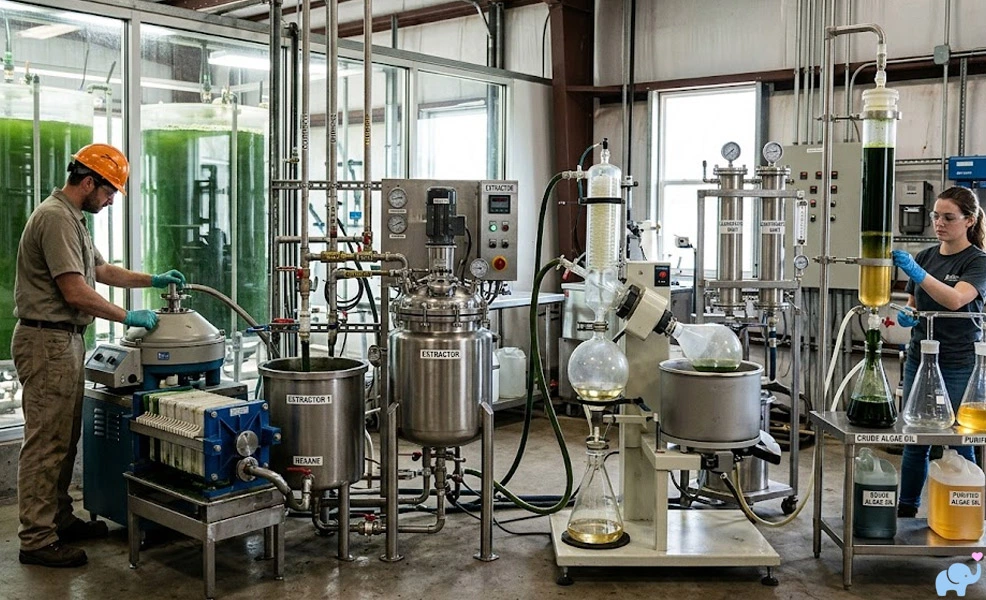
Hexane is a petroleum-derived solvent commonly used in the large-scale extraction of oils.
In a simplified extraction process, dried biological material is exposed to a solvent that dissolves the desired oil. The oil and solvent are then separated through evaporation, distillation, vacuum treatment, or other refining processes.
Other solvents can also be used during oil production, including:
- Ethanol
- Isopropyl alcohol
- Acetone
- Heptane
- Ethyl acetate
Solvent extraction is not the only way to obtain DHA oil. Depending on the ingredient and manufacturing process, companies may use water-based, enzymatic, mechanical, fermentation-assisted, or supercritical carbon dioxide extraction.
It is important to distinguish four very different claims:
- A solvent was used during manufacturing.
- Trace solvent remained in the purified DHA oil.
- Trace solvent was detectable in the finished infant formula.
- The detected amount presented a health risk.
Evidence that hexane was used upstream does not automatically prove that meaningful hexane residue remains in the formula.
For that reason, describing hexane as an intentional “ingredient” in formula is usually inaccurate. When used, it is a processing aid intended to be removed.
Does Organic Formula Mean Hexane-Free?
Not necessarily.
USDA Organic and European organic certifications regulate how agricultural ingredients are produced and processed, but infant formula is a complicated, nutritionally complete product containing vitamins, minerals, fatty acids, and other specialized ingredients.
Some added nutrients may be permitted in organic foods even when they are not themselves available in certified-organic form.
DHA-rich algal oil and ARA-rich fungal oil have been debated within the U.S. organic regulatory system for years, partly because of concerns about solvent processing and whether these ingredients are compatible with consumer expectations of organic food.
Therefore, the presence of a USDA Organic or EU Organic logo should not be treated as proof that every nutrient oil was extracted without hexane or other solvents.
Similarly, these phrases do not establish the extraction method:
- Plant-based DHA
- Algal DHA
- Vegetarian DHA
- Fish-free DHA
- Naturally sourced DHA
- Organic formula with DHA
To determine whether solvents are used, the brand must disclose the actual extraction process or provide information from its ingredient supplier.
Organic Formula DHA Comparison
| Formula | DHA Source | Extraction Finding | Our Classification |
|---|---|---|---|
| Little Spoon Organic | Schizochytrium sp. oil | Manufacturer told Mommyhood101 that no organic solvents are used | Confirmed without organic solvents |
| Bobbie Organic | Marine algae | Described by Bobbie as water-extracted | Confirmed water-extracted |
| Kendamil Organic | Schizochytrium microalgae | Kendamil states that it uses water extraction | Confirmed water-extracted |
| HiPP Dutch Combiotic | DHA source not clearly disclosed in public consumer materials | No definitive current extraction statement located | Unknown |
| Holle Organic | Schizochytrium microalgae in current formulas | No definitive current extraction statement located | Unknown |
| Bubs Organic Grass Fed Stage 1 | Algae | No definitive current extraction statement located | Unknown |
| Earth's Best Organic | Algal DHA | Historically associated with solvent-extracted single-cell oils | Historical concern; current process unknown |
| Happy Baby Organic | Algae | An older manufacturer response described hexane extraction | Historical confirmation; current process unknown |
| Lebenswert Organic | Fish oil | Fish-oil refining process not publicly disclosed | Unknown |
| Similac Organic | Not sufficiently disclosed for the current product | No definitive current extraction statement located | Unknown |
A formula classified as unknown is not necessarily made with hexane-extracted DHA.
It simply means that we could not find enough reliable, current information to make either a solvent-free or solvent-extracted claim.
1. Little Spoon Organic Infant Formula
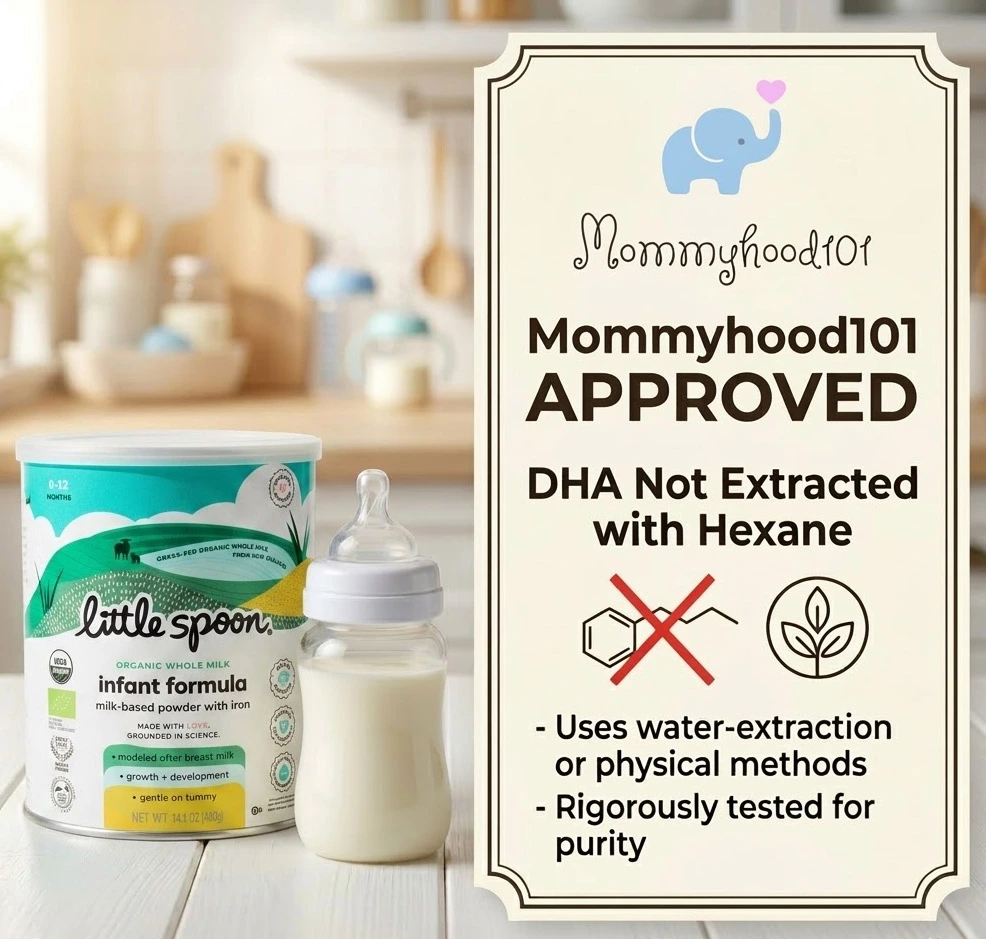
Little Spoon Organic Infant Formula contains DHA from Schizochytrium sp. oil.
Unlike many brands, Little Spoon provided Mommyhood101 with a direct answer about its extraction process.
In an email to Mommyhood101 dated March 10, 2026, a Little Spoon representative stated:
“Schizochytrium Sp Oil (DHA source) is extracted without the use of organic solvents.”
This is broader and more informative than simply saying the DHA is hexane-free.
Hexane is one type of organic solvent, but Little Spoon's statement indicates that its DHA is extracted without organic solvents as a category.
Our conclusion: Little Spoon's algal DHA is directly confirmed by the manufacturer as extracted without organic solvents.
Of course, it would be accurate to call the DHA extraction process solvent-free, but inaccurate to say that every added fatty-acid oil in the formula is produced without solvents.
2. Bobbie Organic Infant Formula
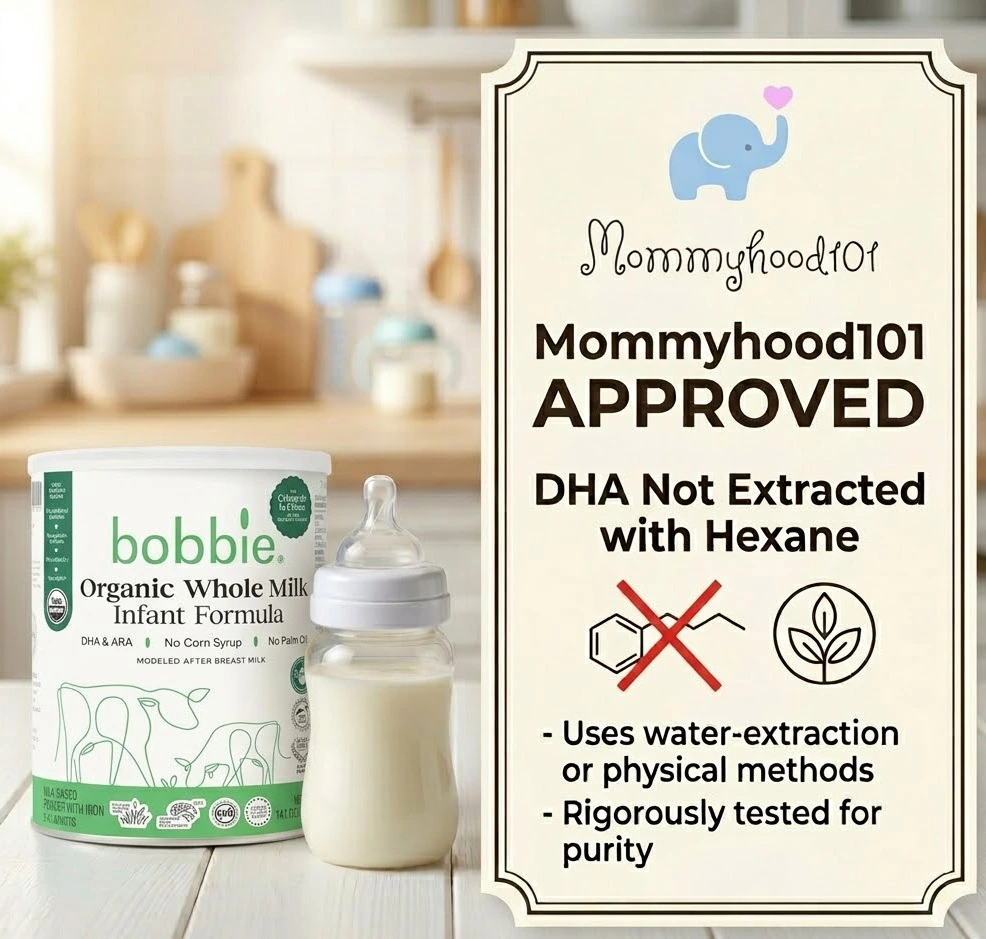
Bobbie Organic Infant Formula contains DHA derived from marine algae.
Bobbie describes this DHA as water-extracted, making it one of the clearest formulas in our comparison.
The brand also provides a specific DHA amount of 20 milligrams per 100 calories.
Our conclusion: Bobbie's marine-algae DHA is publicly documented by the manufacturer as water-extracted rather than hexane-extracted.
As with any manufacturer claim, this does not necessarily constitute an independent audit of the ingredient supplier. However, it is a direct and specific processing disclosure, which is much more useful than simply stating that the formula contains algal DHA.
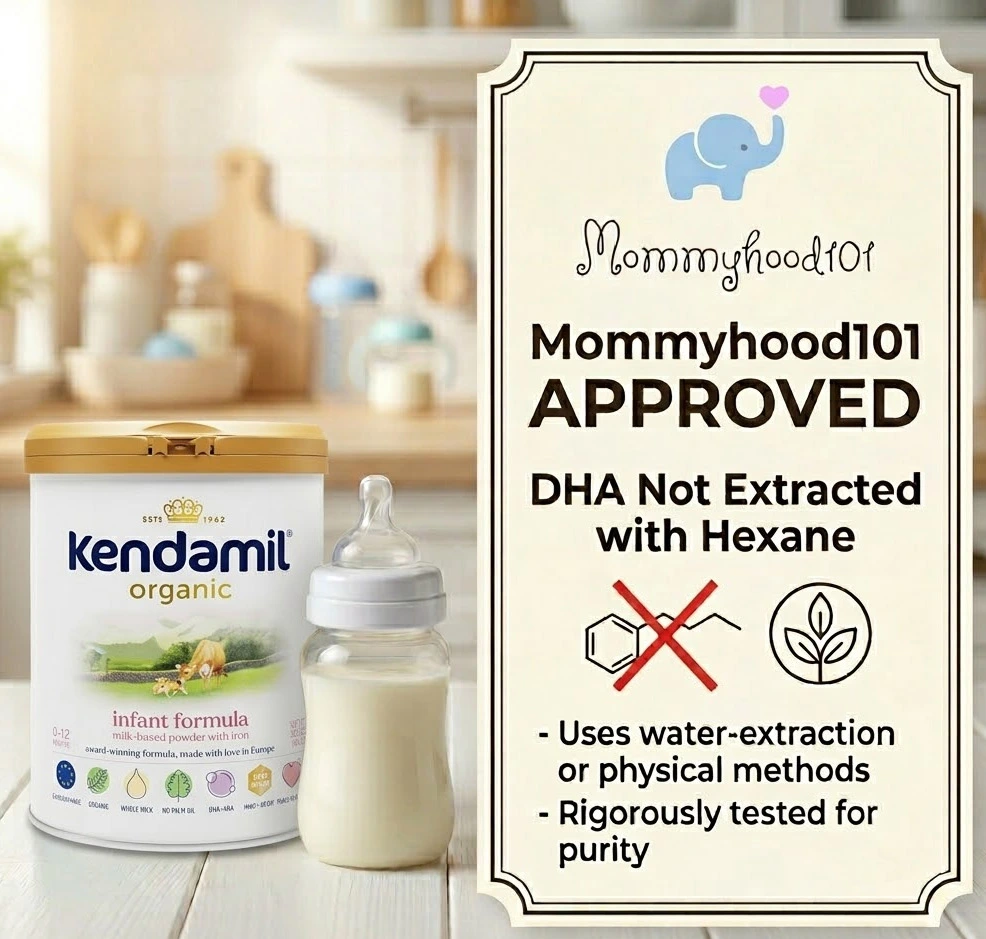
3. Kendamil Organic Infant Formula
Kendamil Organic Infant Formula uses DHA from Schizochytrium microalgae.
Kendamil states that the algal omega-3 oil used in its formulas is obtained using water-extraction techniques.
The company contrasts this process with some fish-oil production methods that may use heat and chemical solvents.
Our conclusion: Kendamil Organic uses algal DHA that the manufacturer publicly describes as water-extracted.
Kendamil deserves credit for addressing the extraction method directly rather than relying solely on terms like plant-based or sustainably sourced.
However, we would not repeat Kendamil's broader implication that fish oil generally requires organic solvents. Fish oils can be processed in several ways, and the extraction method must be evaluated for the particular ingredient.
4. HiPP Dutch Combiotic Organic Formula
HiPP Dutch Stage 1 Combiotic contains DHA, as required for infant formulas under current European regulations.
However, the public-facing Dutch product information does not provide enough detail to determine:
- The exact organism or fish source supplying its DHA.
- Whether the DHA oil is extracted mechanically, aqueously, enzymatically, or with solvents.
- Which solvent may be used, if any.
- The residual-solvent specifications for the finished oil.
Some online formula retailers and older review articles characterize HiPP's DHA as fish-oil-derived and therefore hexane-free.
That conclusion is not adequately supported, and there are several other reputable sources noting that it is extracted with DHA (though undetectable in the finished product).
Even when DHA comes from fish oil, the oil may undergo several extraction, concentration, purification, deodorization, or winterization steps. Fish oil is not automatically solvent-free.
Our conclusion: HiPP Dutch Combiotic contains DHA, but its current extraction method is not sufficiently disclosed for us to classify it as either hexane-extracted or hexane-free; the current evidence points towards it being extracted using hexane.
5. Holle Organic Formula
Current Holle cow-milk formulas list oil from the microalga Schizochytrium sp. as a source of DHA.
This is important because many older Holle reviews and comparison articles describe Holle's DHA as coming from fish oil.
That information may reflect an earlier recipe, a different stage, or a different regional formulation, but it should not be applied broadly to current Holle formulas without checking the exact label.
We could not locate a sufficiently specific current statement from Holle explaining whether its algal oil is produced using water, mechanical extraction, enzymes, carbon dioxide, hexane, ethanol, or another process.
Our conclusion: Current Holle formulas use algal DHA, but the extraction process remains publicly unclear.
Holle's EU Organic certification does not, by itself, establish that this separately produced nutrient oil is hexane-free.
6. Bubs Organic Grass Fed Infant Formula
Bubs Organic Grass Fed Stage 1 lists DHA from algae.
Bubs also promotes the DHA in its organic formula range as plant-based and fish-free.
However, plant-based and algae-derived do not tell us how the oil is extracted.
We were unable to locate a current manufacturer statement specifying whether the DHA is obtained with water, mechanical processing, enzymes, supercritical carbon dioxide, hexane, or another solvent.
Our conclusion: Bubs Organic Grass Fed Stage 1 contains algal DHA, but its extraction method is currently undisclosed.
Be careful not to confuse this Australian Stage 1 formula with the newer Bubs 365 Day Grass Fed Infant Formula sold for babies 0-12 months in the United States. They are separate products with different labels and potentially different ingredient supply chains.
7. Earth's Best Organic Formula
Earth's Best Organic Dairy Infant Formula contains DHA and ARA.
The brand was also connected to the historical controversy surrounding solvent-extracted DHA-rich algal oil and ARA-rich fungal oil in organic infant formulas.
Older USDA technical reviews, National Organic Standards Board discussions, and consumer advocacy reports discussed the use of hexane or other solvents in the production of these single-cell oils.
Earth's Best was among the organic formula brands identified in that debate.
However, those records largely concern older ingredient suppliers and manufacturing processes.
The current Earth's Best product information confirms that DHA and ARA are present but does not publicly identify the extraction process used for its current DHA supply.
Our conclusion: Earth's Best has a documented historical association with solvent-extracted DHA and ARA oils, but we could not verify that its current DHA is still made using hexane.
The most accurate wording is:
Earth's Best was implicated in the historical hexane-extracted DHA and ARA controversy, but the extraction method used for its current DHA supply is not publicly confirmed.
We would not state as a present-tense fact that Earth's Best currently uses hexane-extracted DHA without updated confirmation from the company.
8. Happy Baby Organic Formula
Happy Baby Organic Formula contains algal DHA.
An older manufacturer response preserved in a retailer question-and-answer section stated that the company's DHA was made from algae extracted using hexane and that the solvent was removed during processing.
This is more direct than a third-party blog claim, but it has several limitations:
- The response is old.
- It may refer to a previous formula recipe.
- It does not identify the DHA supplier or production facility.
- It does not establish whether the process is still used.
- It does not provide residual-solvent testing results.
Our conclusion: Happy Baby historically acknowledged using hexane extraction for its algal DHA, but the extraction process for its current formula needs to be reconfirmed.
Until Happy Family Organics provides an updated technical answer, the fairest classification is historically hexane-extracted; current status unknown.
9. Lebenswert Organic Formula
Current Lebenswert formulas list fish oil as their DHA source.
This differs from formulas using DHA-rich Schizochytrium algal oil, but it does not answer the solvent question.
Fish oil production can involve:
- Rendering and centrifugation
- Enzymatic extraction
- Deodorization
- Winterization
- Molecular distillation
- Esterification or concentration
- Solvent-assisted separation
We did not locate a current Lebenswert or manufacturer statement identifying which extraction and purification methods are used for its fish oil.
Our conclusion: Lebenswert uses fish-oil DHA, but we cannot verify whether solvents are used at any stage of extraction, concentration, or purification.
Calling Lebenswert's DHA “hexane-free” merely because it comes from fish would be an unsupported assumption.
10. Similac Organic Formula
Similac Organic contains DHA and ARA.
Abbott describes the DHA and ARA in its formulas as coming from naturally occurring sources, but its public consumer information does not provide enough product-specific detail to determine:
- The organism or fish source used for DHA in the current Similac Organic formula.
- The DHA ingredient supplier.
- The extraction process.
- Whether organic solvents are used at any stage.
- The residual-solvent specification for the purified oil.
Historically, major U.S. formula manufacturers used algal DHA and fungal ARA oils from suppliers connected to the original organic-formula solvent controversy.
However, historical industry practice is not enough to establish Abbott's current ingredient or process.
Our conclusion: Similac Organic contains DHA, but its current DHA source and extraction method are not adequately disclosed.
We would not classify it as either hexane-extracted or hexane-free without a current written response from Abbott.
Should Parents Be Concerned About Hexane-Extracted DHA?
Hexane can be harmful at sufficiently high levels, particularly through repeated or concentrated occupational inhalation exposure.
That does not mean that formula made with an oil extracted using hexane contains a dangerous amount of hexane.
In food-oil manufacturing, the solvent is intended to be removed during refining and purification.
Some DHA ingredient submissions to the FDA report that residual solvents were not detected in the finished purified oil. However, those results apply to the specific ingredient, supplier, manufacturing process, analytical method, and detection limit described in the submission.
They should not be generalized to every DHA oil on the market.
Based on the evidence currently available, the strongest concerns surrounding solvent-extracted DHA are:
- Transparency: Parents are rarely told how the DHA was processed.
- Organic expectations: Consumers may reasonably expect an organic product to avoid petrochemical extraction.
- Worker exposure: Concentrated solvent exposure is more relevant to manufacturing employees than to babies consuming the refined product.
- Environmental impact: Solvent use can generate emissions and chemical waste.
- Residual testing: Brands rarely publish finished-oil or finished-formula solvent test results.
We did not find convincing evidence that infants are being poisoned by hexane residues in properly manufactured formula.
Therefore, claims that solvent-extracted DHA is categorically toxic to babies go beyond the available evidence.
A more balanced interpretation is that some parents may reasonably prefer water-extracted or solvent-free DHA, particularly when a brand can document that process, but an upstream solvent process does not by itself establish a clinically meaningful exposure in the finished bottle.
What About ARA?
Many formulas containing DHA also contain ARA, or arachidonic acid.
ARA is an omega-6 fatty acid commonly obtained from oil produced by the fungus Mortierella alpina.
A formula can use solvent-free DHA while still using solvent-extracted ARA.
Little Spoon is a clear example. The company told Mommyhood101 that its DHA oil is extracted without organic solvents, while its Mortierella alpina ARA oil is extracted using organic solvents.
Therefore, parents interested in processing methods should ask about DHA and ARA separately.
Do European Baby Formulas use Hexane for DHA or ARA Extraction?
Yes, many do.
EU organic standards do not authorize hexane as a processing aid in the production of organic foods and oils.
However, infant formula may contain legally required non-organic micronutrients, including DHA.
Therefore, organic certification strongly supports solvent-free processing of the formula’s organic oils, but does not by itself conclusively establish that the added DHA oil was produced without hexane.
Therefore, a formula (even an organic European baby formula) should only be described as using hexane-free DHA when the manufacturer or DHA supplier confirms it.
Questions to Ask an Infant Formula Company
Simply asking, “Does your formula contain hexane?” may produce an incomplete answer.
A company may truthfully say that hexane is not an ingredient or is not detectable in the finished product, without answering whether it was used upstream.
Here are more useful questions:
- What organism, fish species, or other material supplies the DHA?
- Who manufactures the DHA oil?
- Is hexane used at any stage of DHA production?
- Are ethanol, isopropyl alcohol, heptane, acetone, ethyl acetate, or other organic solvents used?
- Is the DHA produced using water, enzymes, mechanical separation, or supercritical carbon dioxide?
- Are solvents used only for extraction, or also during purification, winterization, or concentration?
- What are the residual-solvent specifications for the DHA oil?
- Is the finished DHA oil tested for residual solvents?
- Is the finished infant formula tested for residual solvents?
- Can the company provide the analytical detection limits?
- Does the same answer apply to the formula's ARA oil?
A detailed written answer from the manufacturer is much more valuable than a general statement that the ingredient is natural, clean, organic, plant-based, or sustainably sourced.
Claims We Recommend Avoiding
“All algal DHA is extracted with hexane.”
False. Little Spoon says its algal DHA is extracted without organic solvents, while Bobbie and Kendamil describe their algal DHA as water-extracted.
“Fish-oil DHA is naturally hexane-free.”
Unsupported. Fish oil can be extracted and refined using multiple processes, including some that may involve solvents.
“Hexane is an ingredient in the formula.”
Usually misleading. When used, hexane is a processing solvent intended to be removed rather than an intentionally retained formula ingredient.
“The manufacturer says no hexane remains, so no solvent was used.”
Not necessarily. A company may be referring to residual testing rather than the upstream manufacturing process.
“Organic formula cannot use solvent-extracted DHA.”
Too broad. Organic certification does not automatically disclose the processing history of every added nutrient.
“Hexane-extracted DHA is proven to harm babies.”
Not supported by the evidence we reviewed. Known risks from concentrated hexane exposure should not be confused with trace-residue questions in refined oils.
Our Conclusions
DHA is a valuable and widely used infant-formula nutrient, but formula brands vary enormously in how much they disclose about its source and processing.
Among the 10 organic formulas we investigated, three provided the clearest evidence of solvent-free or water-based DHA extraction:
- Little Spoon Organic: Directly confirmed to Mommyhood101 that its Schizochytrium DHA is extracted without organic solvents.
- Bobbie Organic: Publicly describes its marine-algae DHA as water-extracted.
- Kendamil Organic: Publicly states that its algal DHA is made using water-extraction techniques.
For HiPP Dutch, Holle, Bubs Organic, Lebenswert, and Similac Organic, we verified that DHA is present but could not verify the current extraction process.
Earth's Best and Happy Baby have stronger historical connections to hexane-extracted DHA or ARA oils, but current manufacturing methods may have changed.
That leaves us with a surprisingly simple conclusion:
Do not assume that organic means solvent-free, but do not assume that algal DHA means hexane-extracted either.
The real issue is transparency.
Parents should not need to search through regulatory archives, old retailer answers, and technical ingredient dossiers to learn how a prominent ingredient in an infant formula is manufactured.
We give Little Spoon, Bobbie, and Kendamil credit for providing useful processing information.
We encourage the remaining formula brands to identify their DHA source, disclose whether organic solvents are used at any stage, and publish meaningful residual-solvent specifications or testing results.
Until then, the honest classification for many popular organic formulas remains simply: unknown.

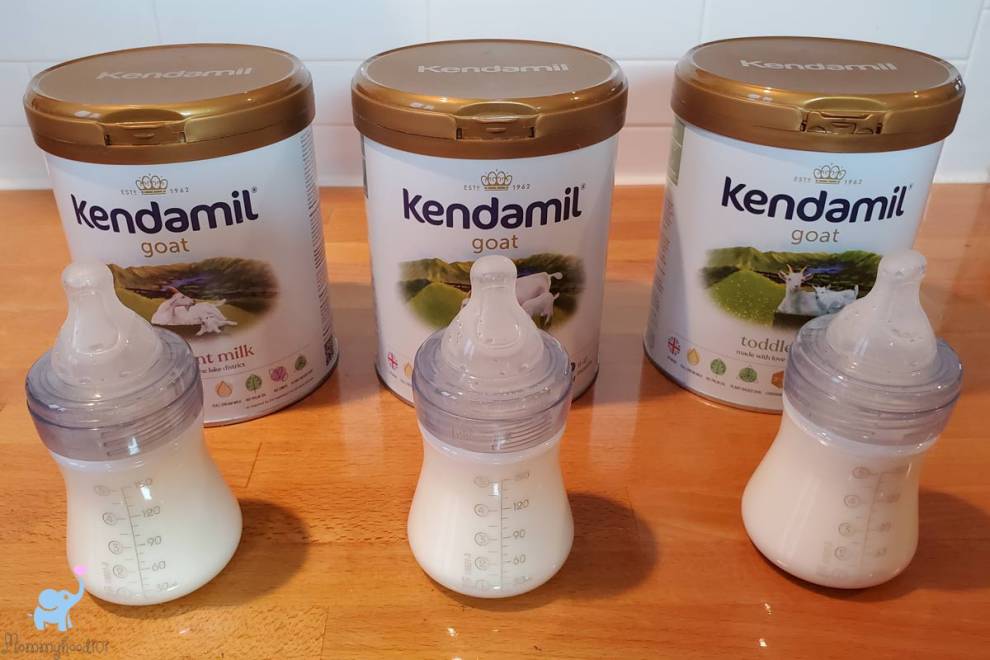
Kendamil Goat Baby Formula Review & Analysis
Kendamil goat milk formulas are becoming very popular in the UK and other European...
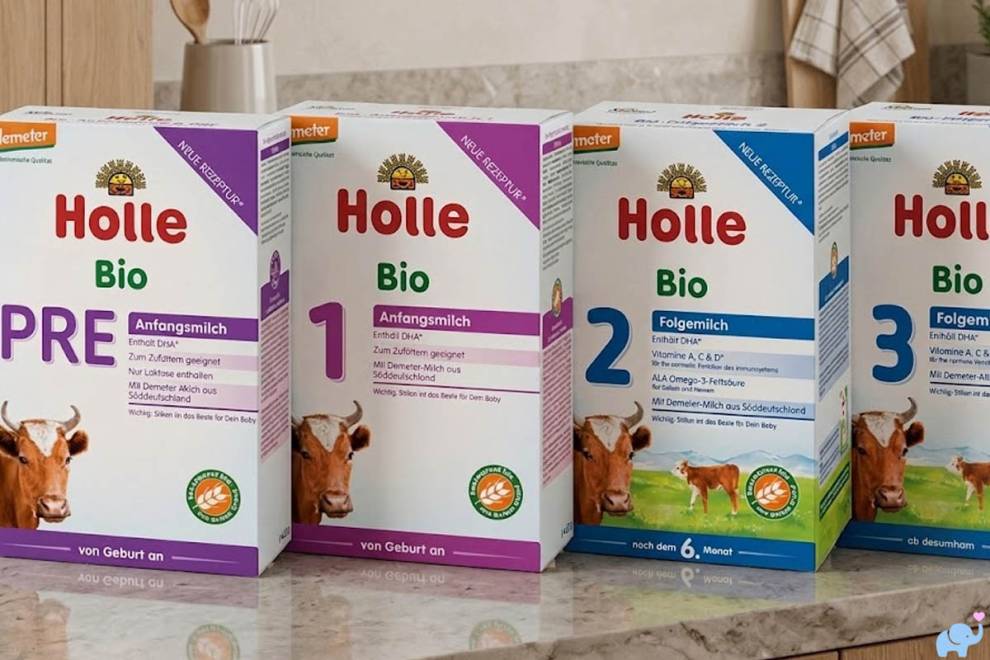
Holle Baby Formula Reviews and Analysis
Holle is one of the oldest and best-known European baby formula brands, with a...
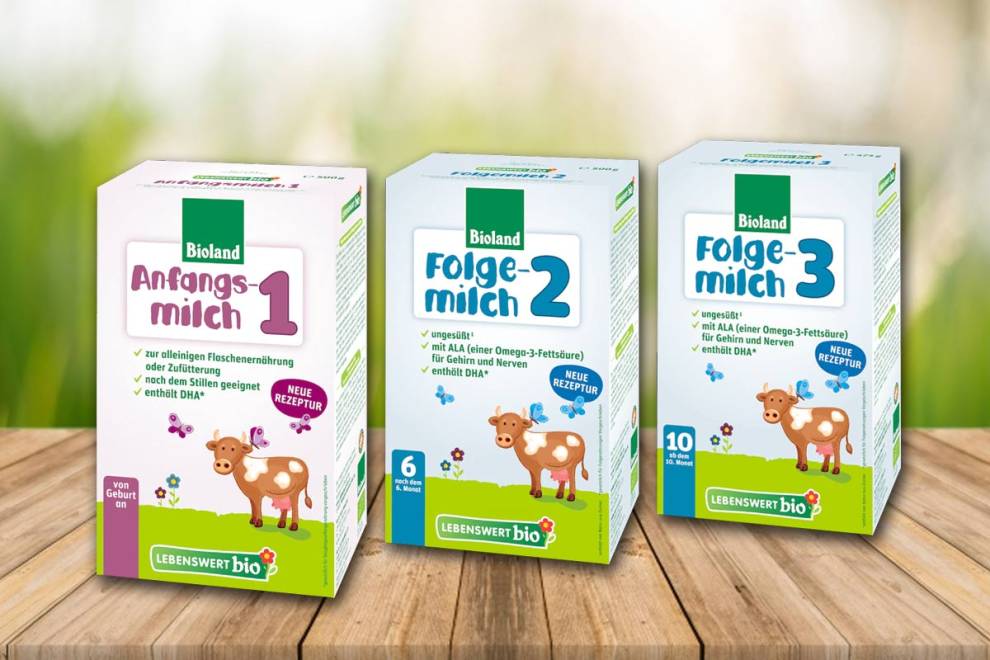
Lebenswert Baby Formula Review and Analysis
Lebenswert organic formulas were introduced in 2009 by the biggest and most popular...
Full Review: Good Start Gentle Pro Infant Formula - Dr. Brown’s
Good Start Gentle Pro is one of the more interesting gentle baby formulas we've tested,...