
Combination feeding? We found the perfect formula for breastfed babies!
 By: Tali Ditye, Ph.D., Co-founder
Mommyhood101 independently curates baby gear to help inform decisions; if you buy through links on our site, we may earn a commission.
For many families, breastfeeding and formula feeding aren't an either-or decision.
When we supplement breast milk with combination feeding, we want babies to readily and flexibly switch between breast milk and formula without rejecting one or the other.
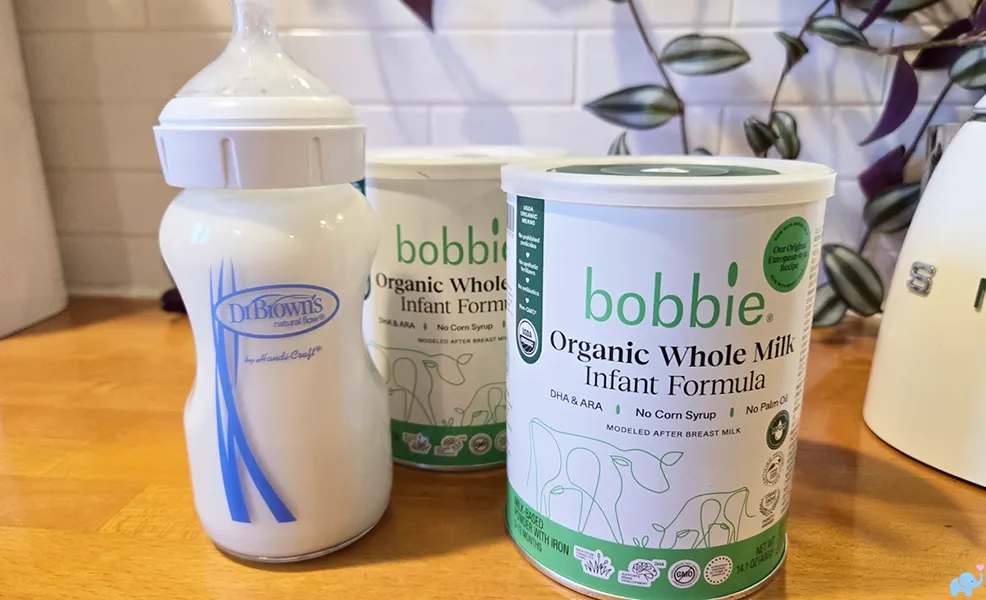
That's why we're excited about Bobbie's newly-updated Organic Whole Milk formula. The new recipe uses organic whole milk as its milk base, without nonfat milk. We've had fantastic experiences with it, and think you will too!
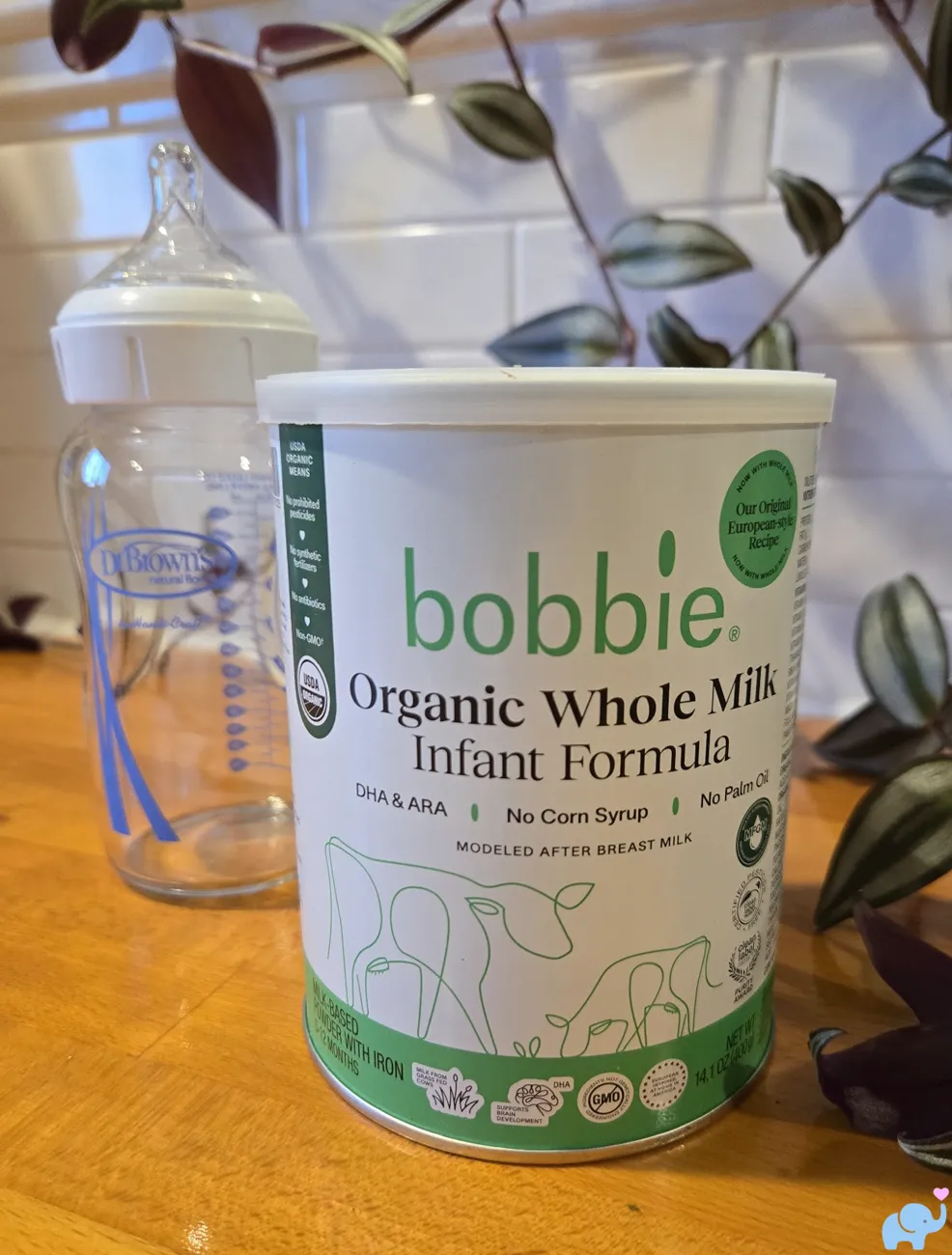
A good bottle of formula can help with a late-night feeding, a return to work, or sharing feeding duties between parents.
-
- Our Take-Home Message
- Our Video Review
- 1. Real Organic Whole Milk
- 2. Naturally Occurring MFGM
- 3. Independent Contaminant Testing
- 4. DHA, ARA & Choline
- 5. Organic Lactose
- 6. 60:40 Whey-to-Casein Ratio
- 7. Babies Love It!
- Preparing a Bottle
- Our Conclusions
- Frequently Asked Questions
- Research & Sources
-
Most product links lead to an affiliate partner. Mommyhood101 may earn commissions from purchases made through qualifying links.
Full disclosure: Our opinions reflect our own hands-on experiences with the new formulation, its physical ingredient and nutrition labels, and our review of published research.
Which Formula Is Best for Supplementing Breastfeeding?
Our pick: Bobbie Organic Whole Milk Infant Formula
We love its lactose-only carbohydrate source, 60:40 whey-to-casein ratio, whole-milk fat, naturally occurring milk fat globule membrane (MFGM), and extensive independent testing.
These features share some important similarities with breast milk, though no infant formula reproduces all of breast milk's immune factors and bioactive components.
7 Reasons Bobbie is Perfect for Combination Feeding
Here are 7 reasons we think Bobbie is a great option for breastfed babies!
1. Real Organic Whole Milk
The newest Bobbie recipe uses organic, grass-fed whole milk sourced from New Zealand, plus organic whey protein concentrate.
Unlike the previous formulation, it contains no added nonfat milk. Its lactose is sourced from the United States, and the formula is manufactured in Ohio.
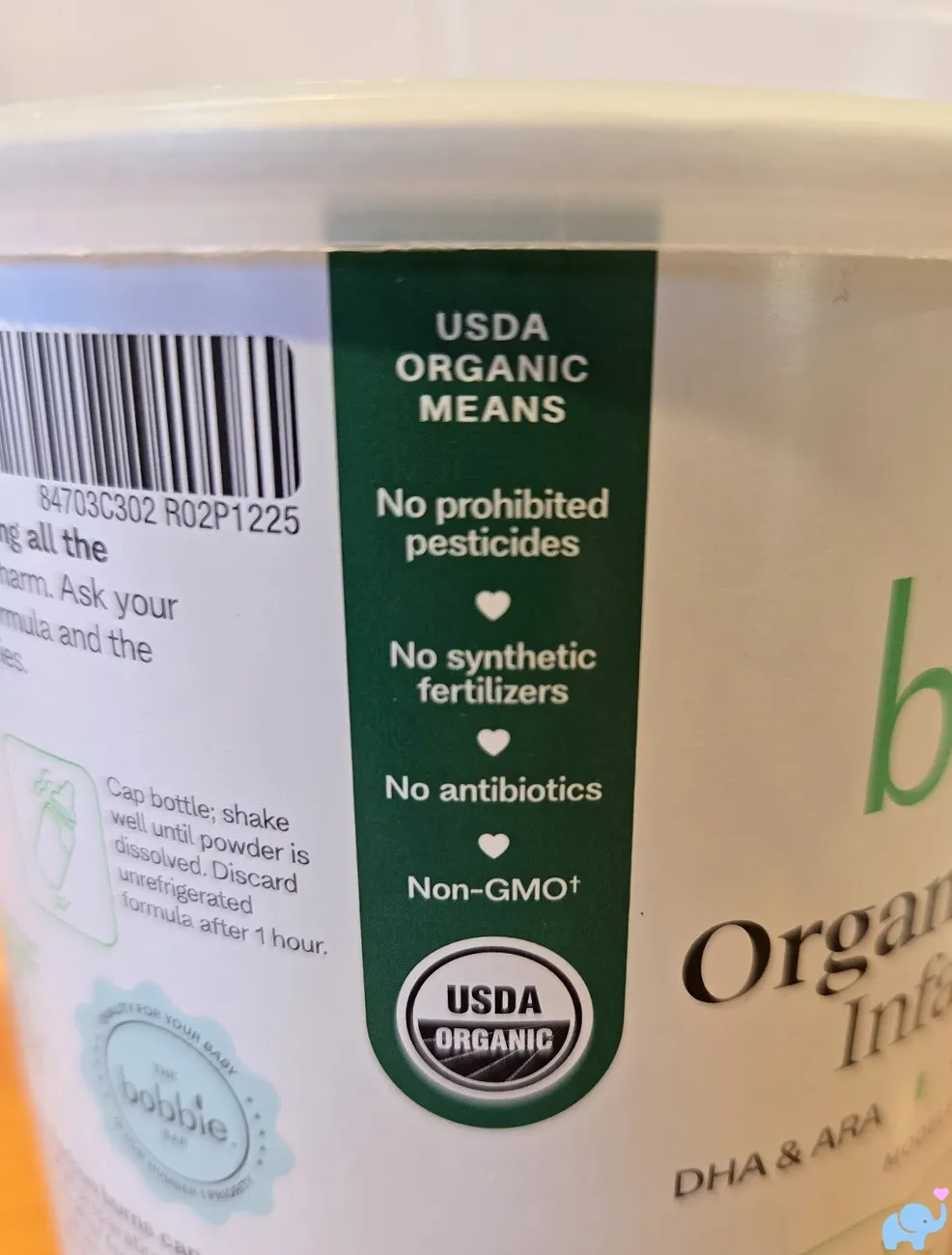
Bobbie also proudly carries USDA Organic certification, with certification by Quality Assurance International (QAI).
Whole milk contributes natural dairy fats and associated milk-lipid compounds.
Bobbie still uses supplemental sunflower, rapeseed, and coconut oils to provide a balanced fatty acid profile; it isn't made entirely from milk fat.
Research comparing certain experimental milk-fat-based and vegetable-fat-based formulas has found positive differences in fecal fatty acid soaps and stool consistency (Looijesteijn et al., 2022).
2. Naturally Occurring MFGM
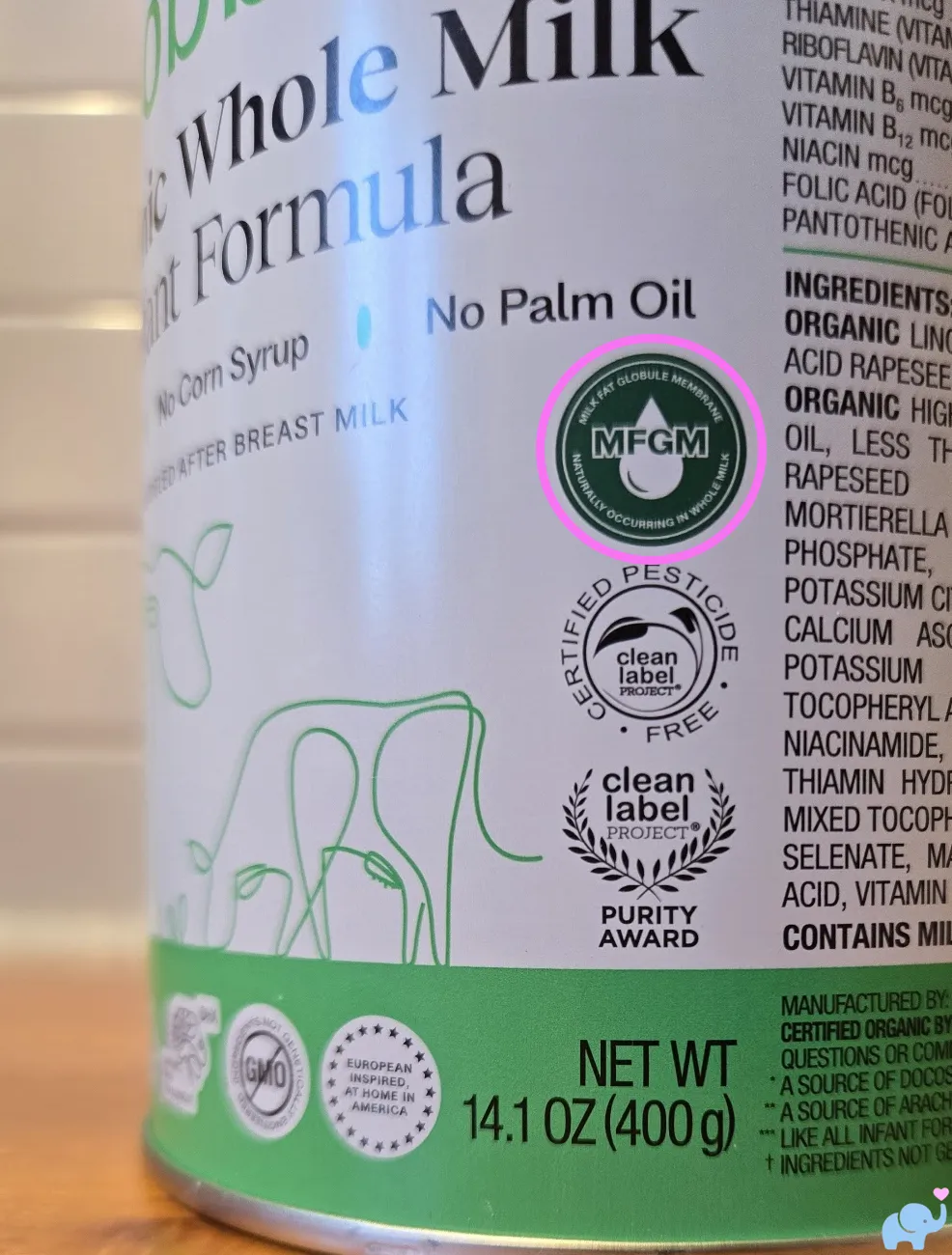
MFGM stands for milk fat globule membrane, the membrane surrounding fat droplets in mammalian (including mom's!) milk.
It contains phospholipids, sphingomyelin, and other components that researchers are studying for their roles in infant development. MFGM is found in breast milk, and Bobbie's whole milk provides naturally occurring bovine MFGM.
In one study, babies receiving an MFGM-enriched formula scored higher on a cognitive assessment at 12 months than babies receiving the comparison formula (Timby et al., 2014).
A 2024 meta-analysis also reported promising cognitive results.
3. Independent Testing for More Than 550 Contaminants
Ingredient quality matters, but so does the testing behind the formula.
According to our discussions with Bobbie, Light Labs independently screens for more than 550 contaminants, while the Clean Label Project tests for more than 400 under its separate certification program.
These are two distinct screening programs that are fully independent from the manufacturer.
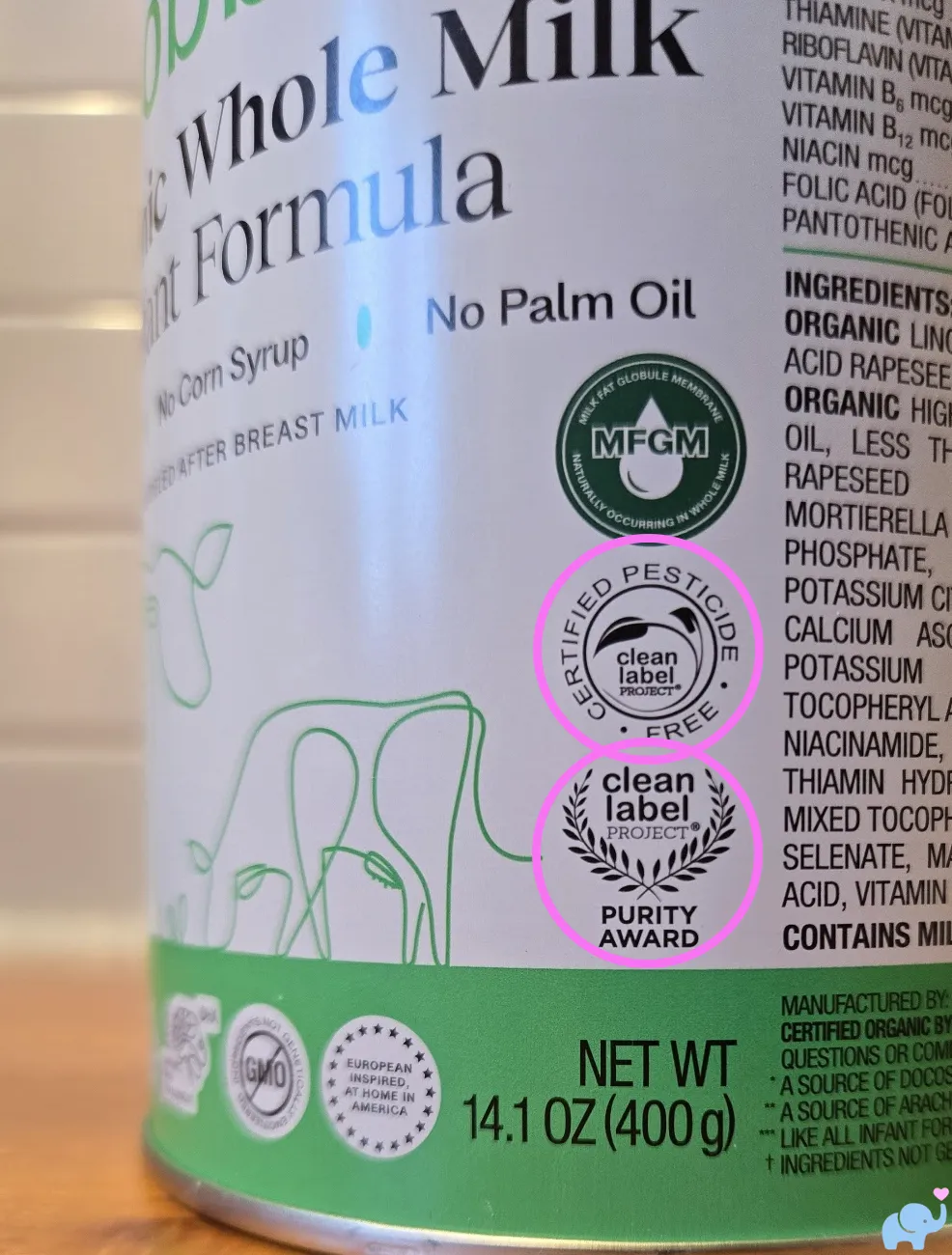
Bobbie proudly displays the Clean Label Project Certified Pesticide Free and Purity Award marks.
In March 2026, Consumer Reports also named Bobbie Organic Whole Milk among its top choices in independent contaminant testing.
Of course, tests describe the samples examined; they aren't a guarantee that every batch is identical, and the Consumer Reports testing may predate this new Bobbie formulation.
4. DHA, ARA, and Choline
These three nutrients are part of Bobbie's brain-and-body nutrition story.
DHA is an omega-3 fatty acid found in developing brain and retinal tissues.
ARA is an omega-6 fatty acid involved in cell structure and signaling.
Choline helps the body produce cell-membrane components and acetylcholine.
The new label identifies algal Schizochytrium oil as its DHA source and Mortierella alpina oil as its ARA source; with 25 mg of choline per 100 calories.
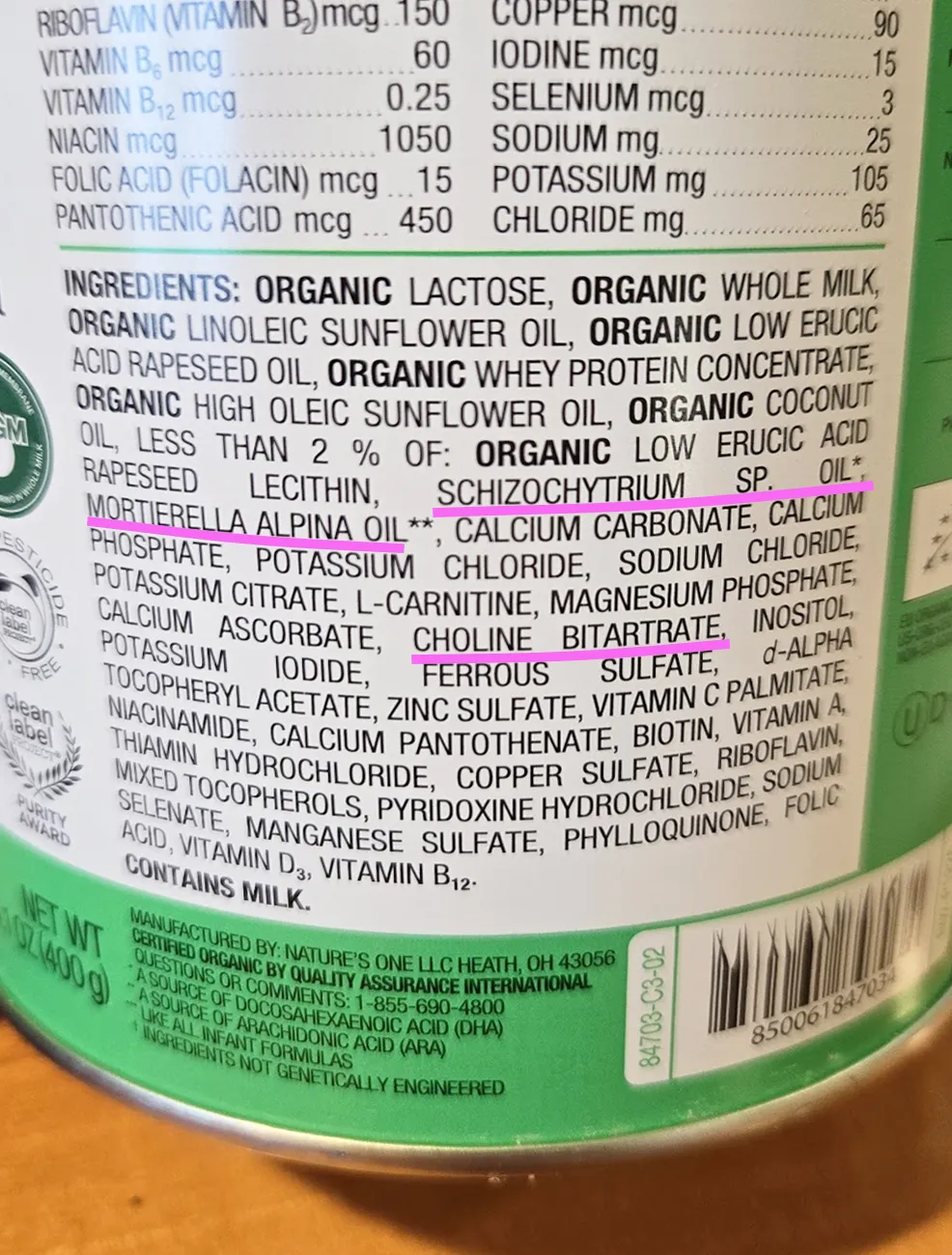
DHA, ARA, and choline are relevant to normal infant nutrition and also occur in breast milk.
Clinical trials haven't consistently found extra developmental benefits from DHA/ARA-fortified formula compared with other nutritionally adequate formulas (Cochrane, 2017), so these are thoughtful inclusions but they don't promise a smarter baby!
5. Organic Lactose as the Carbohydrate Source
Look at the top of the ingredient list: organic lactose is first.
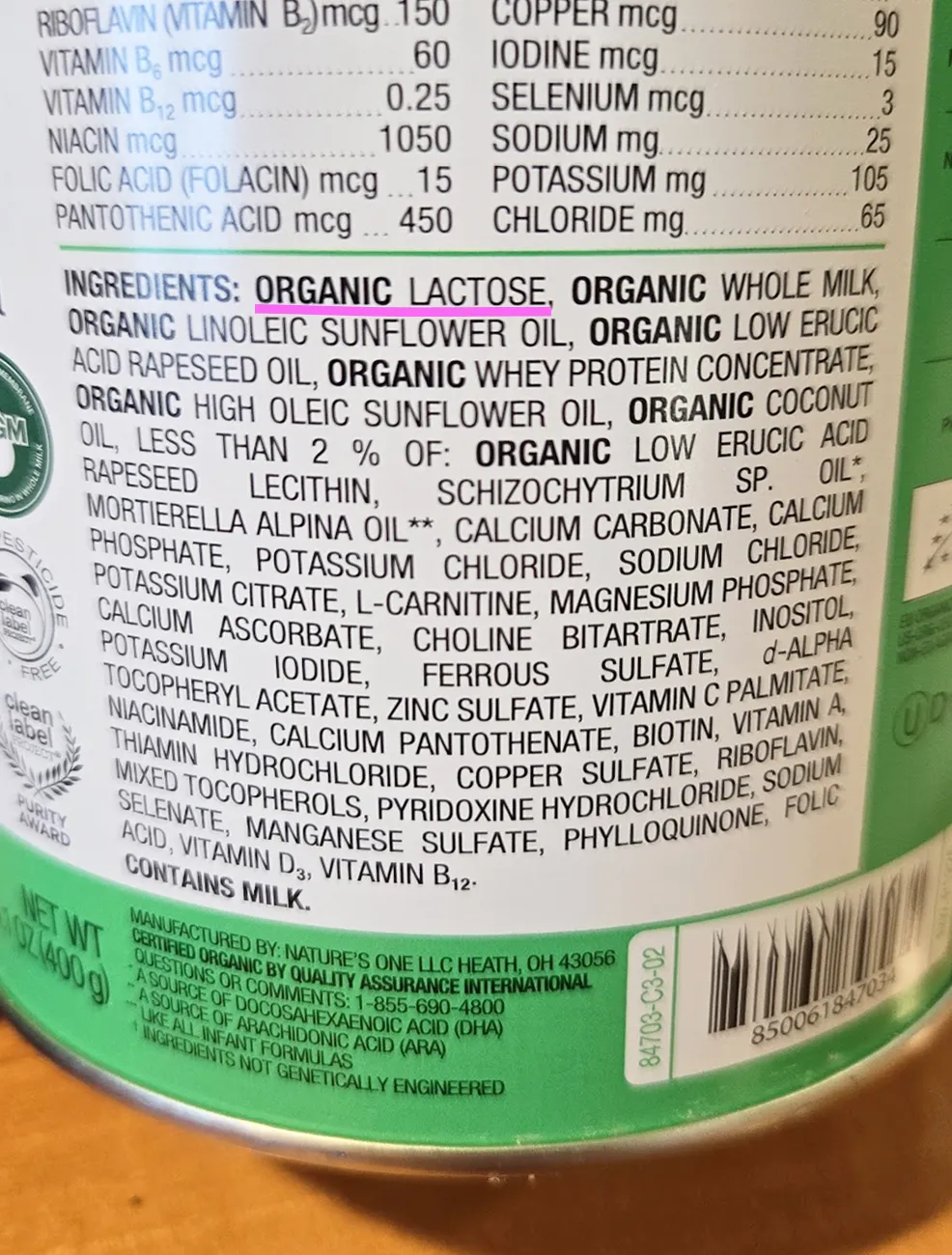
Lactose is also the principal digestible carbohydrate in breast milk, making this one of Bobbie's clearest compositional similarities.
There are also no corn syrup solids, maltodextrin, or alternative carbohydrate sources.
Most healthy, full-term infants digest lactose well. That doesn't mean a lactose-based formula is automatically better for every baby: specialized formulas may use other carbohydrates for good medical reasons.
Also, lactose isn't the same thing as human milk oligosaccharides (HMOs), the complex prebiotic carbohydrates naturally found in breast milk (Larson-Nath et al., 2025; Ballard & Morrow, 2013).
6. A 60:40 Whey-to-Casein Ratio
Bobbie reports a 60% whey to 40% casein protein ratio, similar to a commonly reported ratio in mature human milk.
Unmodified cow's milk is substantially more casein-heavy, so Bobbie adds whey protein concentrate to adjust the balance.
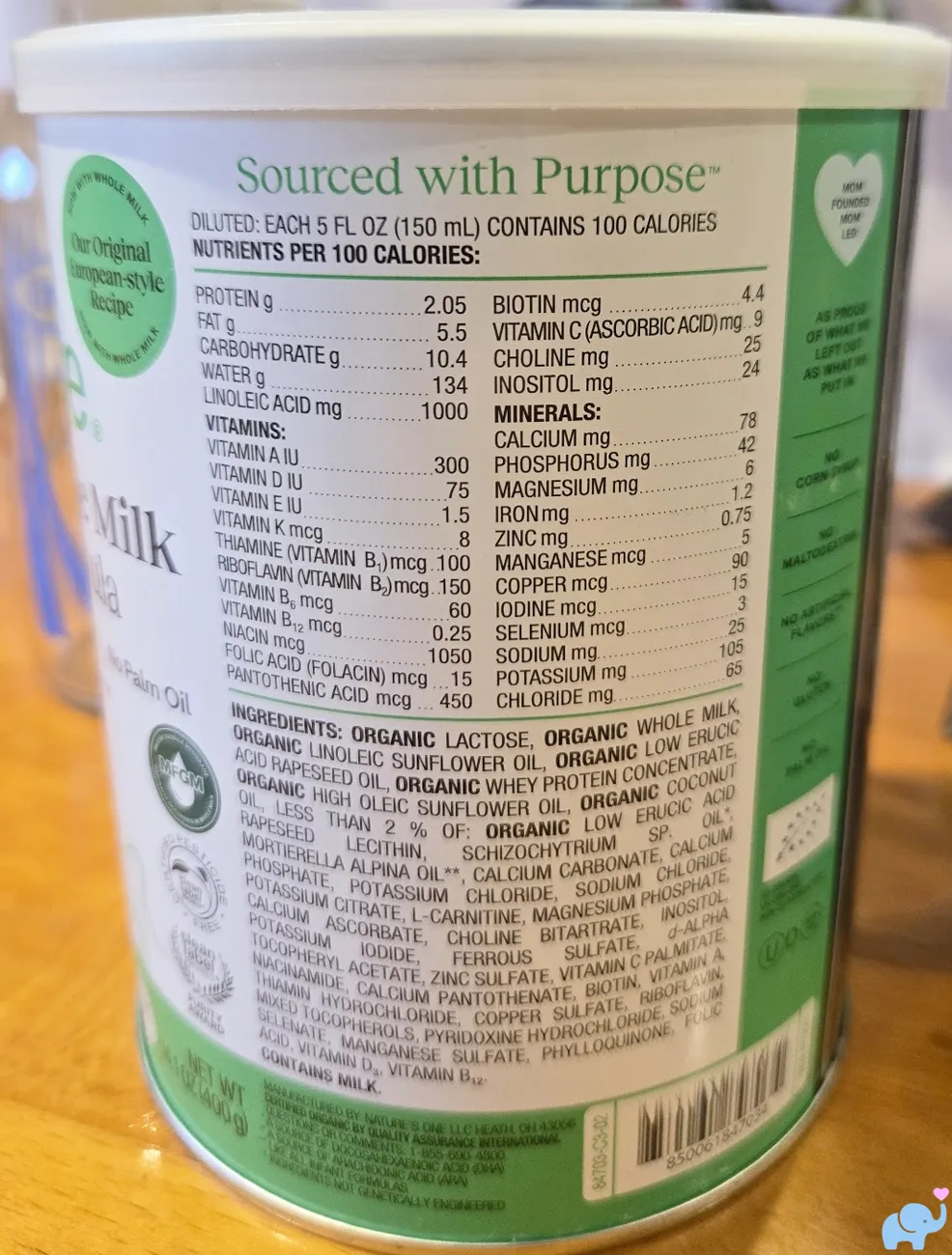
Whey and casein behave differently during digestion, and the ratio makes a useful point of comparison with breast milk. But it doesn't make bovine proteins identical to human milk proteins, and a 60:40 ratio doesn't necessarily guarantee that your baby will show better tolerance (Donovan, 2019).
We also checked the new formulation's physical nutrition label: it lists 2.05 g protein, 5.5 g fat, 10.4 g carbohydrate, and 1.2 mg iron per 100 calories. That's a complete, iron-fortified infant formula, which is great to see.
7. Babies Love It!
Here's where we put the science aside for a moment: we've had a fantastic experience with this formula.
That's one of the many reasons why Bobbie is featured on our list of the best organic baby formulas!
The babies in our circle who have tried it have generally taken to it well, including babies who normally breastfeed. Friends, family, and neighbors have shared similarly encouraging experiences.

Of course, that's personal feedback, not a controlled test of acceptance or digestion, and every baby has different preferences.
But when a family needs an occasional or regular formula bottle, whether the baby happily accepts it or not matters a lot!
In our experience, Bobbie passed that test with flying colors.
Preparing a Bottle: Our Hands-On Experience
Bobbie was easy to scoop and mix in our testing.
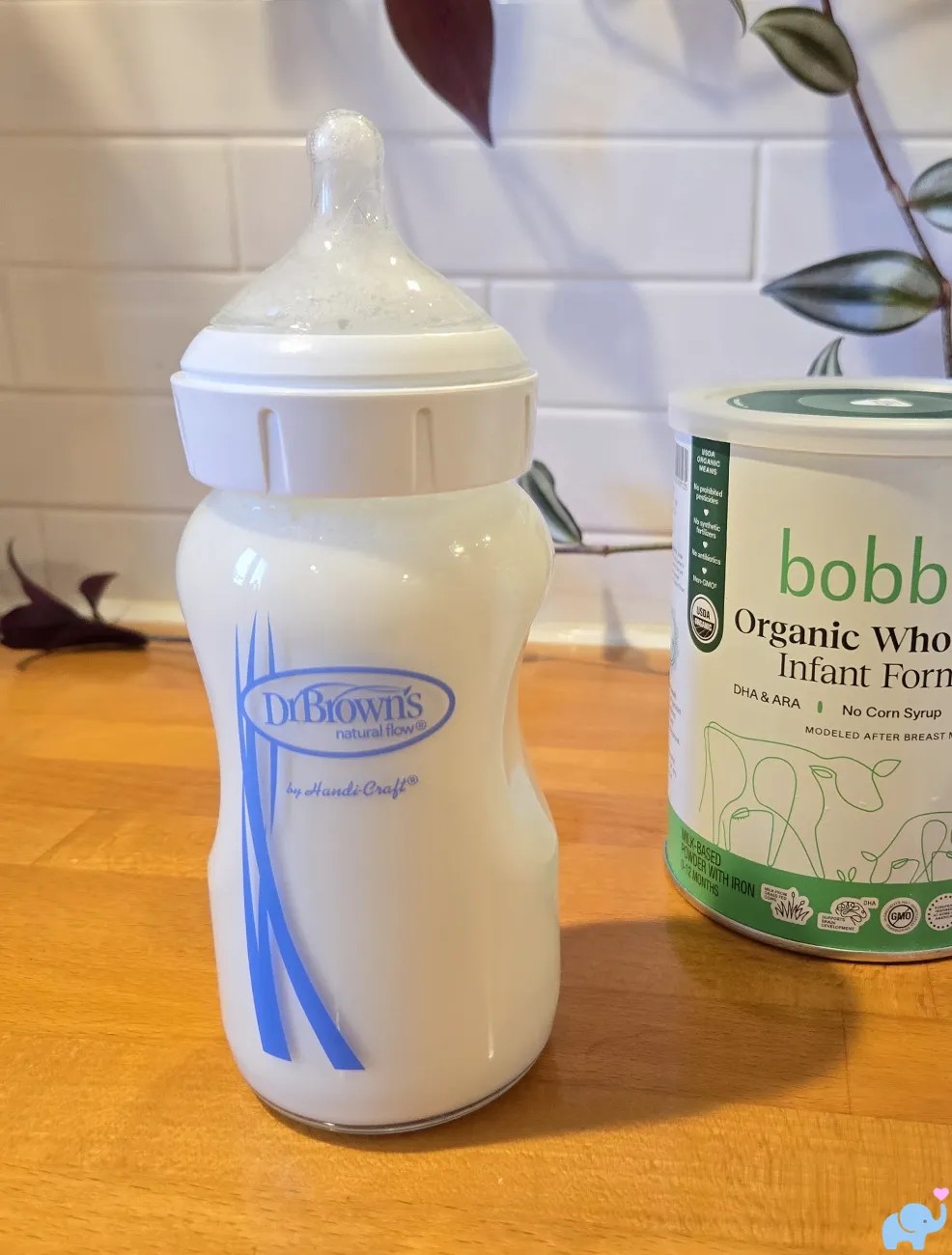
For our demonstration, we measured 8 fluid ounces of water first, added four unpacked, level scoops using the provided scoop, then capped and shook the bottle.
The powder dissolved well, with no visible clumps at the bottom and surprisingly little foam.
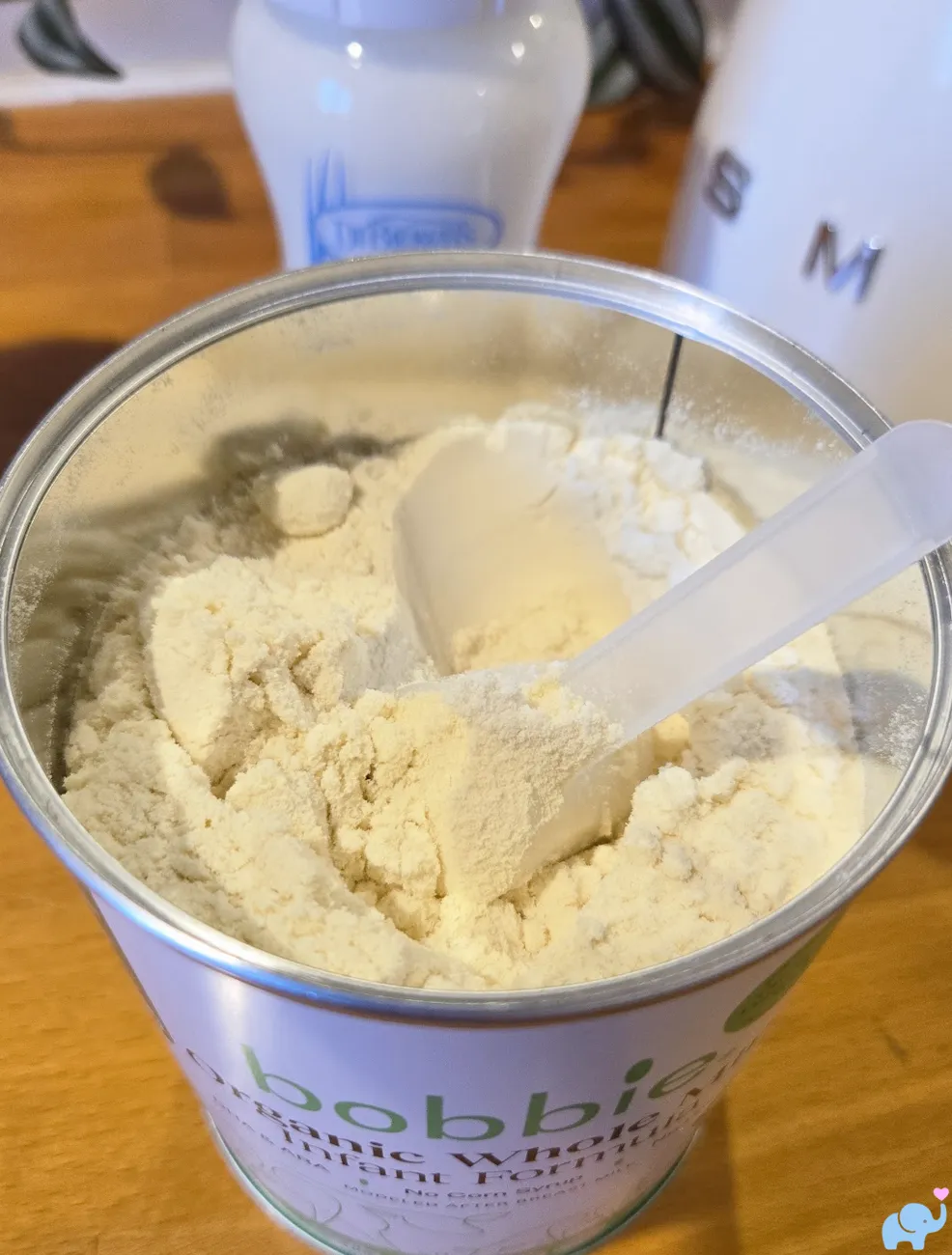
Always follow the exact directions on your can, including water-to-powder proportions and safe handling; an eight-ounce preparation is just our demonstration, not a suggested amount for every baby.
The label's preparation instructions are pictured below.
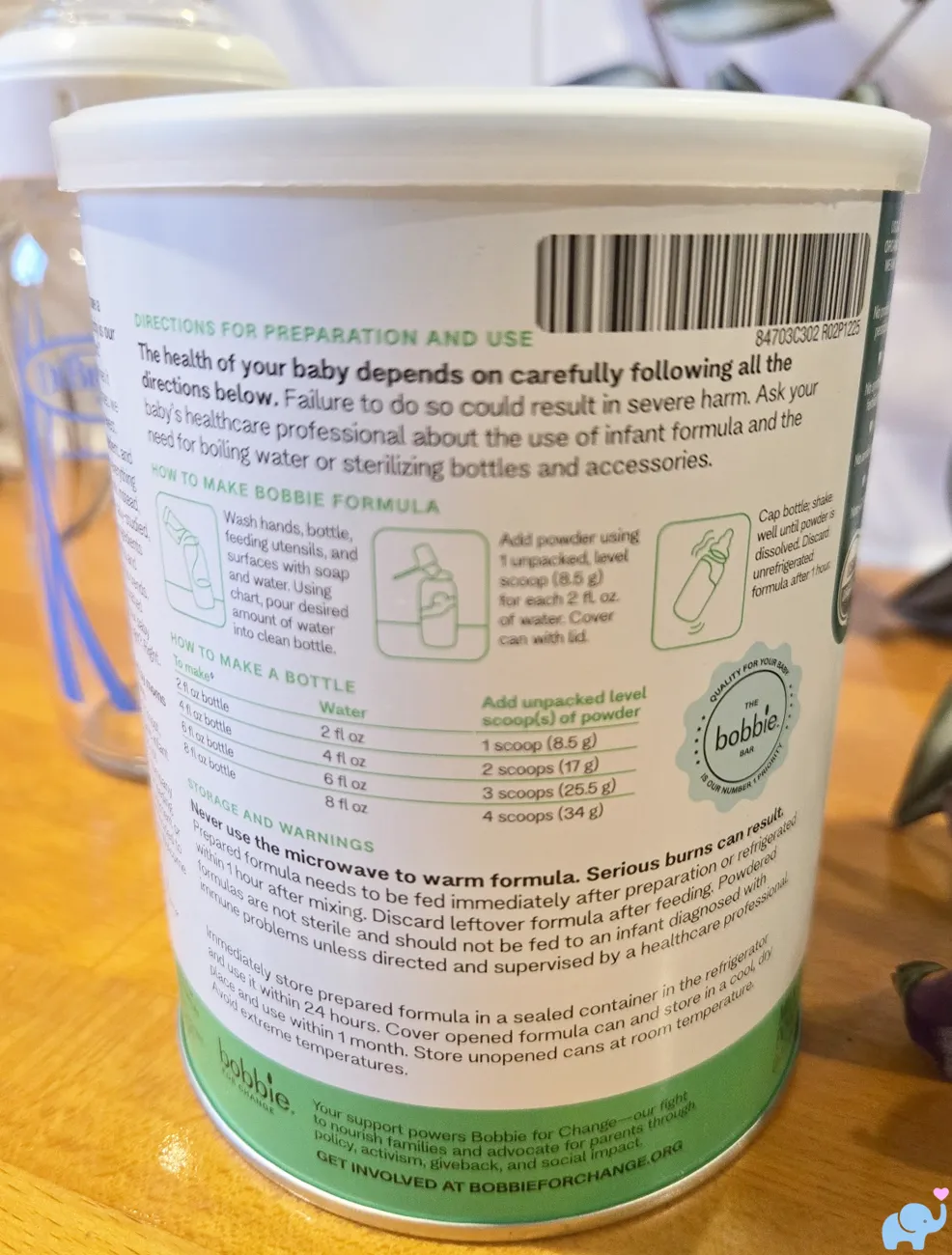
We measured one finished bottle at about 93°F, but formula doesn't need to be served warm.
Powdered formula is not sterile, and extra preparation precautions apply for babies younger than two months, premature babies, and babies with weakened immune systems.
The CDC preparation guide explains these precautions and storage limits.
Our Conclusions
We think Bobbie Organic Whole Milk is an excellent option to consider for supplementing breastfeeding.
The revised whole-milk-only dairy base, naturally occurring MFGM, lactose-based carbohydrates, whey-to-casein balance, and independent testing all make it stand out to us. It's a formidable competitor to Kendamil organic baby formula, which also has a whole milk base.
Most importantly, we've loved using it!
Of course, no formula is breast milk, and nutritional similarities alone don't demonstrate that one formula is uniquely better for combination-fed babies.
The right formula is one that's safe, nutritionally appropriate, tolerated by your baby, and practical for your family.
For families planning to combination feed, remember that regularly replacing nursing sessions without expressing milk can affect supply. Feeding plans can be individualized with a pediatrician or lactation professional.
Bottom line: The newest Bobbie Organic Whole Milk is one of our favorite formulas to recommend considering for families who want to breastfeed and bottle-feed. Highly recommended!
Frequently Asked Questions
Can I use Bobbie Organic Whole Milk while continuing to breastfeed?
Yes. It is a standard, iron-fortified infant formula and can be used for some feedings while continuing to breastfeed, assuming it suits your baby's needs. It isn't necessary to use a special "supplementing" formula.
Does the new Bobbie Organic Whole Milk formula contain nonfat milk?
No. The revised 2026 formula we purchased lists organic whole milk and organic whey protein concentrate, but no nonfat milk. Older packaging may still use the previous recipe.
Is Bobbie Organic Whole Milk the same as breast milk?
No. It shares some macronutrient characteristics with mature human milk but doesn't reproduce human milk's full array of antibodies, HMOs, and other bioactive factors.
Is it suitable for babies with cow's milk protein allergy?
No. It contains intact cow's milk proteins and isn't a hypoallergenic formula. Consult your pediatrician about an appropriate alternative if your baby has a diagnosed or suspected allergy.
Research & Sources
Our ingredient and nutrient descriptions are based on the physical can of Bobbie's revised 2026 formula and information confirmed with Bobbie.
The following publications provide background on infant nutrition and formula composition; studies of experimental formulas are not clinical trials of Bobbie.
- Ballard O, Morrow AL (2013). Human milk composition: nutrients and bioactive factors. Pediatric Clinics of North America.
- Larson-Nath C, et al. (2025). Term infant formula macronutrient composition: An update for clinicians. Journal of Pediatric Gastroenterology and Nutrition.
- Donovan SM (2019). Human milk proteins: composition and physiological significance. Nestlé Nutrition Institute Workshop Series.
- Looijesteijn E, et al. (2022). Effect of bovine milk fat-based infant formulae on microbiota, metabolites and stool parameters. BMC Nutrition.
- Timby N, et al. (2014). MFGM-enriched experimental infant formula and neurodevelopment. American Journal of Clinical Nutrition.
- Thongseiratch T, et al. (2024). Bovine MFGM supplementation and neurocognitive development: a systematic review and meta-analysis. Nutrients.
- Jasani B, et al. (2017). Long-chain polyunsaturated fatty acid supplementation in term infants. Cochrane Database of Systematic Reviews.
- Consumer Reports (2026). Best Organic Baby Formulas From Our Tests.
- CDC (2026). Infant Formula Preparation and Storage.
