
Gentle vs. Regular Baby Formula: Differences and Pros/Cons
Understanding what makes gentle baby formula different from regular formula is essential before making the switch.

 By: Tali Ditye, Ph.D., Co-founder
Mommyhood101 independently curates baby gear to help inform decisions; if you buy through links on our site, we may earn a commission.
For many parents, the search for a gentle formula begins after a few uncomfortable days or weeks: lots of gas, seemingly endless fussiness, hard stools, spit-up, straining, or a baby who just doesn't seem happy after feeding.
It is understandable to wonder whether the formula is the problem.
Sometimes a change really does help. But babies also naturally experience gas, reflux, crying, straining, and changing stool patterns as their digestive systems mature. A gentle formula is therefore best viewed as one possible feeding option, not a solution for every uncomfortable baby.
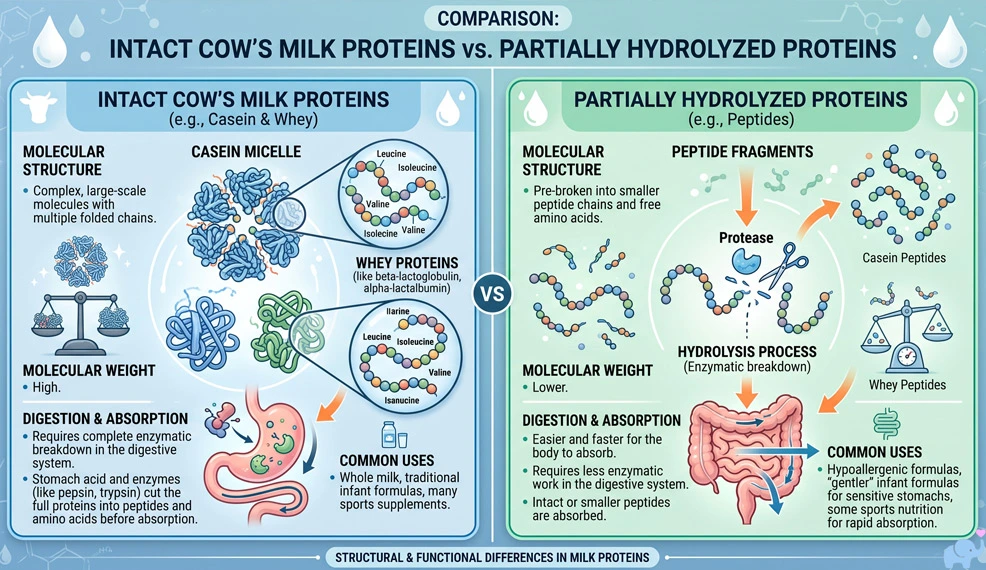
The biggest difference is usually the protein. Most regular cow's-milk formulas contain relatively intact milk proteins, while many gentle formulas use partially hydrolyzed proteins that have already been broken into smaller peptide fragments. Some gentle formulas also contain less lactose, use alternative carbohydrates, or add ingredients such as HMOs, prebiotics, or probiotics.
The short version: Gentle formulas can change how protein and carbohydrate are presented to the digestive system and may improve tolerance for some babies. They remain complete infant formulas, but it's important to realize that they are not hypoallergenic and are not automatically healthier, better, or easier to digest for every infant.
For our favorite products in this category, see our list of the best gentle baby formulas.
-
- Gentle vs. Regular Formula: Quick Comparison
- What Is Gentle Baby Formula?
- Why Do Parents Choose Gentle Formula?
- How Does Gentle Formula Change Digestion?
- Partially Hydrolyzed Protein
- Lactose and Alternative Carbohydrates
- HMOs, Prebiotics & Probiotics
- How Gentle Formula Can Change Poop
- Does Gentle Formula Actually Work?
- Potential Downsides of Gentle Formula
- Gentle vs. Sensitive vs. Hypoallergenic Formula
- Gentle Formula and Cow's-Milk Protein Allergy
- When Might Gentle Formula Be Worth Considering?
- When to Call Your Pediatrician
- Switching to a Gentle Formula
- How to Choose a Gentle Formula
- Frequently Asked Questions
- Conclusions
- Scientific References
Important: This article is intended for general educational purposes and is not a substitute for individualized medical advice. Infant feeding problems can have many causes. Contact your pediatrician if your baby has persistent vomiting, blood in the stool, poor weight gain, significant feeding refusal, hives, swelling, breathing problems, dehydration, severe diarrhea or constipation, or other concerning symptoms.
Gentle vs. Regular Baby Formula: Quick Comparison
There is no single recipe shared by every product labeled "gentle." However, most gentle formulas differ from standard infant formula primarily in their protein structure, and many also change the carbohydrate blend.
| Feature | Regular Formula | Gentle Formula |
|---|---|---|
| Protein | Usually intact cow's-milk proteins | Often partially hydrolyzed milk or whey protein |
| Protein Size | Larger intact proteins | Proteins enzymatically broken into smaller peptides |
| Lactose | Often the main carbohydrate | May contain normal, reduced, or very little lactose |
| Alternative Carbohydrates | Less commonly dominant | May include corn syrup solids or maltodextrin |
| HMOs/Prebiotics/Probiotics | Varies widely | Varies widely; not required for a formula to be gentle |
| Taste | Generally mild and milk-like | Hydrolysis can produce a somewhat different taste or odor |
| Designed For | Healthy infants without specialized feeding needs | Healthy infants who may experience mild digestive intolerance with standard formula |
| Hypoallergenic? | No | No |
Both standard and gentle infant formulas marketed in the United States must comply with FDA requirements for infant-formula nutrition, manufacturing, and labeling. A gentle formula is therefore not nutritionally "watered down" simply because its protein has been hydrolyzed.
What Is Gentle Baby Formula?
The word gentle describes a general style of infant formula rather than one standardized recipe.
In most products, the defining feature is partially hydrolyzed cow's-milk protein. Manufacturers use enzymes during production to break large milk proteins into smaller peptide fragments before the formula reaches your baby's bottle.
You will sometimes see this described as "easy-to-digest protein" or proteins that have been "broken down into smaller pieces."
That description is broadly accurate, but it can also be misleading if taken too far. Gentle formula is not "predigested." Your baby's stomach and intestines still perform normal digestion and absorption.
There are also substantial differences among gentle formulas. One might contain 100% partially hydrolyzed whey with lactose as its carbohydrate, while another might contain partially hydrolyzed whey and casein with very little lactose and corn syrup solids as its main carbohydrate.
Another might add HMOs and probiotics.
That means two cans that both say Gentle on the front can actually be quite different.
Why Do Parents Choose Gentle Formula?
The most common reasons involve everyday gastrointestinal symptoms:
- Gas
- Fussiness after feeding
- Straining during bowel movements
- Hard or uncomfortable stools
- Frequent burping
- Spit-up or regurgitation
- Abdominal discomfort
- Difficulty transitioning from breast milk to formula
- Poor tolerance of a previous standard formula
These symptoms can certainly motivate a reasonable formula change, but they also deserve perspective.
Crying, gas, spit-up, and changing stool habits are extremely common in healthy infants. A baby's gastrointestinal tract is developing rapidly during the first months of life, babies swallow air during feeds, the valve between the stomach and esophagus is immature, and infants have not yet mastered the coordination involved in passing stool.
In other words, a baby can appear "sensitive" even when there is nothing wrong with the formula.
This is one reason formula tolerance can be so difficult to evaluate. Parents often switch formula at approximately the same time that a baby's digestive system would have improved naturally.
That doesn't mean switching never helps. It simply means that improvement following a formula change does not always prove that intact protein or lactose was responsible for the original symptoms.
Common Reasons Parents Try Gentle Formula
| Parent Concern | What Gentle Formula Changes | Important Context |
|---|---|---|
| Gas | Smaller protein peptides; sometimes less lactose | Gas is extremely common in young infants and can also result from swallowed air or feeding technique |
| Fussiness | Protein structure and sometimes carbohydrate blend | Crying and fussiness have many causes; evidence that hydrolyzed formula reliably improves colic is inconsistent |
| Hard Stools | Protein, carbohydrate, prebiotic, and fat composition may differ | Certain gentle formulas have produced softer stools in clinical studies, but the effect is formula-specific |
| Spit-Up | Protein hydrolysis may alter gastric behavior | Simple infant reflux is common; thickened anti-reflux formulas target regurgitation more directly |
| Possible Lactose Sensitivity | Some formulas substantially reduce lactose | True lactose intolerance is uncommon in young infants |
| Possible Milk Allergy | Protein is only partially hydrolyzed | Gentle formula is not appropriate treatment for cow's-milk protein allergy |
How Does Gentle Formula Change Digestion?
Gentle formulas can alter digestion in several different ways. It is useful to separate those mechanisms because they are often lumped together in marketing.
The main variables are:
1. Protein size.
2. Whey-versus-casein composition.
3. Lactose content.
4. Alternative carbohydrate sources.
5. Fat composition.
6. Prebiotics, probiotics, and HMOs.
Any combination of these can influence what happens in the stomach and intestines.
1. Partially Hydrolyzed Protein
Protein is made from chains of amino acids. In standard cow's-milk formula, many of those proteins remain relatively intact when you scoop the powder into the bottle.
In a partially hydrolyzed formula, enzymes have already cut many of those protein chains into smaller peptides.
Your baby's digestive system would normally perform this type of protein breakdown using stomach acid and digestive enzymes. Partial hydrolysis therefore changes the form in which the protein first arrives in the gastrointestinal tract.
Research suggests that partially hydrolyzed formulas are capable of supporting normal infant growth and are generally well tolerated. Some studies also report differences in gastrointestinal tolerance compared with intact-protein formulas.
However, the magnitude of hydrolysis varies considerably among products, and the entire formula matters. A formula's carbohydrate, prebiotic, probiotic, HMO, and fat composition can influence digestive outcomes alongside the protein.
That is why we would be skeptical of any claim that partially hydrolyzing the protein alone guarantees a happier tummy.
Does Smaller Protein Mean Faster Digestion?
Potentially, but the answer is more complicated than it sounds.
Protein structure can influence how formula behaves in the stomach, including curd formation, protein digestion, and gastric emptying. Reviews of the available evidence suggest that hydrolysis may alter gastric emptying under some conditions, but studies differ considerably in formula composition and methodology.
So while "smaller proteins may be easier to digest" is a reasonable shorthand, it should not be interpreted as meaning that every partially hydrolyzed formula empties from the stomach faster or causes fewer digestive symptoms.
2. Lactose and Alternative Carbohydrates
Protein hydrolysis and lactose reduction are completely different things, but gentle formulas frequently change both at the same time.
Lactose is the major carbohydrate naturally found in human milk. Healthy young infants normally produce large amounts of lactase, the intestinal enzyme needed to break lactose into glucose and galactose for absorption.
True congenital lactase deficiency is extremely rare.
Temporary lactose malabsorption can occur after significant gastrointestinal illness because lactase is located near the tips of the intestinal villi and can be reduced when the intestinal lining is injured. This is known as secondary lactase deficiency.
Some gentle and sensitive formulas therefore reduce lactose substantially and replace it with other carbohydrate sources, such as:
- Corn syrup solids
- Maltodextrin
- Other glucose polymers
These ingredients are not the same thing as high-fructose corn syrup. Corn syrup solids and maltodextrin used in infant formula are predominantly glucose-based carbohydrate sources.
If lactose is poorly absorbed, it can travel into the colon where bacteria ferment it, potentially producing gas and drawing additional water into the bowel. In an infant who actually has reduced lactase activity, lowering the lactose load can therefore make physiological sense.
But because most healthy infants digest lactose normally, we do not consider "less lactose" automatically better.
Some of our favorite gentle formulas retain lactose while modifying the protein, whereas others reduce lactose dramatically. You can see those differences in our best gentle baby formula comparison.
3. HMOs, Prebiotics, and Probiotics
Modern gentle formulas sometimes include additional ingredients intended to influence the developing intestinal microbiome.
Human milk oligosaccharides (HMOs) are complex carbohydrates naturally found in human milk. Infants do not simply digest them for calories; HMOs interact with intestinal microorganisms and the developing gut environment.
Formula manufacturers can now produce individual HMOs such as 2'-FL, LNnT, LNT, 3-FL, 3'-SL, and 6'-SL.
Prebiotics such as GOS, FOS, and PDX are carbohydrates designed to serve as substrates for selected intestinal bacteria.
Probiotics are live microorganisms added directly to the formula.
These ingredients may influence stool consistency, stool frequency, and microbiome composition, but their effects are ingredient- and strain-specific. A formula should not automatically be considered superior simply because the label contains a longer list of HMOs or probiotics.
It is also important to remember that these additions are not what makes a formula "gentle." Some excellent gentle formulas contain them, while others do not.
4. The Fat Blend Can Matter Too
Protein and lactose receive most of the attention, but formula fat composition can also influence digestion and stool characteristics.
Infant formulas typically combine oils such as:
- Sunflower or safflower oil
- Coconut oil
- Canola oil
- Soybean oil
- Palm or palm-olein oil
Palm olein is widely used as a source of palmitic acid. Studies have found that the position of palmitic acid within palm oil differs from much of the palmitic acid in human milk, which can influence calcium and fat absorption and may contribute to firmer stools in some infants.
This does not make palm olein unsafe, but it helps explain why two gentle formulas using similar proteins can still produce different stool patterns.
How Can Gentle Formula Change a Baby's Poop?
This is one of the first things parents notice after switching formulas.
Changing formula can alter:
- Stool frequency
- Stool firmness
- Color
- Odor
- Amount
Studies of selected partially hydrolyzed formulas have reported softer or more frequent stools, particularly when the formula also contains specific prebiotic or fat blends.
Green stool is also relatively common with formulas containing hydrolyzed proteins and does not, by itself, indicate that something is wrong.
Parents sometimes become concerned when a baby's stool suddenly becomes darker green, looser, firmer, or more frequent after a switch. Some change during a formula transition can be normal.
What matters more is the baby's overall condition.
Blood in the stool, persistent watery diarrhea, significant pain, dehydration, white or clay-colored stool, or black tarry stool should be discussed with a healthcare professional rather than attributed simply to a new formula.
Does Gentle Formula Actually Work?
This is where marketing and science sometimes drift apart.
There is good evidence that appropriately formulated partially hydrolyzed formulas can provide adequate nutrition and support normal growth in healthy term infants.
There is also evidence that certain formulations can improve particular measures of gastrointestinal tolerance, including stool consistency and frequency.
What the research does not establish is that every fussy, gassy, refluxing, or colicky infant will improve simply by changing to partially hydrolyzed protein.
A Cochrane review examining dietary interventions for infantile colic found inconsistent evidence for hydrolyzed formulas and concluded that the available evidence was insufficient to recommend a particular dietary intervention.
That distinction is important.
There is a major difference between:
"This type of formula is safe and may improve tolerance in some infants."
and:
"This formula will fix your baby's gas and fussiness."
The first statement is reasonable. The second is not supported.
Why Do Some Babies Improve Dramatically?
There are several possibilities.
A baby may genuinely tolerate the different protein structure better.
A reduced-lactose formula may help if temporary lactose malabsorption is present.
A different prebiotic, probiotic, HMO, or fat blend may change stool consistency or intestinal fermentation.
The baby's previous formula may simply have been a poor individual fit.
Or the timing may be coincidental: infant crying, gas, and digestive discomfort often improve naturally as the gastrointestinal and nervous systems mature.
Real-world parent experiences therefore matter, but they cannot tell us which ingredient caused the improvement.
Potential Downsides of Gentle Baby Formula
Gentle formula is perfectly appropriate for many infants, but there are several reasons not to automatically choose it over standard formula.
1. It May Not Help
The most important limitation is simple: your baby may tolerate a gentle formula exactly the same, or even less well, than a standard formula.
Digestive tolerance is highly individual.
A baby might develop more gas on one partially hydrolyzed formula, harder stools on another, or more spit-up after switching to a formula that another parent describes as miraculous.
2. Some Gentle Formulas Replace Much of the Lactose
Lactose is the predominant carbohydrate in human milk and is normally well tolerated by healthy infants.
Some parents specifically prefer a lactose-based formula and may be surprised to discover that corn syrup solids or maltodextrin are the primary carbohydrate in their gentle formula.
We do not consider these alternative carbohydrates inherently unsafe, but they produce a carbohydrate profile that is different from human milk.
3. Hydrolyzed Protein Can Taste Different
Breaking proteins into smaller peptides can create bitter, sour, or savory flavor notes.
The effect tends to become more pronounced as hydrolysis becomes more extensive, which is why extensively hydrolyzed hypoallergenic formulas are especially well known for having a distinctive smell and taste.
Partially hydrolyzed gentle formulas are generally milder, but some babies still notice the difference.
Interestingly, research suggests that infants exposed to hydrolyzed formulas early in life can become accustomed to their unusual flavor profile.
4. The Formula May Cost More
Protein hydrolysis and premium digestive ingredients can increase manufacturing cost.
Some name-brand gentle formulas are substantially more expensive than their standard counterparts.
Fortunately, generic and warehouse-club gentle formulas can offer similar basic protein designs at much lower prices.
5. It Can Be Harder to Determine What Actually Helped
Suppose a parent changes from a standard formula to one with hydrolyzed protein, reduced lactose, a different oil blend, two HMOs, and a probiotic.
The baby improves.
What fixed the problem?
There is really no way to know.
This is one reason comparing formula solely according to the word Gentle on the front of the package can be misleading.
6. Frequent Formula Switching Can Create More Confusion
When a baby is uncomfortable, the temptation is to move rapidly from one formula to another.
But every change can produce temporary differences in stooling, taste acceptance, feeding volume, and gastrointestinal behavior.
Constant switching can make it difficult to identify whether any particular formula is actually helping.
If symptoms are significant enough to prompt repeated formula changes, we recommend discussing them with your pediatrician.
7. Gentle Formula Can Delay Recognition of a Different Problem
A baby with persistent symptoms may have something other than ordinary formula intolerance.
Potential explanations range from feeding technique and nipple flow to reflux, infection, cow's-milk protein allergy, or another gastrointestinal or medical condition.
A gentle formula should not become a substitute for evaluation when symptoms are severe or persistent.
Gentle vs. Sensitive vs. Hypoallergenic Formula
This is probably the most confusing part of the formula aisle.
| Formula Type | Typical Protein | Typical Lactose | Common Purpose | For Milk Allergy? |
|---|---|---|---|---|
| Standard / Regular | Intact cow's-milk protein | Usually substantial | Routine infant feeding | No |
| Gentle / Comfort | Usually partially hydrolyzed | Varies from full lactose to very low lactose | Mild digestive sensitivity, gas, fussiness, stool concerns | No |
| Sensitive | May remain intact; varies by brand | Usually reduced substantially | Lactose-related sensitivity or digestive complaints | No |
| Extensively Hydrolyzed / Hypoallergenic | Extensively broken-down milk protein | Varies | Cow's-milk protein allergy and selected medical indications | Often first-line under medical guidance |
| Amino Acid | Free amino acids rather than intact milk protein | Usually none | Severe or refractory cow's-milk protein allergy and other specialized indications | Yes, when medically indicated |
Brand terminology varies, so always look beyond the product name and read the actual protein and carbohydrate sources.
Gentle Formula Is Not Hypoallergenic
This deserves its own section because the distinction is extremely important.
Cow's-milk protein allergy is an immune reaction to proteins in cow's milk.
Partially hydrolyzing those proteins makes them smaller, but it does not eliminate their allergenic potential.
A baby with cow's-milk protein allergy can therefore still react to a gentle formula.
Current pediatric gastroenterology guidance generally uses an extensively hydrolyzed formula as the first formula option for many formula-fed infants with confirmed cow's-milk allergy, with amino-acid formulas reserved for selected cases.
Gentle formula should therefore not be used as a do-it-yourself test or treatment for suspected milk allergy.
Milk Allergy Is Also Easy to Over-Suspect
The opposite problem also occurs.
Parents understandably associate symptoms such as crying, reflux, gas, stool changes, or rash with something the baby is eating. However, these symptoms are far more common than confirmed cow's-milk allergy.
The 2024 ESPGHAN position paper specifically warns that cow's-milk allergy is frequently overdiagnosed and notes that common stool changes and feeding behaviors should not automatically be interpreted as milk allergy.
If allergy is genuinely suspected, diagnosis is better guided by a pediatrician than by moving progressively from regular formula to gentle, sensitive, hypoallergenic, and amino-acid formula without a clear plan.
When Might Gentle Formula Be Worth Considering?
A gentle formula can be a reasonable option to discuss when an otherwise healthy, normally growing baby repeatedly seems uncomfortable on a standard formula and there are no signs suggesting a more serious problem.
Examples might include:
- Persistent mild gas or fussiness associated with feeding
- Repeated difficulty tolerating intact-protein formula
- Hard or uncomfortable stools
- A preference for trying partially hydrolyzed protein before moving to a more specialized formula
- Temporary digestive sensitivity following gastrointestinal illness, depending on the formula's lactose content and the pediatrician's advice
For families who decide to try one, our best gentle baby formulas list compares protein sources, carbohydrates, HMOs, probiotics, certifications, price, preparation, and parent feedback across our favorite options.
When a Formula Switch Is Not Enough
Contact your baby's healthcare provider if feeding problems involve:
- Blood in the stool
- Repeated forceful or projectile vomiting
- Green or bilious vomit
- Persistent diarrhea
- Severe constipation
- Hives
- Facial or lip swelling
- Wheezing or difficulty breathing
- Significant eczema associated with feeding symptoms
- Poor feeding or feeding refusal
- Fewer wet diapers or signs of dehydration
- Poor weight gain
- Extreme lethargy
- A baby who appears acutely ill
Breathing difficulty, significant swelling, or signs of a severe allergic reaction require urgent medical attention.
These symptoms should not simply be managed by experimenting with increasingly specialized formulas.
How to Switch to a Gentle Formula
Many healthy babies can change formulas without a complicated transition plan, but some parents prefer a more gradual change because the taste and stool pattern may differ.
Your pediatrician can advise you on the most appropriate approach for your baby.
Whatever method you use, never improvise the water-to-powder ratio.
Different formulas can use different scoop sizes and preparation ratios. Always prepare formula according to the exact instructions printed on that product's label.
Too little water can cause dehydration and excessive nutrient concentrations. Too much water can provide inadequate calories and dangerously disturb electrolyte balance.
Expect Some Differences
When changing formula, you may notice:
- A different smell
- A slightly different flavor
- Green or darker stools
- Different stool frequency
- Changes in stool softness
- Temporary differences in gas
- Different powder-mixing behavior
These changes do not necessarily mean the formula is failing.
Powdered Formula Is Not Sterile
Remember that powdered infant formula can contain microorganisms even when properly manufactured.
Wash your hands before preparation, keep the scoop dry, use safe water, clean feeding equipment carefully, and follow the package instructions for preparation and storage.
FDA recommends additional precautions for babies at increased risk of Cronobacter infection, including infants younger than two months, premature babies, and infants with weakened immune systems. Ready-to-feed liquid formula is commercially sterile before opening and may be preferable for some higher-risk infants.
How to Choose a Gentle Baby Formula
Once you have decided that gentle formula makes sense, look beyond the marketing claims on the front of the container.
We recommend comparing:
✔️ Type of partially hydrolyzed protein.
✔️ Whey versus whey-and-casein composition.
✔️ Lactose content.
✔️ Alternative carbohydrate sources.
✔️ HMOs.
✔️ Prebiotics.
✔️ Probiotics.
✔️ DHA and ARA.
✔️ Fat and oil blend.
✔️ Palm-oil content.
✔️ Organic or non-GMO certifications, if important to your family.
✔️ Manufacturing and recall history.
✔️ Mixing and preparation.
✔️ Ready-to-feed availability.
✔️ Reliable local availability.
✔️ Cost.
For example, some families prioritize a formula that combines partially hydrolyzed whey with lactose as the main carbohydrate. Others care more about HMOs and probiotics. Others simply need something their baby tolerates well that is consistently available and affordable.
There is no universal winner.
The best formula is ultimately one that is nutritionally appropriate, reliably available, affordable for your family, prepared correctly, and well tolerated by your baby.
Frequently Asked Questions About Gentle Baby Formula
Is gentle formula easier to digest than regular formula?
Many gentle formulas use partially hydrolyzed proteins that have been broken into smaller peptides before feeding. This changes the digestive workload and may improve gastrointestinal tolerance for some babies, but clinical evidence does not show that every baby digests or tolerates gentle formula better than standard formula.
Is gentle formula healthier than regular formula?
No. Both standard and gentle infant formulas marketed in the United States must meet applicable FDA nutritional requirements. Gentle formula is a different formulation strategy rather than a nutritionally superior category.
Can I use gentle formula from birth?
A gentle infant formula labeled for use from birth can generally serve as a complete source of infant nutrition when used according to its labeling. Specialized medical circumstances may require a different feeding plan.
Does gentle formula have less milk protein?
Not necessarily. The important difference is generally the structure of the protein rather than simply the amount. Partially hydrolyzed formulas break some milk proteins into smaller peptides while still providing the protein needed for infant nutrition.
Does gentle formula contain dairy?
Most gentle formulas do. Partially hydrolyzed whey and casein are still cow's-milk proteins.
Is gentle formula dairy-free?
Usually not. Check the ingredient list of the specific product.
Is gentle formula lactose-free?
Not necessarily. Some gentle formulas contain normal or substantial amounts of lactose, while others are reduced-lactose or contain very little lactose.
Is lactose bad for babies?
No. Lactose is the predominant carbohydrate in human milk, and most healthy infants are well equipped to digest it.
How common is lactose intolerance in babies?
Primary lactose intolerance is uncommon in young infants, and congenital lactase deficiency is extremely rare. Temporary secondary lactose malabsorption can occur after intestinal illness or injury.
Why do some gentle formulas contain corn syrup solids?
When manufacturers reduce lactose, they need another carbohydrate source to provide energy. Corn syrup solids and maltodextrin are glucose-based carbohydrates commonly used for this purpose in infant formula.
Are corn syrup solids the same as high-fructose corn syrup?
No. Corn syrup solids used in infant formula are predominantly glucose-based carbohydrate ingredients and should not be confused with high-fructose corn syrup.
Does gentle formula help gas?
It may help some babies, but gas is also a normal part of infancy and can result from swallowed air, bottle technique, intestinal fermentation, or normal gastrointestinal development. A gentle formula is not guaranteed to reduce it.
Does gentle formula help constipation?
Certain partially hydrolyzed formulas have been associated with softer or more frequent stools, but this depends on the entire formula, including its protein, fat, carbohydrate, and prebiotic composition.
Does gentle formula help reflux?
Some babies may tolerate a partially hydrolyzed formula differently, but ordinary gentle formula is not necessarily designed specifically for reflux. Formulas thickened for regurgitation target spit-up through a different mechanism.
Does gentle formula help colic?
Evidence is mixed. Some studies have reported improvements with particular hydrolyzed formulations, but systematic reviews have not established partially hydrolyzed formula as a universally effective treatment for infantile colic.
Does gentle formula prevent milk allergy?
Gentle formula should not be selected on the assumption that partially hydrolyzed protein will reliably prevent cow's-milk allergy. Allergy prevention and allergy treatment are separate questions from everyday formula tolerance.
Is gentle formula hypoallergenic?
No. The partially hydrolyzed proteins in gentle formula can still trigger reactions in infants with cow's-milk protein allergy.
What formula is used for cow's-milk protein allergy?
Extensively hydrolyzed formulas are commonly used as a first-line formula option for many infants with cow's-milk protein allergy, while amino-acid formulas may be required in selected cases. Formula choice should be made with a healthcare professional.
Why does gentle formula sometimes smell different?
Protein hydrolysis creates smaller peptides and free amino acids that can produce more noticeable bitter, sour, or savory flavor and odor characteristics. The effect is usually stronger in extensively hydrolyzed formulas than in partially hydrolyzed gentle formulas.
Why did my baby's poop turn green after switching to gentle formula?
Green stools are commonly reported with hydrolyzed-protein formulas and can be normal if your baby is otherwise comfortable, feeding well, and growing normally.
Should every gassy baby use gentle formula?
No. Gas is extremely common during infancy and does not necessarily indicate formula intolerance.
Can I switch back to regular formula later?
Many babies who tolerate gentle formula can later use standard formula, but there is no need to switch simply for the sake of switching if your current formula is nutritionally appropriate, affordable, available, and working well. Discuss changes with your pediatrician when there is a medical concern.
Is organic gentle formula better?
Organic certification concerns how eligible agricultural ingredients are produced and processed. It does not make a formula inherently easier to digest. Protein structure and the overall formula composition are more directly relevant to whether a product is considered gentle.
Which gentle formula is best?
There is no single formula that works best for every infant. Our current favorites balance partially hydrolyzed proteins with thoughtful carbohydrate sources, nutritional ingredients, sourcing, safety history, preparation, acceptance, and price. See our complete ranking of the best gentle baby formulas here.
Conclusions
Gentle baby formula can be a useful middle ground between standard cow's-milk formula and medically specialized hypoallergenic formula.
The most important difference is usually partial protein hydrolysis. Instead of providing only intact cow's-milk proteins, gentle formulas break some or all of those proteins into smaller peptide fragments before feeding. Depending on the product, the formula may also reduce lactose, use alternative carbohydrates, or add HMOs, prebiotics, and probiotics.
Those changes can influence digestion, gastric behavior, intestinal fermentation, stool consistency, and the developing microbiome. Clinical research shows that properly formulated partially hydrolyzed formulas support normal infant growth, and some formulas improve selected measures of gastrointestinal tolerance.
But gentle formula is not magic.
Gas, crying, spit-up, straining, and irregular stool patterns are incredibly common during normal infancy, and research does not show that every baby experiencing these symptoms benefits from hydrolyzed protein. In particular, evidence for treating ordinary infantile colic through formula modification remains inconsistent.
We also do not recommend assuming that lower lactose automatically means easier digestion. Lactose is the predominant carbohydrate in human milk, and true lactose intolerance is uncommon in young infants. Some of our favorite gentle formulas retain lactose while changing primarily the protein structure.
Perhaps most importantly, gentle formula is not hypoallergenic. Partially hydrolyzed milk proteins can still trigger an immune reaction in a baby with cow's-milk protein allergy. Persistent vomiting, blood in the stool, poor growth, hives, swelling, respiratory symptoms, or other significant symptoms deserve pediatric evaluation rather than simply moving from one gentle formula to another.
For babies with mild digestive sensitivity and no concerning symptoms, however, a thoughtful gentle formula can be an excellent option. The key is looking beyond the word Gentle on the front of the container and comparing the actual protein, carbohydrate, fat, HMO, prebiotic, probiotic, price, and availability.
Scientific and Safety References
Information on the Manufacture and Distribution of Infant Formula, U.S. Food & Drug Administration.
Infant Formulas Marketed in the United States, U.S. Food & Drug Administration.
Handling Infant Formula Safely: What You Need to Know, U.S. Food & Drug Administration.
Lactose Intolerance in Infants, Children, and Adolescents, American Academy of Pediatrics.
An ESPGHAN Position Paper on the Diagnosis, Management, and Prevention of Cow's Milk Allergy.
Assessment of Evidence About Common Infant Symptoms and Cow's Milk Allergy.
An Infant Formula With Partially Hydrolyzed Whey Protein: Growth and Gastrointestinal Tolerance.
Dietary Modifications for Infantile Colic: Cochrane Systematic Review.
Partially Hydrolyzed Formula in Non-Exclusively Breastfed Infants: A Systematic Review.
Pre-, Pro-, Syn-, and Postbiotics in Infant Formulas.
Early Milk Feeding Influences Taste Acceptance and Liking During Infancy.
Palm Olein in Infant Formula: Effects on Fat and Calcium Absorption and Stool Characteristics.
