
Lalo The Chair II Review - Is this High Chair Worth the Price?
The redesigned Lalo Chair II has adjustability, versatility, solid wood construction, and easy cleaning.
 By: Tali Ditye, Ph.D., Co-founder
Mommyhood101 independently curates baby gear to help inform decisions; if you buy through links on our site, we may earn a commission.
We tested the new Lalo The Chair II from initial unboxing and assembly through its high chair, booster seat, junior chair, play chair, and play stool configurations. Along the way, we measured its seating dimensions, footrest and backrest adjustment ranges, conversion times, stability, harness usability, and overall build quality.
The result? The Chair II is a major improvement over the original Lalo Chair. It's sturdy, highly adjustable, surprisingly easy to assemble and convert, and exceptionally easy to wipe clean. There are a few quirks, but overall this is one of the best high chairs we've tested.
-
- Take-Home Message
- How We Tested
- Unboxing & First Impressions
- Assembly & Setup
- Design, Size & Build Quality
- Adjustable Footrest
- Adjustable Backrest & Seating Position
- Real-World Fit with an 8-Month-Old
- Harness & Buckle
- The 7-in-1 Configurations
- Booster Seat
- Junior Chair
- Play Chair & Stool
- Cleaning & Everyday Use
- Specifications
- Consumer Sentiment
- What It Struggles With
- Our Conclusions
- Frequently Asked Questions
- Most product links lead directly to an affiliate partner. Mommyhood101 may earn a commission from qualifying purchases at no additional cost to you.
Full disclosure: Lalo provided us with a free sample of The Chair II for testing. This review was not sponsored, and Lalo had no editorial control over our testing, findings, or conclusions. As always, follow manufacturer instructions for assembly, adjustment, cleaning, and safe use.
Our Lalo The Chair II Review
Bottom line: The new Lalo Chair II is a thoughtfully redesigned premium high chair with excellent footrest and backrest adjustability, impressive build quality, easy-clean silicone straps, and useful configurations that extend well beyond the baby years.
Here are our findings, right up front:
✔️ Solid beechwood construction.
✔️ Excellent overall build quality.
✔️ Compact footprint.
✔️ Eight-position adjustable footrest.
✔️ Three-position adjustable backrest.
✔️ Supports 90/90/90 seating position.
✔️ Smooth, wipeable silicone straps.
✔️ Easy magnetic harness buckle.
✔️ One-handed tray removal.
✔️ Easy-to-clean surfaces.
✔️ Quick eight-minute initial assembly.
✔️ Converts to several configurations.
✔️ All conversion hardware included.
✔️ Very stable against tipping.
✔️ No BPA, PFAS, PVC, or phthalates.
❌ Slight play in leg connection to seat.
❌ One harness strap was twisted.
❌ Legs hard to remove for conversion.
❌ Premium $250 price.
Overall, the advantages greatly outweighed the relatively minor annoyances. The excellent adjustability is particularly compelling for growing babies and toddlers, and the ability to continue using the chair well beyond the high-chair stage helps justify the relatively high initial price.
How We Tested
We began with the Chair II completely boxed and measured the package before unboxing. We then assembled it from scratch, recorded assembly and conversion times, measured the seating area and adjustment ranges, tested the harness and tray, examined stability and build quality, and converted it into each of its major configurations.
We also used the high chair with an 8-month-old, the booster with a 16-month-old, the junior chair with a 4-year-old, and the play chair with a 3-year-old, giving us a good sense of how the design accommodates children across several stages.
Unboxing & First Impressions
Our first surprise was the weight of the box.
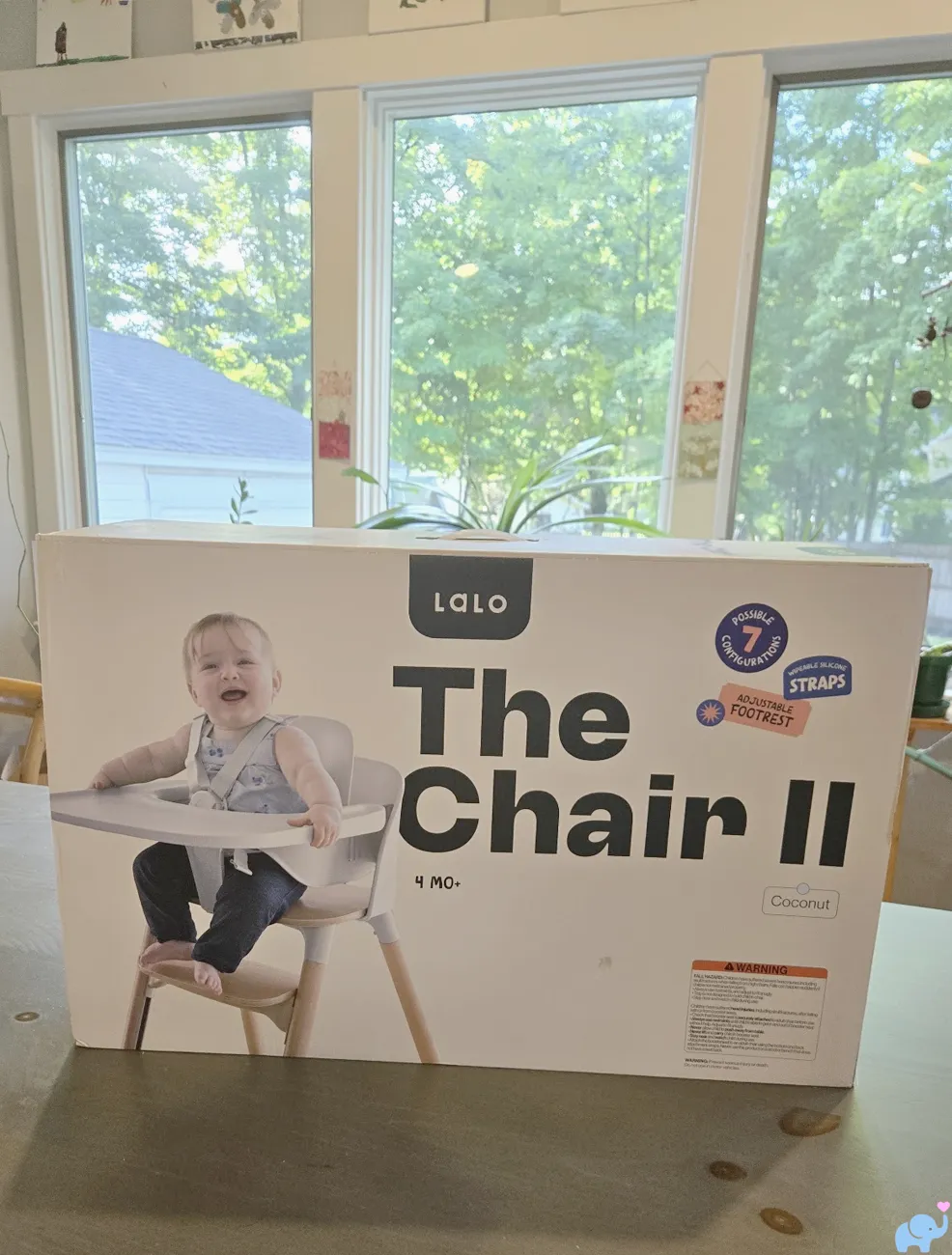
Our box weighed a substantial 24 pounds and measured approximately 27 inches long, 18 inches tall, and 10 inches deep.
That weight makes more sense once you open it. Lalo uses solid beechwood extensively throughout the chair, including the legs, seating structure, and footrest. The heavier package is largely a reflection of higher-quality materials rather than excessive plastic components.
The side of the box illustrates the Chair II's seven advertised configurations.
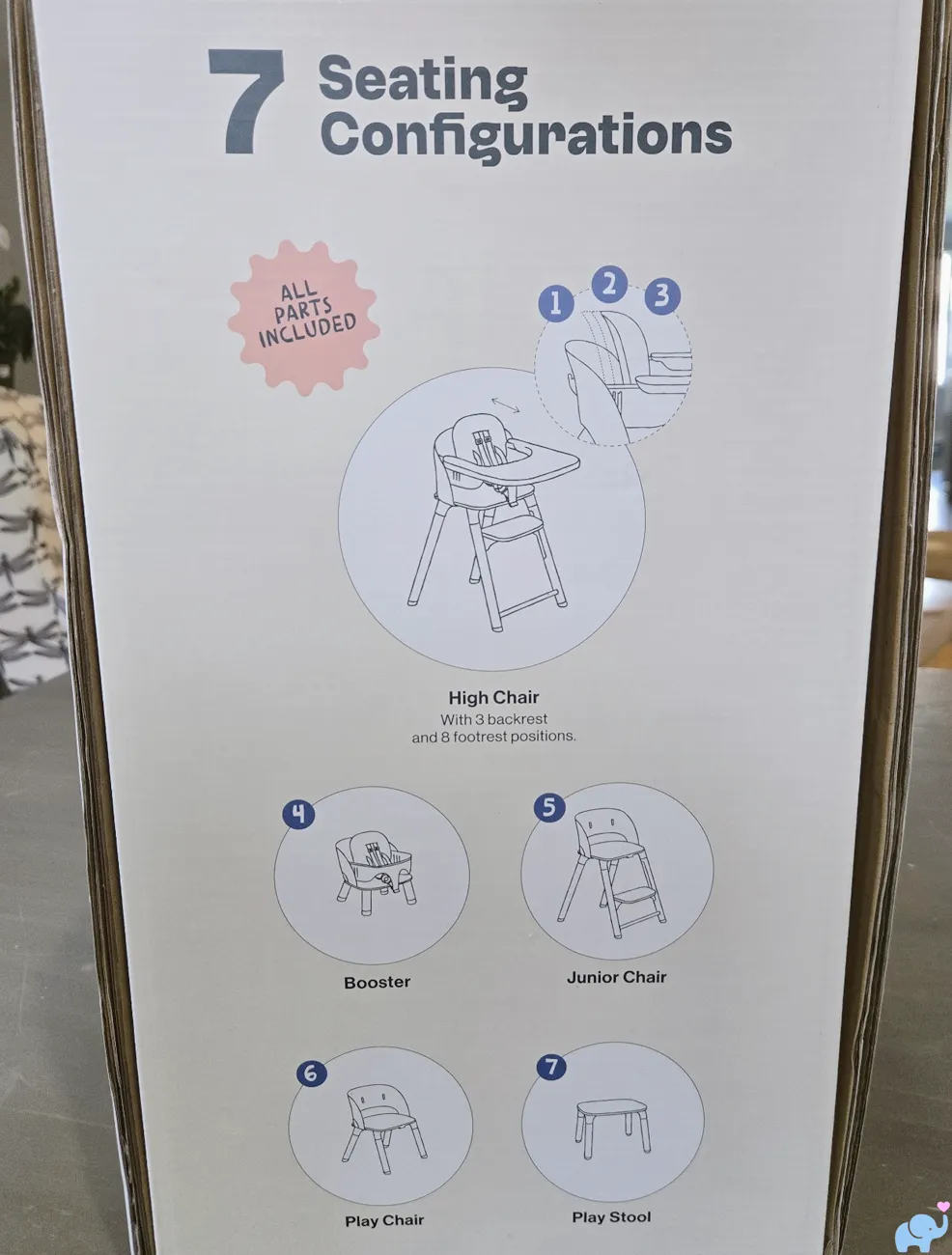
We'll discuss those configurations in more detail below, but there is a little marketing math involved: the three high-chair backrest positions are counted as three separate configurations, followed by the booster seat, junior chair, play chair, and play stool.
Opening the box reveals the user manual right on top, with the individual components well protected by cardboard packaging.
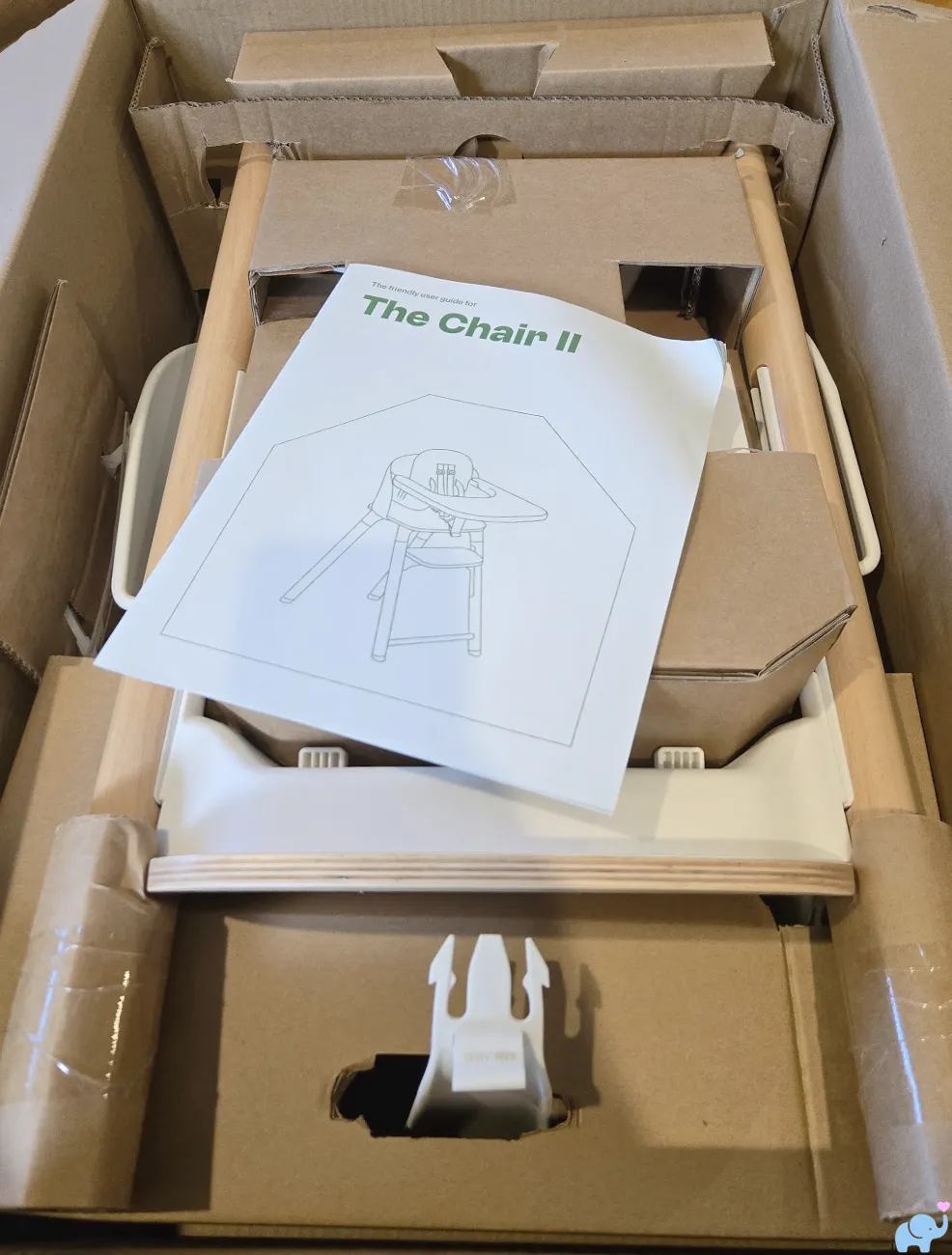
Everything was packed securely and arrived without damage.
Once we laid everything out, the project looked a little more intimidating.
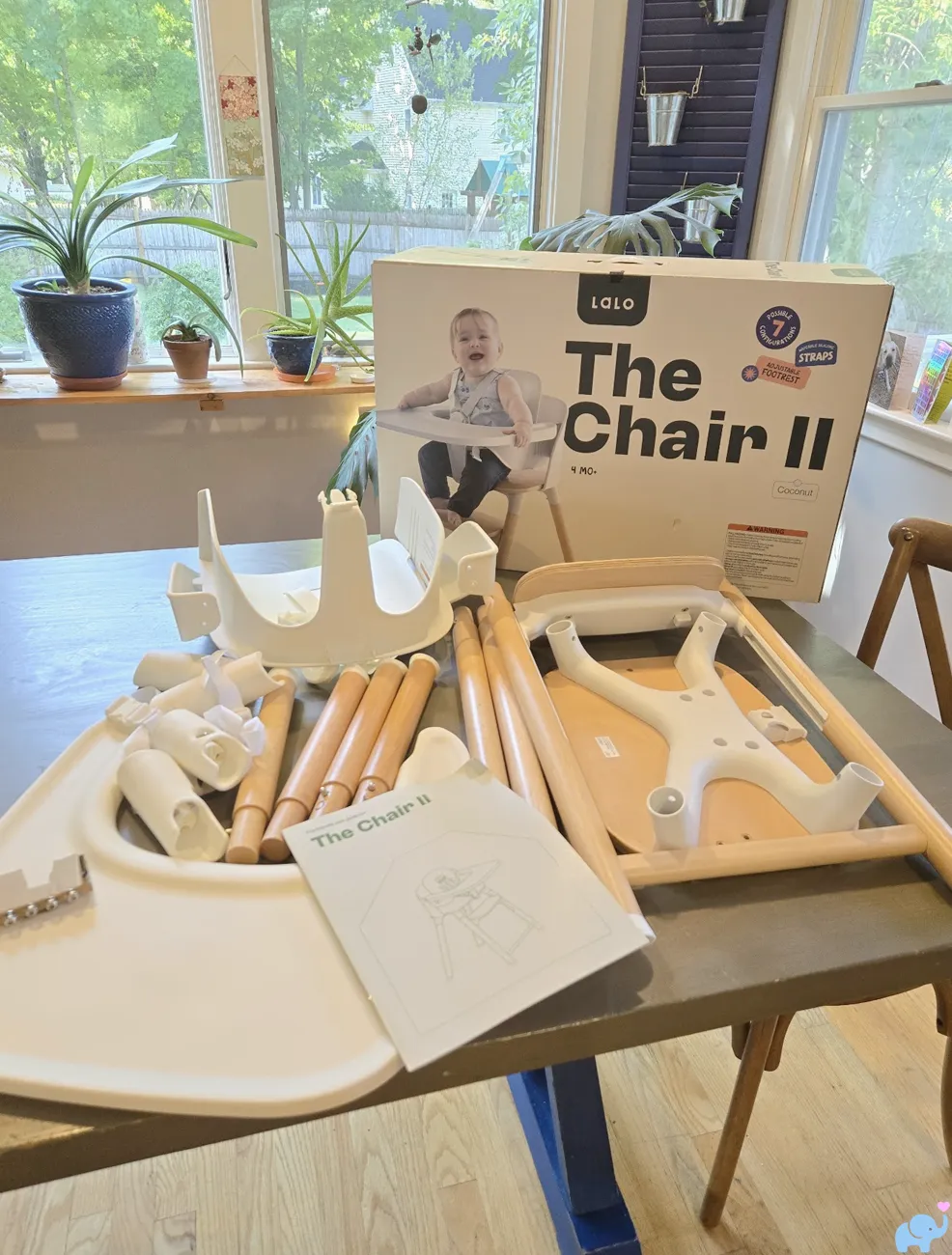
As you can see in the above photo, the chair arrives disassembled into about 16 primary pieces, plus screws and an included Allen wrench. Fortunately, assembly turned out to be much easier than the pile of parts initially suggested.
Assembly & Setup
From opening the box to having a completely assembled high chair, the process only took us about ten minutes.
That's very reasonable for a chair with this many components, and the supplied instructions were generally easy to follow.
We did encounter one mystery accessory: an extra strap with a clip in the middle:
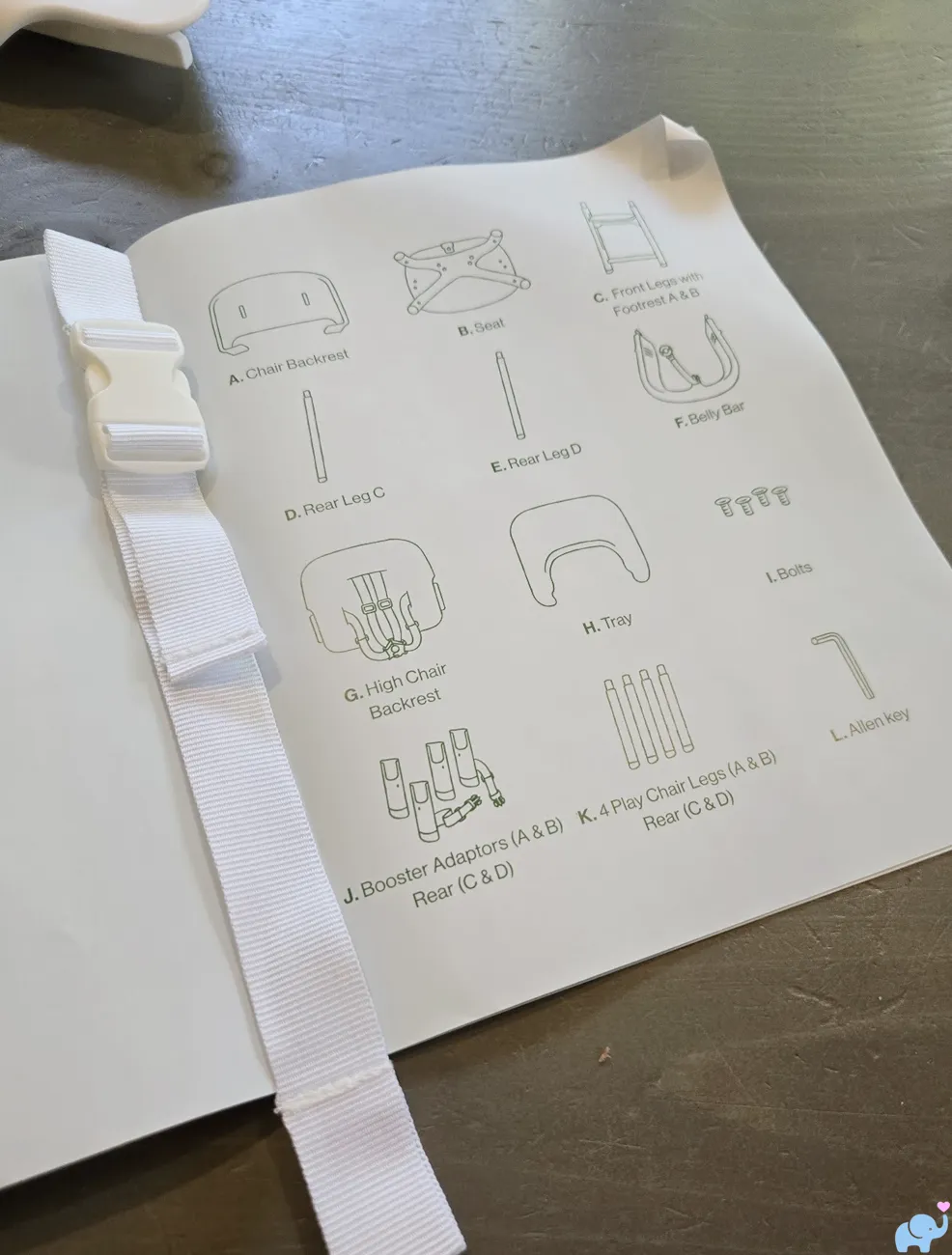
We couldn't find it in the manual's parts inventory, making its intended purpose unclear.
That's a minor documentation issue rather than a problem with the chair itself, but better labeling would help.
Design, Size & Build Quality
The Chair II is attractive without being overly complicated. Its beechwood construction gives it a warmer, more furniture-like appearance than most plastic high chairs, and its relatively narrow footprint helps it fit into smaller dining areas.
Our assembled chair measured approximately 20 inches wide, 21 inches deep, and 33 inches tall.
The seating surface sits about 22.25 inches above the floor. With the backrest in its deepest position, the usable seating area is approximately 11 inches wide and 7 inches deep, with a seat-back height of about 11.75 inches.
Structurally, it feels substantial and very difficult to tip forward, backward, or sideways. We did notice a small amount of play in the chair, particularly where the upper wooden legs attach to the seat assembly. That creates a very slight wiggly sensation if you deliberately move the upper seat, although the chair remains stable overall.
In other words, we noticed a little movement, but never felt like the chair itself was unstable.
Excellent Adjustable Footrest
The footrest is one of our favorite improvements on the Chair II.
Rather than giving you one or two fixed positions, Lalo provides eight height settings that can be adjusted without tools.
Here's what the vertical adjustment range looks like:
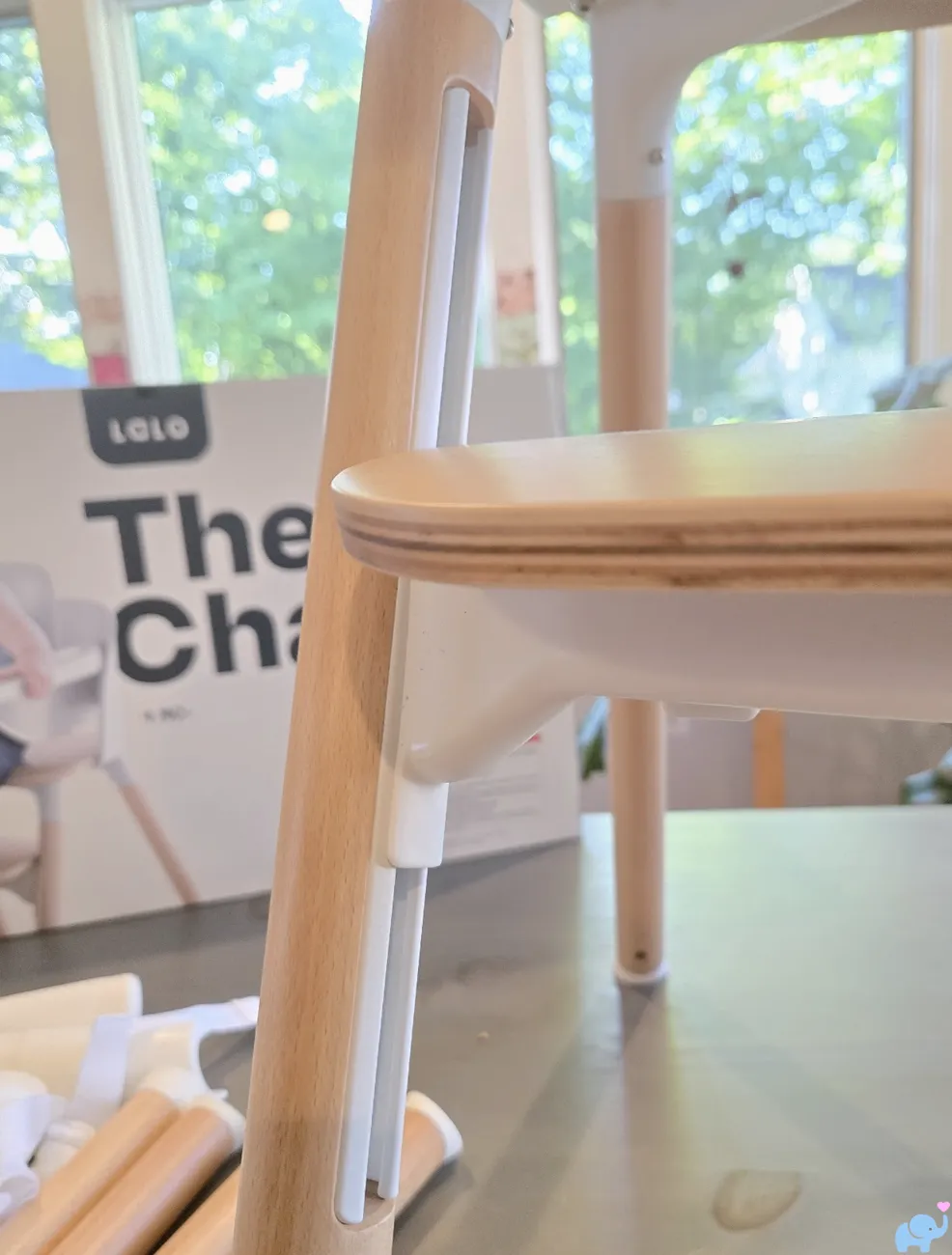
At its highest position, the footrest sits about 2.5 inches below the seating surface. At its lowest position, that distance increases to about 9.75 inches.
That's approximately 7.25 inches of total adjustment range, which should accommodate substantial growth through the high-chair years.
Adjustment is also simple. Press the release buttons and slide the footrest to the desired position.
Here's a photo of the two buttons, looking upwards under the foot rest.
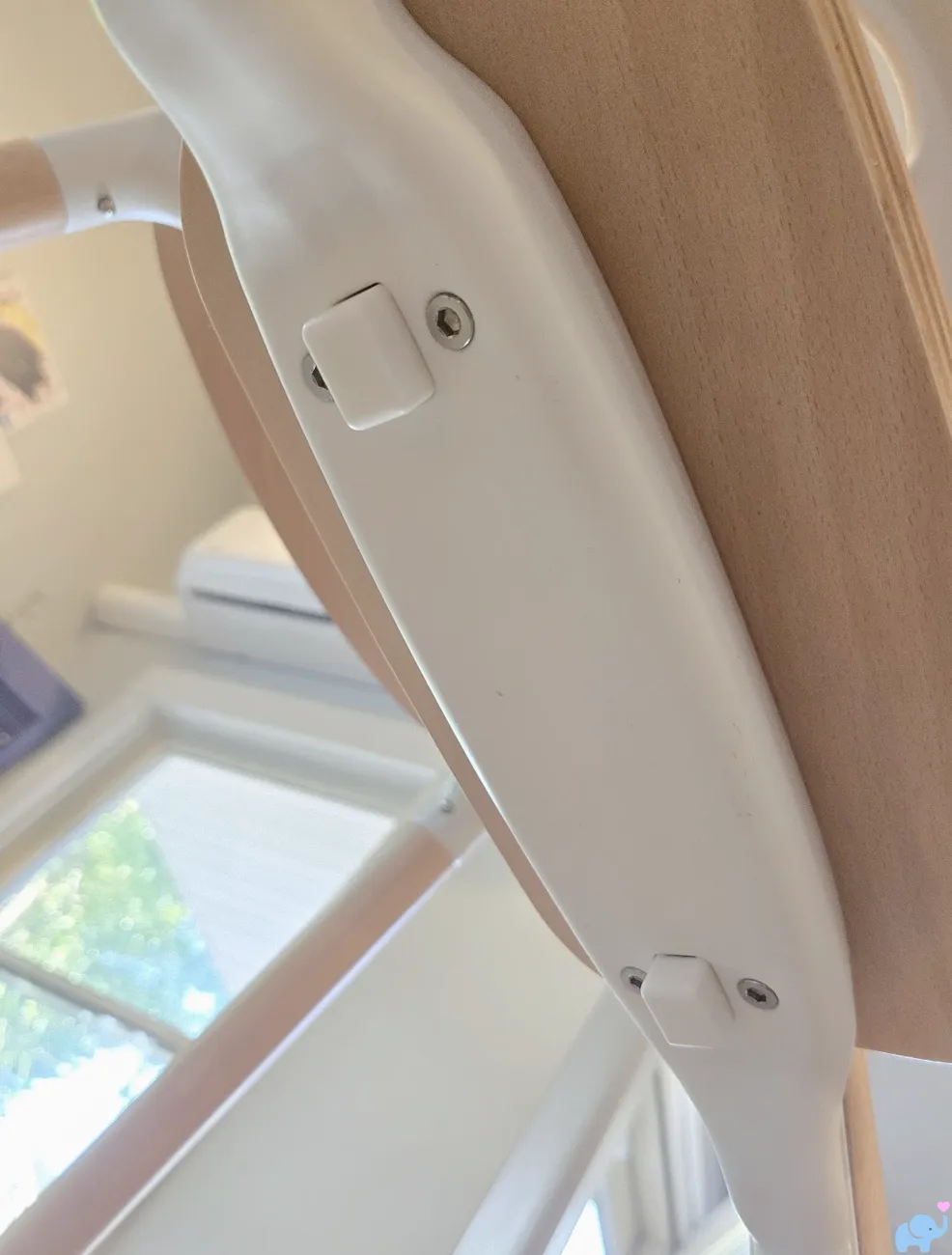
This is more than a convenience feature. Proper foot support can help children sit more securely at mealtime, and the combination of an adjustable footrest and backrest makes it much easier to approximate the desirable 90/90/90 sitting position at the hips, knees, and ankles.
Adjustable Backrest & Seating Position
The other major ergonomic improvement is the three-position adjustable backrest.
Here's a close-up of the adjustment slots:
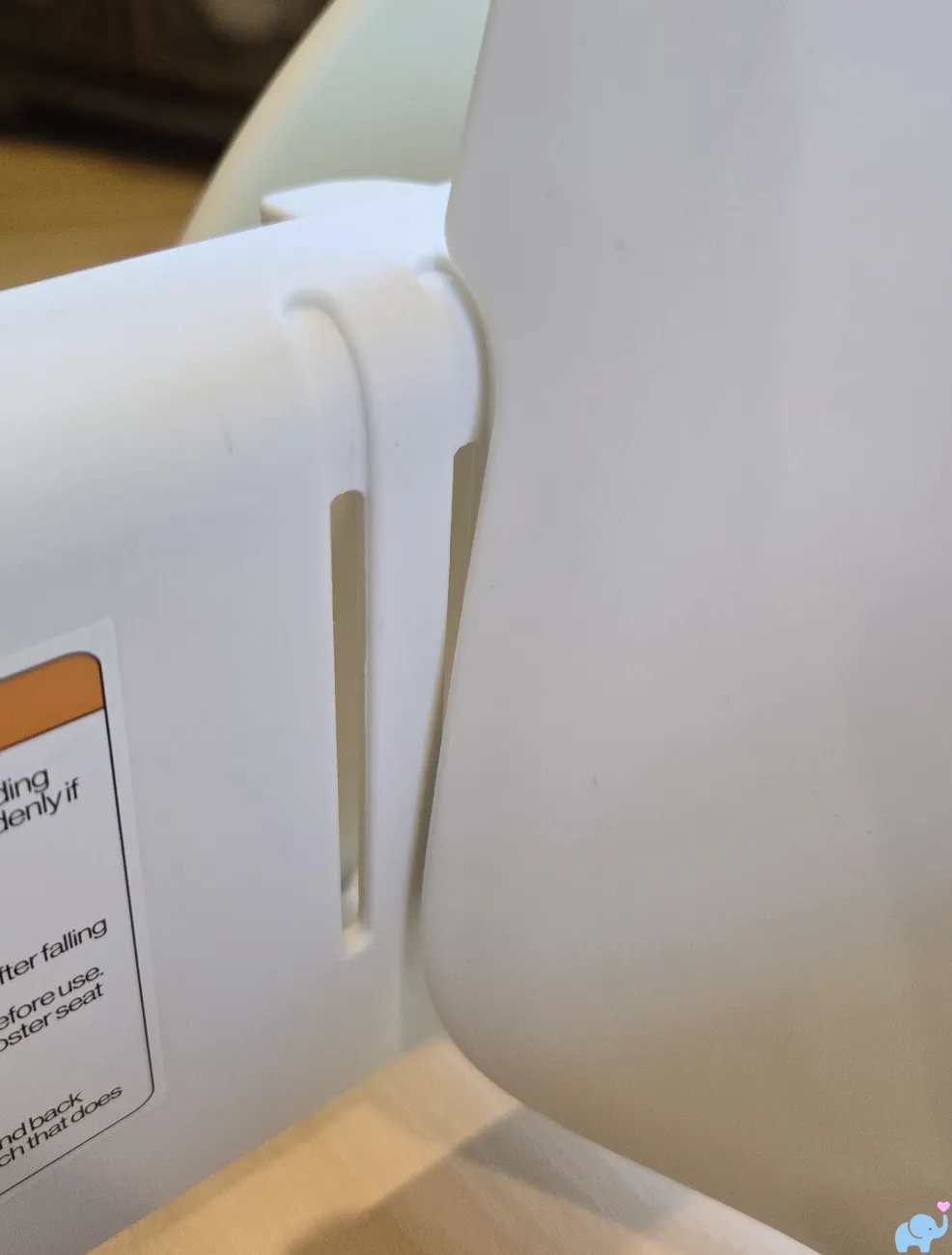
Moving the backrest forward reduces the effective depth for smaller babies, while moving it rearward creates more room as your child grows.
We measured the approximate distance from the backrest to the tray at:
- 8.5 inches in the shallowest setting
- 9.0 inches in the middle setting
- 9.5 inches in the deepest setting
That one-inch total adjustment doesn't sound enormous on paper, but it makes a meaningful difference in the fit of a relatively small seating area.
Combined with the eight footrest positions, it gives parents considerably more control over positioning than most conventional high chairs. To be fair, it's a bit of a pain to change the position, but nothing terrible; we wish backrest adjustment was as easy as the footrest adjustment.
Real-World Fit with an 8-Month-Old
Measurements are useful, but the real test is how a baby actually fits in the chair.
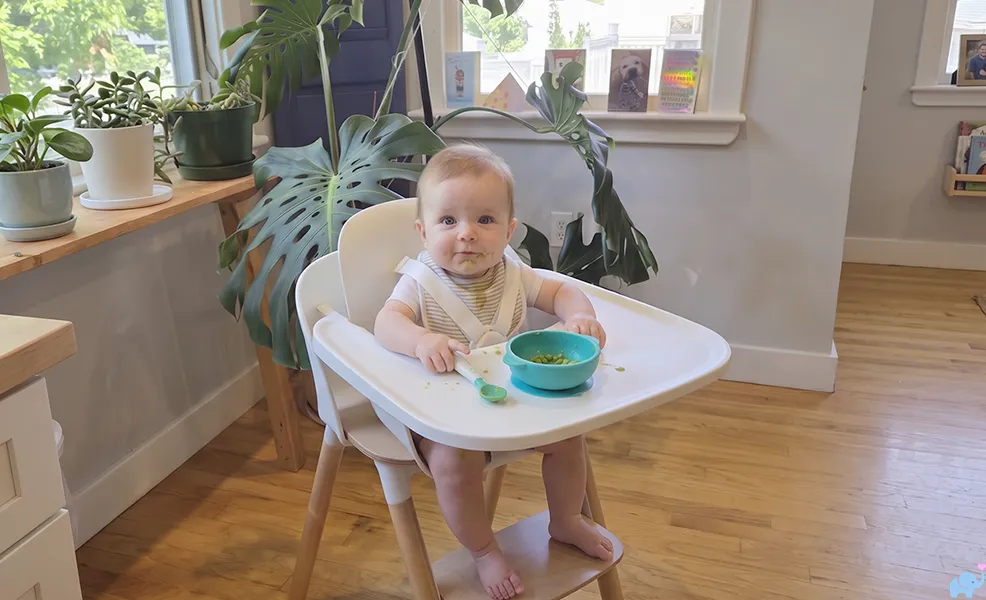
Our 8-month-old tester fit nicely in the high-chair configuration with the tray installed. The adjustable backrest allowed us to bring the seating position forward, while the footrest could be raised high enough to provide useful support underneath the feet.
Here's what he looked like in the chair:
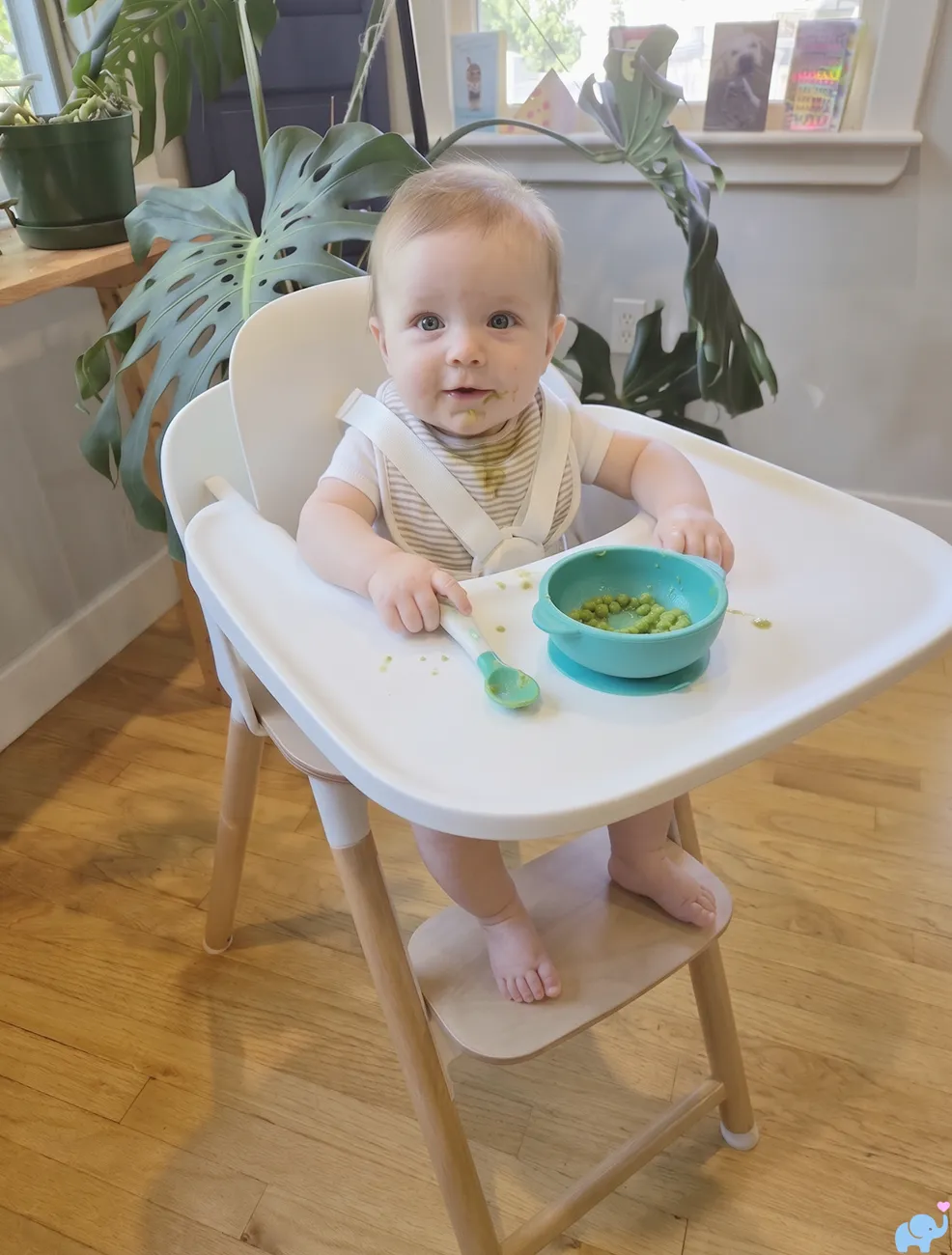
We especially like that the Chair II can also be used directly at a dining table.
Just remove the tray and slide the chair toward the table, allowing your baby to participate in family meals without a separate feeding surface.
Here's what that looked like:

Our 8-month-old sat comfortably in both configurations, and the chair's relatively compact legs allowed us to bring it reasonably close to the dining table.
Of course, fit will vary with a baby's height and proportions, which is exactly why the adjustable backrest and footrest are so useful.
Harness & Magnetic Buckle
The five-point harness is another highlight.
Rather than conventional woven straps that gradually become stained with food, Chair II uses smooth, wipeable silicone straps.
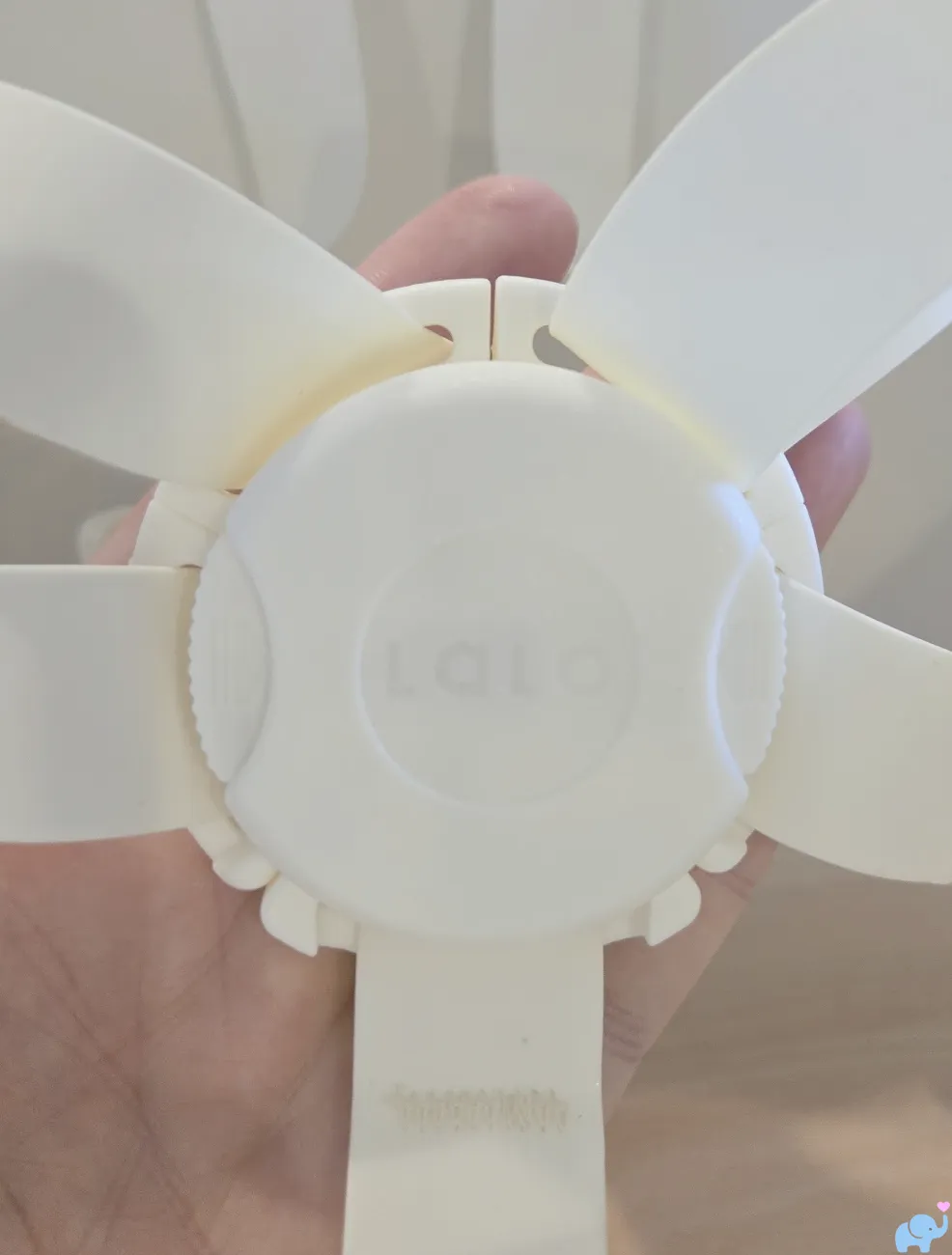
The shoulder and side straps slide smoothly during adjustment, and the silicone material should be substantially easier to clean after messy meals.
The magnetic center buckle is also intuitive. Bring the components together and they quickly align and snap into position.
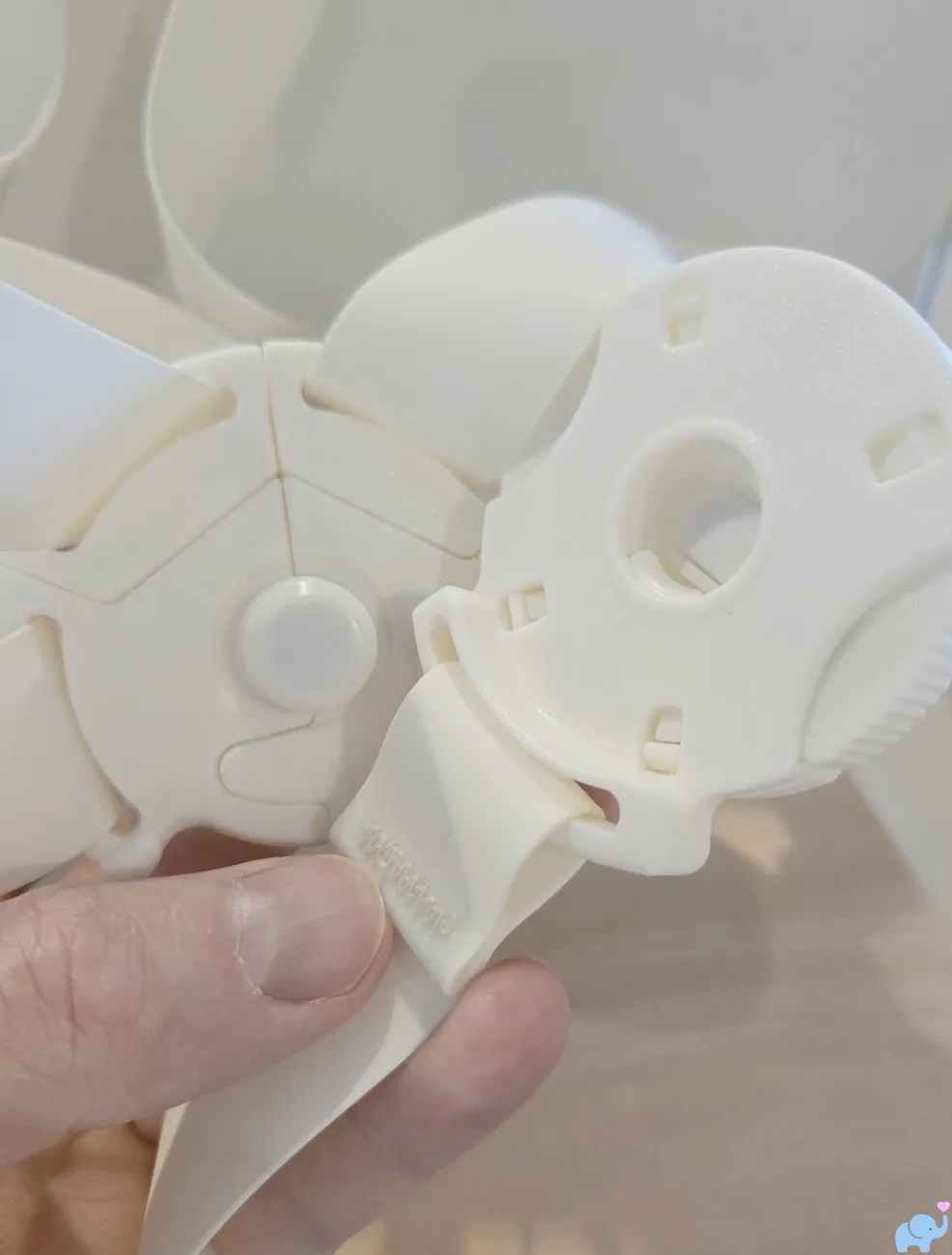
We did encounter two little harness issues.
First, one of the lower straps on our sample arrived twisted.
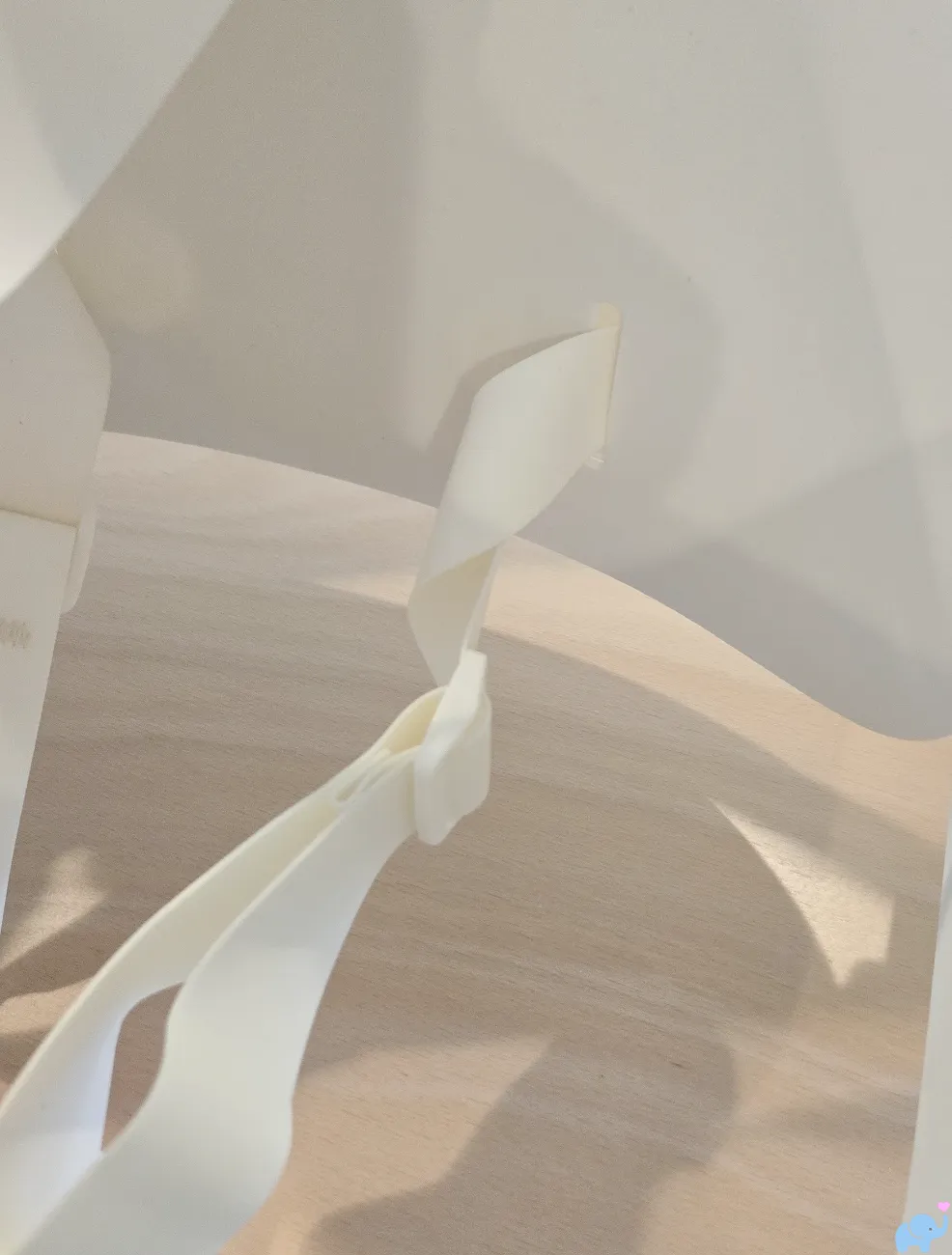
This wasn't difficult to correct, but worth noting - more quality control would be good before a chair leaves the factory.
Second, the center crotch strap is relatively long and isn't adjustable. With smaller children, that can leave more slack than we would prefer, putting the clip at chest height rather than near the waist.
What Does 7-in-1 Actually Mean?
Lalo calls The Chair II a 7-in-1 high chair, although that description requires a little explanation.
| Configuration | What It Means |
|---|---|
| 1. High Chair | Backrest in forward position |
| 2. High Chair | Backrest in middle position |
| 3. High Chair | Backrest in rear position |
| 4. Booster | Seat attaches to an adult dining chair |
| 5. Junior Chair | Tall wooden legs without baby backrest and bumper |
| 6. Play Chair | Short wooden legs create a child-height chair |
| 7. Play Stool | Back support is removed from the play chair |
So although there are seven technically advertised configurations, three of them are simply different backrest settings in high-chair mode.
That said, the remaining transformations are genuinely useful and could substantially extend the chair's lifespan.
Converting to the Booster Seat
Booster conversion is straightforward once the long legs have been removed.
Replace the four wooden high-chair legs with the four short white plastic booster feet, place the seat onto a suitable dining chair, and secure it tightly using the supplied attachment straps.
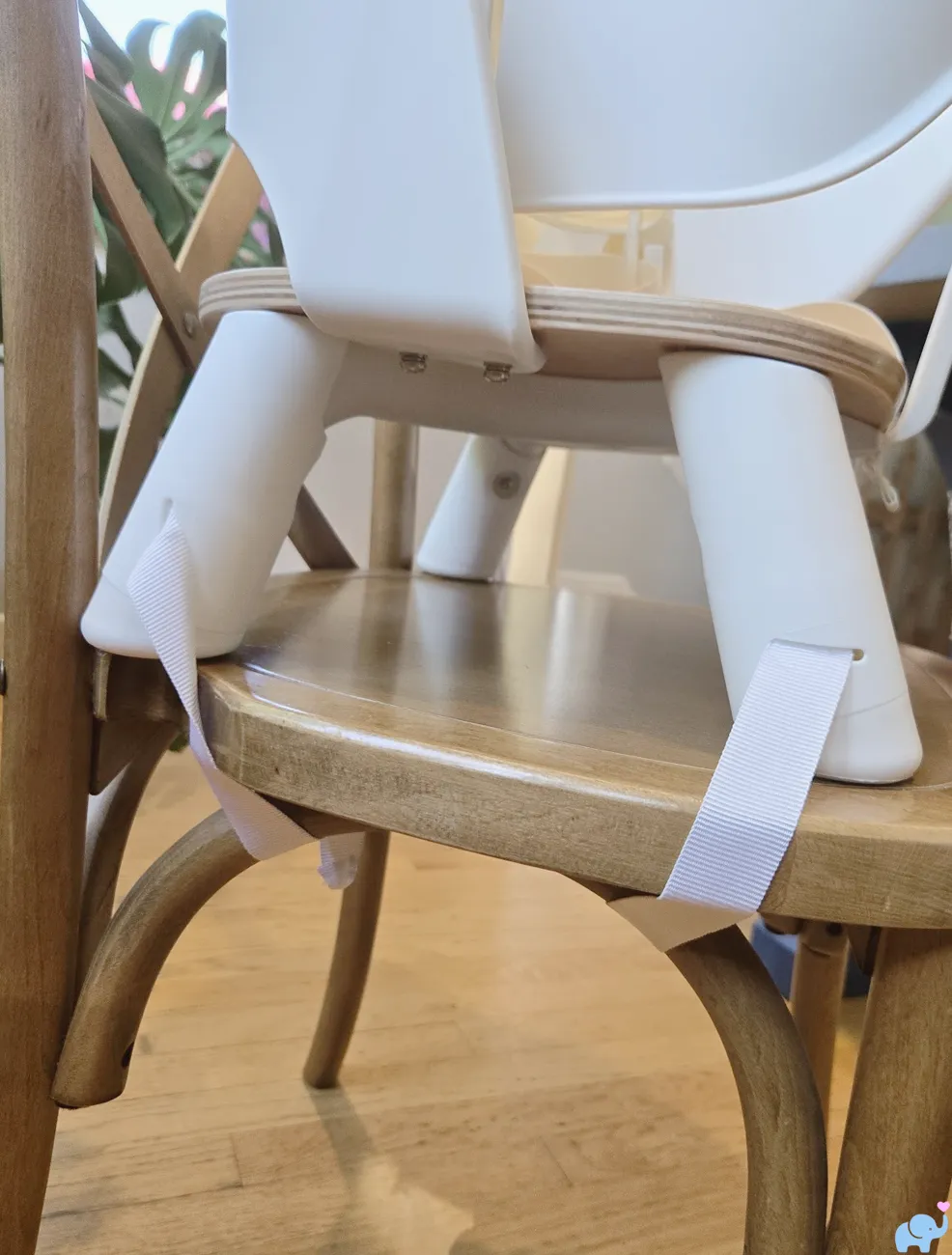
Be sure to tighten both straps carefully so the booster cannot slide or shift.
One thing to notice in the above photo: the rear legs were only partially on our dining room chair, about 50% of each leg was hanging off the side. With the rubber feet and tight straps, we didn't think there was any risk of it falling off, but we do wish the footprint was a bit narrower to accommodate different chair types.
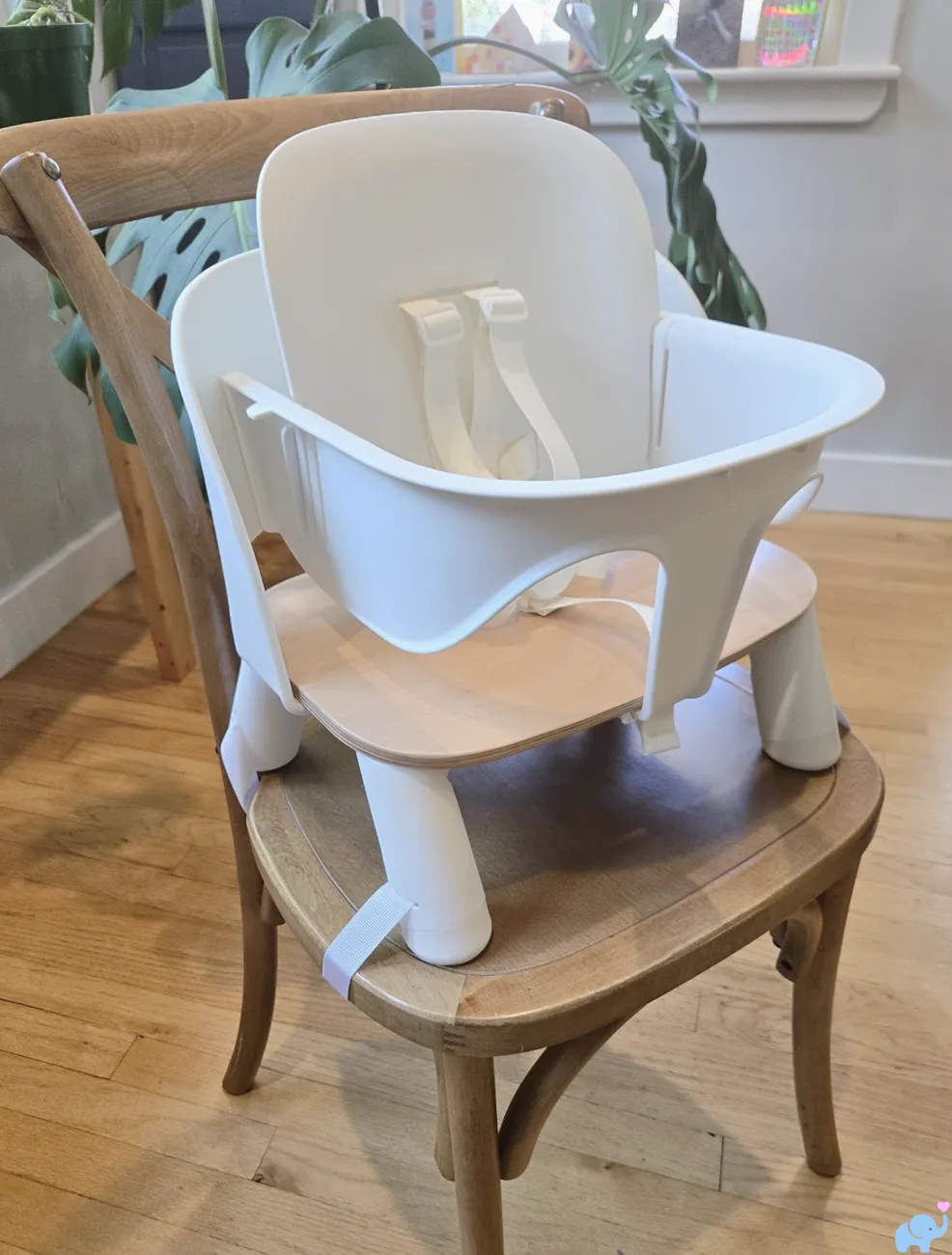
The complete conversion took us about three minutes.
Our 16-month-old test toddler fit nicely at the dining table, as you can see below:

Our only frustration was removing the long front legs. The spring-loaded metal release tabs were difficult to depress deeply enough with a finger, so we used a small screwdriver to gently push them inward while pulling the legs free.
Once we figured out that trick, conversion became much easier.
Converting to the Junior Chair
Junior chair mode uses the full-height wooden legs but removes the high-chair backrest, tray, and bumper bar.
The result is a simple elevated chair that allows an older child to sit directly at the dining table.
Here's what that looks like:
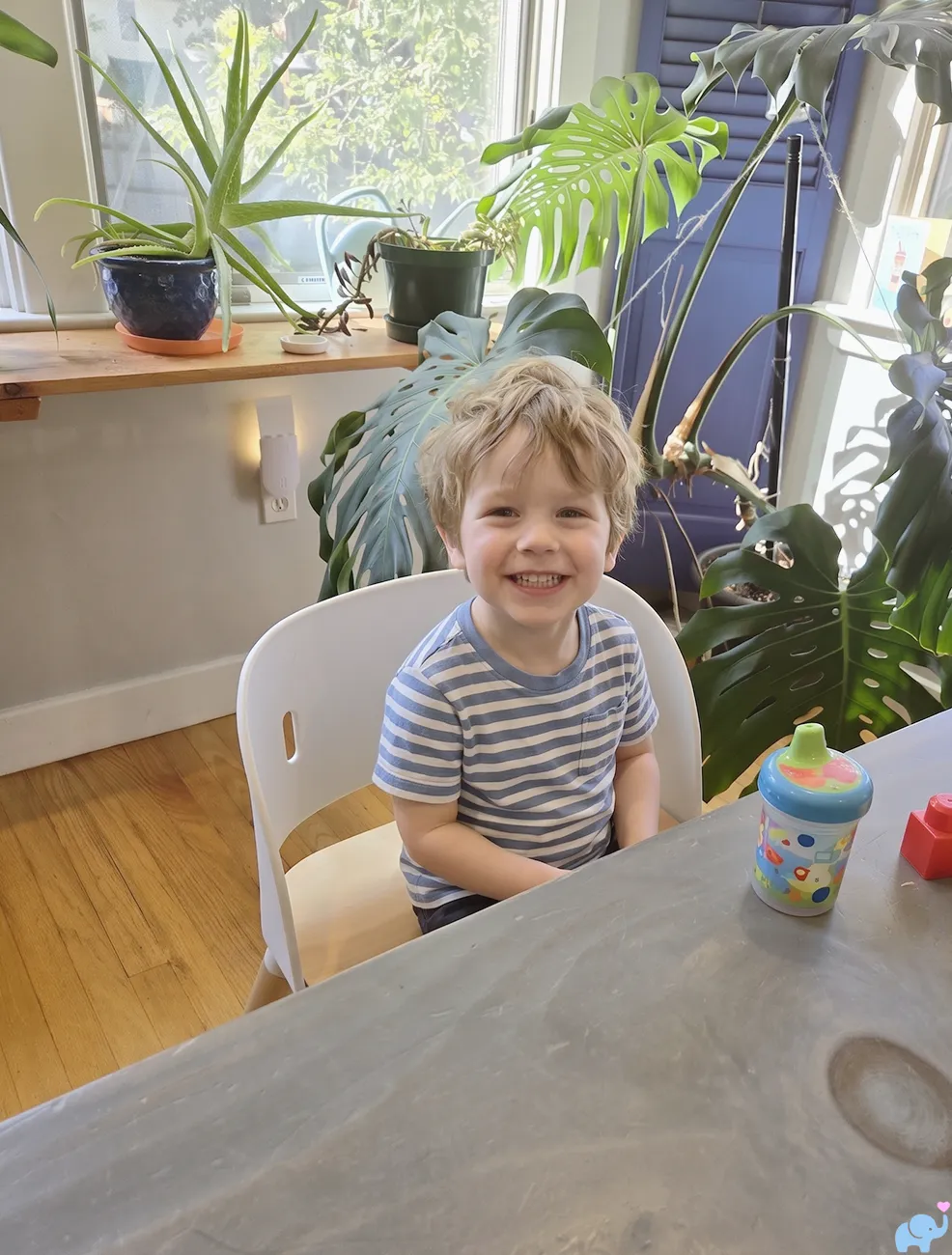
Our 4-year-old fit nicely, and the transformation took about three minutes.
This is one of the configurations that helps make the premium price easier to justify: the chair doesn't necessarily become obsolete once your child outgrows traditional high-chair use.
Converting to the Play Chair & Stool
To make the play chair, remove the four long legs and install the shorter wooden legs, then remove the high-chair backrest and bumper bar.
Again, this conversion took us approximately three minutes.
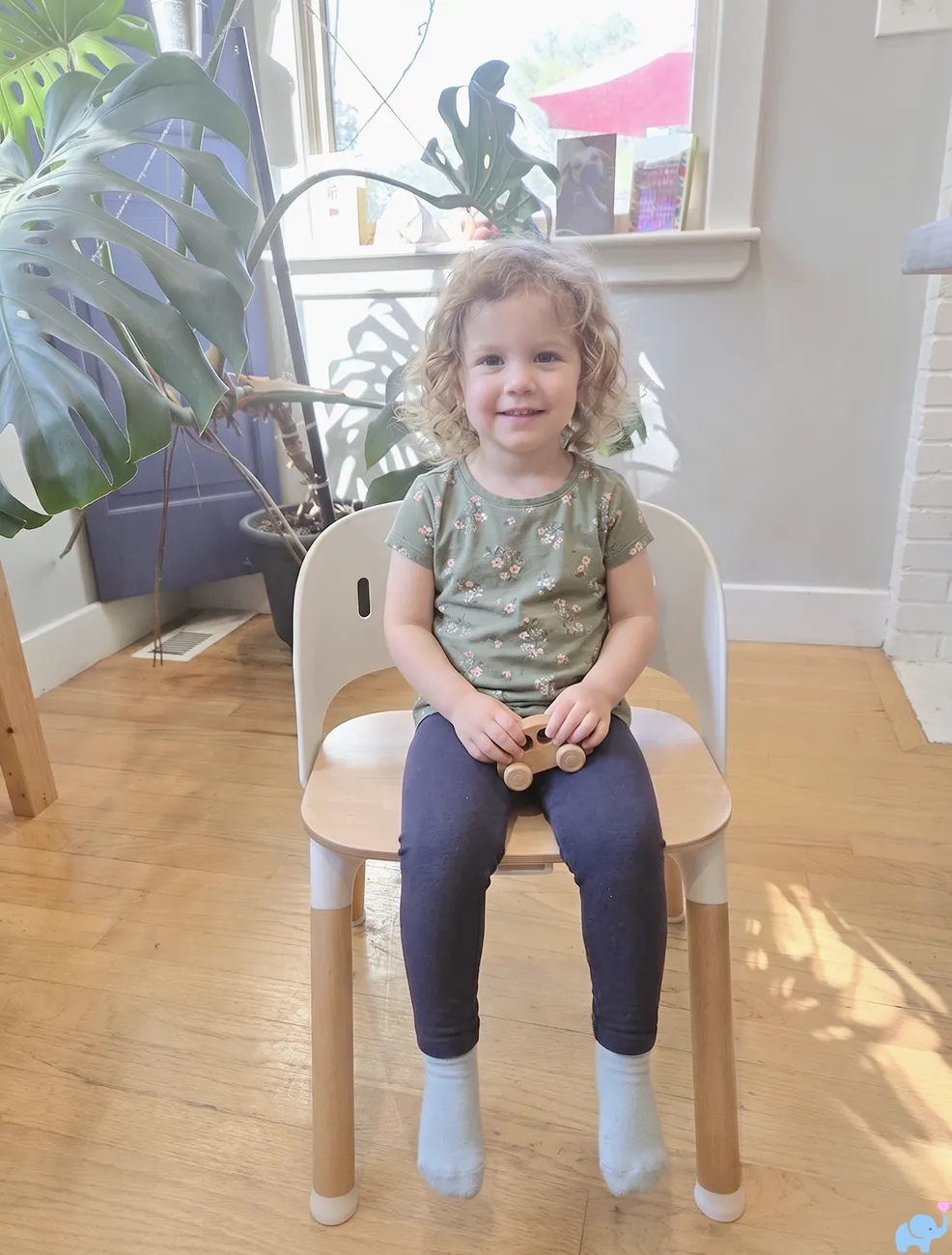
She fit very comfortably, making this a useful chair for a play table, art table, or bedroom.
The final transformation is the play stool. Four screws secure the remaining rear support structure to the seat; remove those and you're left with a simple wooden stool.
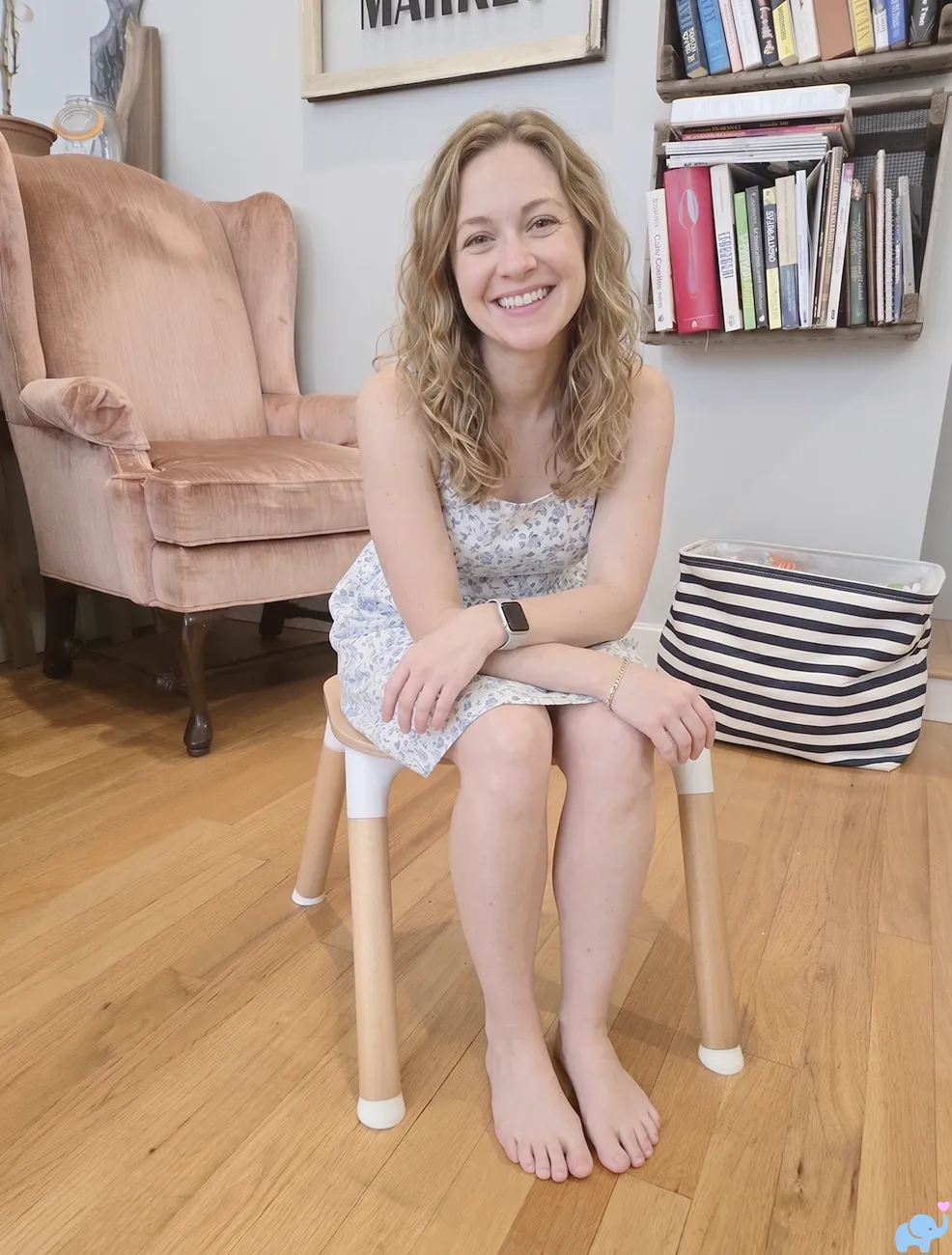
The stool is sturdy enough to accommodate an adult, illustrating how substantial the underlying construction really is.
Cleaning & Everyday Use
Cleaning is one of the Chair II's strongest attributes.
The smooth seating surfaces wipe down easily, the silicone harness doesn't absorb food the way woven fabric straps can, and the tray releases with one hand.
The removable tray is also top-rack dishwasher safe, although for most everyday messes a quick sink rinse or wipe should be sufficient.
There is no built-in seat padding, which initially makes the chair feel somewhat hard compared with padded models. In practice, babies are already wearing diapers that provide some cushioning, and avoiding fabric also eliminates one of the messiest parts of maintaining many high chairs.
Lalo does sell a separate cushion for families who prefer additional padding.
Lalo The Chair II Specifications
| Specification | The Chair II |
|---|---|
| Price | About $250 |
| Recommended Age | 4+ months, subject to developmental readiness and manufacturer guidance |
| Our Measured Dimensions | Approximately 20"W × 21"D × 33"H |
| Chair Weight | Approximately 14 pounds |
| Box Dimensions | 27" × 18" × 10" |
| Box Weight | 24 pounds on our scale |
| Seat Height | 22.25 inches from floor |
| Usable Seat Width | Approximately 11 inches |
| Usable Seat Depth | Approximately 7 inches with backrest deepest |
| Backrest Height | Approximately 11.75 inches above seat |
| Backrest Positions | 3 positions |
| Backrest-to-Tray Distance | Approximately 8.5", 9.0", or 9.5" |
| Footrest Positions | 8 positions |
| Footrest Range | Approximately 2.5" to 9.75" below seat |
| Harness | 5-point wipeable silicone harness with magnetic buckle |
| Main Material | Sustainably sourced beechwood and easy-clean components |
| High Chair Weight Limit | 30 pounds |
| Booster Weight Limit | 50 pounds |
| Junior/Play Chair Limit | Up to 250 pounds |
| Materials of Concern | Lalo states no BPA, PFAS, PVC, or phthalates |
| Folds | No |
Consumer Sentiment
The Chair II was only released in 2026, so there isn't yet enough independent owner feedback to establish the kind of long-term reputation enjoyed by older high chairs.
Early sentiment is nevertheless encouraging. Owners commonly praise the improved adjustability, sturdy construction, attractive design, and easy-clean surfaces.
Early Reddit discussions are also generally favorable, although several potential concerns are worth watching. One owner praised the Chair II overall but felt the tray was relatively small and still wished the baby could sit slightly closer to it. Another parent questioned whether the footrest sits far enough forward for their smaller baby.
Those reports aren't widespread enough to call them established problems, but they're useful things to consider when checking fit for an individual child.
It's also important not to confuse feedback about the original Lalo Chair with Chair II. Older reviews frequently criticized the original model's limited footrest adjustment, wide footprint, infant positioning, and difficult cleanup. The 2026 Chair II substantially redesigns all of those areas.
What It Struggles With
No high chair is perfect, and we encountered a few shortcomings.
First, our chair had a slight amount of structural play. The movement seemed concentrated around the upper leg connections. It wasn't enough to make the chair unstable or unsafe-feeling, but we'd prefer a completely rigid feel at this price.
Second, our sample had a twisted lower harness strap. It's an easy fix, but somewhat frustrating for a brand new premium high chair.
Third, the crotch strap is long and non-adjustable. Smaller babies may have more slack in this strap than ideal, even though the remaining harness straps are highly adjustable.
Fourth, converting between modes can require some finger strength. The release tabs on the legs were difficult to press deeply enough. A small screwdriver helped us depress the tabs and slide the legs free.
The Chair II also doesn't fold, and its roughly $250 price places it firmly into premium high-chair territory.
Our Conclusions
Who The Chair II Is Best For
- Parents who prioritize excellent seating ergonomics
- Families who want a highly adjustable footrest
- Parents who want a high chair that is easy to wipe clean
- Families who dislike fabric harness straps
- Parents who appreciate modern wood furniture styling
- Families who want to continue using the chair after the high-chair stage
- Anyone who values a relatively compact footprint
Who Should Probably Skip It
- Budget-focused families who don't need multiple configurations
- Anyone who needs a high chair that folds for storage
- Parents who strongly prefer a padded seat
- Families who want an especially large tray
Overall, we came away impressed with the new Lalo Chair II.
The combination of an eight-position footrest and three-position backrest gives it excellent adjustability, particularly for parents trying to achieve a secure 90/90/90 sitting position as their baby grows. The smooth silicone harness, magnetic buckle, one-handed tray removal, and easy-clean surfaces are also well designed for the realities of feeding young children.
Our experience with an 8-month-old also reinforced the advantages of that adjustability. The chair provided good support with the tray installed, and removing the tray allowed us to pull the chair directly up to our dining room table for family meals.
We especially appreciate that the additional configurations aren't merely theoretical. Converting between modes took us only about three minutes, and we successfully used the booster with a 16-month-old, junior chair with a 4-year-old, and play chair with a 3-year-old.
There are some imperfections. We'd like the upper leg connections to feel completely rigid, the crotch strap should be adjustable, and getting the legs off for booster conversion was more difficult than necessary. The hard seating surface and relatively high price will also give some families pause.
Still, none of those issues overshadowed the Chair II's strong ergonomics, sturdy construction, excellent adjustability, easy cleaning, and unusually long useful lifespan.
We give the Lalo The Chair II an excellent 4.5 out of 5.0!
Frequently Asked Questions
How much does the Lalo Chair II cost?
The Chair II has a regular price of approximately $250, placing it among premium high chairs. Its ability to convert into a booster, junior chair, play chair, and stool helps extend its useful lifespan beyond the traditional high-chair years.
What does 7-in-1 mean on the Lalo Chair II?
Lalo counts the three adjustable high-chair backrest positions as three configurations. The other four are booster seat, junior chair, play chair, and play stool. In practical terms, it's several genuinely different chairs plus three high-chair seating positions.
How adjustable is the Lalo Chair II footrest?
Very adjustable. There are eight positions. On our chair, the highest setting placed the footrest about 2.5 inches below the seat, while the lowest was about 9.75 inches below it. That's roughly 7.25 inches of total adjustment range.
Does the Lalo Chair II support a 90/90/90 sitting position?
Its adjustable backrest and eight-position footrest make achieving an appropriate hip, knee, and ankle position much easier than on high chairs with fixed geometry. Exact fit will still depend on the size and proportions of the individual child.
Can the Lalo Chair II be used at the dining table without the tray?
Yes. We removed the tray and pulled the chair directly up to our dining table with our 8-month-old tester. This worked well and is a nice option for families who want their baby participating directly in family meals.
Is the Lalo Chair II easy to clean?
Yes. This is one of its best features. The seat and tray have smooth wipeable surfaces, and the five-point harness uses silicone rather than conventional woven straps. The tray can also be removed with one hand and is top-rack dishwasher safe.
Is the Lalo Chair II seat padded?
No. The standard chair uses a hard seating surface without built-in padding. Lalo sells an optional cushion separately for families who want additional softness.
How long does the Lalo Chair II take to assemble?
Our initial assembly took approximately eight minutes despite the chair arriving in about 16 major pieces. The instructions were generally clear and all necessary assembly hardware and an Allen wrench were included.
How long does it take to convert the Chair II?
Most conversions took us approximately three minutes. Booster mode requires replacing the long wooden legs with short plastic feet and securing the booster to an adult dining chair. Junior and play-chair conversions similarly involve swapping or removing a small number of components.
Does the Lalo Chair II fold?
No. The Chair II does not fold for storage. Its footprint is relatively compact for a full-size wooden high chair, but families who need to frequently collapse and store their high chair may prefer another design.
What age can use the Lalo Chair II?
Lalo markets the Chair II for approximately 4 months and older, although parents should always follow the manufacturer's developmental and safety requirements before beginning high-chair use. The later booster, junior chair, play chair, and stool configurations extend its usefulness well beyond infancy.
What is the Lalo Chair II weight limit?
The high-chair configuration is rated to approximately 30 pounds, while the booster supports up to 50 pounds. The later junior/play configurations are rated substantially higher, up to approximately 250 pounds.
Is the Lalo Chair II worth it?
We think it is for families who value excellent adjustability, easy cleaning, attractive wood construction, and a chair that can remain useful well beyond infancy. At around $250, there are certainly cheaper high chairs, but the Chair II's eight-position footrest, adjustable backrest, silicone harness, strong build quality, and multiple later-life configurations provide genuine advantages over many less expensive models.

Delta Crave High Chair Review + Video
The Delta Children Crave is a stylish, versatile, and surprisingly affordable wooden...
Chicco FastLock Go Hook-on Chair Review + Video
The Chicco FastLock Go Hook-On Chair promises the convenience of a high chair without...
Best High Chairs of 2026, Tested & Reviewed
Starting around 4-5 months, your baby will begin spending a couple of hours a day in...
Unilove Feed Me Booster Chair Review & Video
With a unique design, swiveling tray, and lightweight and compact footprint, the new...