
Little Spoon Babyblends Baby Food - Full Review!
Fresh, organic, and delicious - these baby foods are the best of the best!
 By: Tali Ditye, Ph.D., Co-founder
Mommyhood101 independently curates baby gear to help inform decisions; if you buy through links on our site, we may earn a commission.
We tested Little Spoon Babyblends across multiple meals, textures, and developmental stages to see how they perform in real-world feeding scenarios.
Our focus went beyond taste alone; we evaluated texture progression, ingredients, storage logistics, safety transparency, and how Babyblends fit into a broader routine of starting solid foods.
We tested Babyblends with two babies and compared the experience to other fresh and shelf-stable baby food options we’ve reviewed.
Let’s see whether Little Spoon Babyblends deserve a spot on our list of the best baby purees!
-
- Our Review Summary
- Unboxing & First Impressions
- Stages, Textures & What They Really Mean
- Feeding Experience & Baby Acceptance
- Ingredients, Sugar & Nutrition Context
- Processing, “Freshness,” & Storage Safety
- Safety Testing, Heavy Metals & Transparency
- Packaging, Storage & Convenience
- Comparison to Other Baby Food Brands
- Value & Subscription Tradeoffs
- Our Conclusions
Full disclosure: Little Spoon provided these products for testing. No compensation or sponsorship was provided, and all opinions are our own.
Our Little Spoon Babyblends Review
Here’s the short version if you’re in a hurry: Little Spoon Babyblends combine excellent ingredient quality, thoughtful texture progression, and industry-leading safety transparency into one of the most complete starting-solids systems we’ve tested.
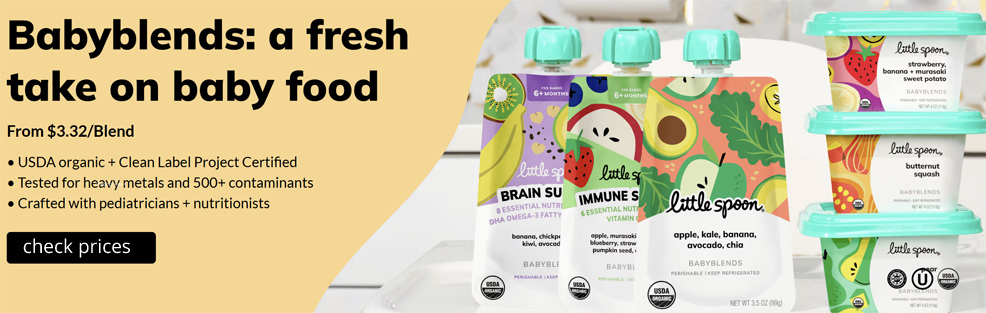
✔️ USDA organic (certified by QAI).
✔️ Clean Label Project certified.
✔️ Extremely simple ingredient lists.
✔️ No preservatives, colors, or fillers.
✔️ Clear stage-based texture progression.
✔️ Beautiful color, aroma, and flavor.
✔️ Stackable 4oz containers (our preferred format).
✔️ Batch-level safety testing via QR code.
✔️ BPA-free, recyclable packaging.
✔️ Kosher certified.
✔️ Can be frozen or refrigerated.
❌ Premium price point.
Overall, we rate Little Spoon Babyblends an excellent 4.8 out of 5.0.
Unboxing & First Impressions
Little Spoon Babyblends arrive frozen in insulated boxes with ice packs. After delivery, they need about 24 hours in the refrigerator to fully thaw.
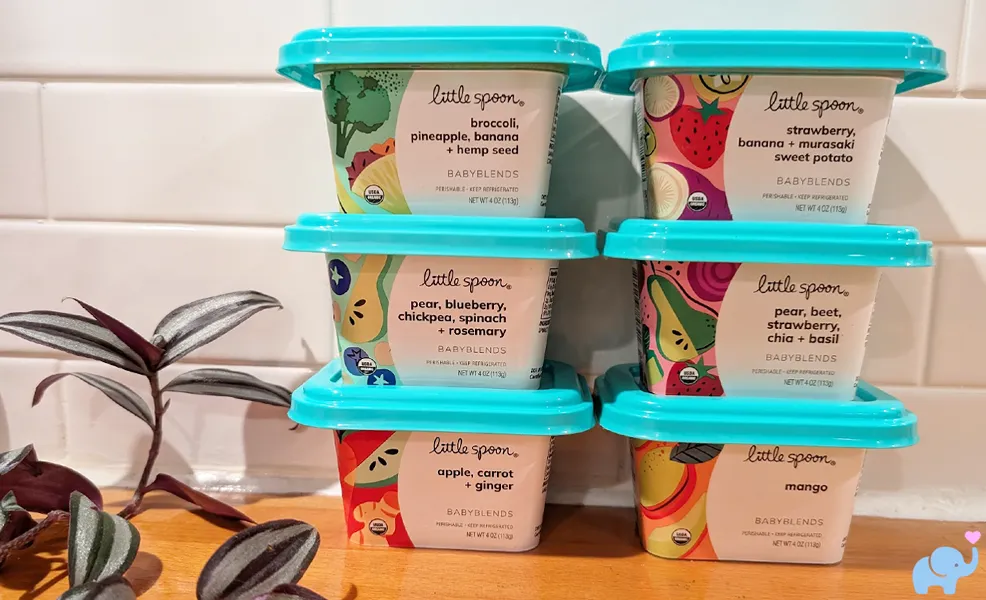
Babyblends are available in both squeezable pouches and small 4-ounce plastic containers.
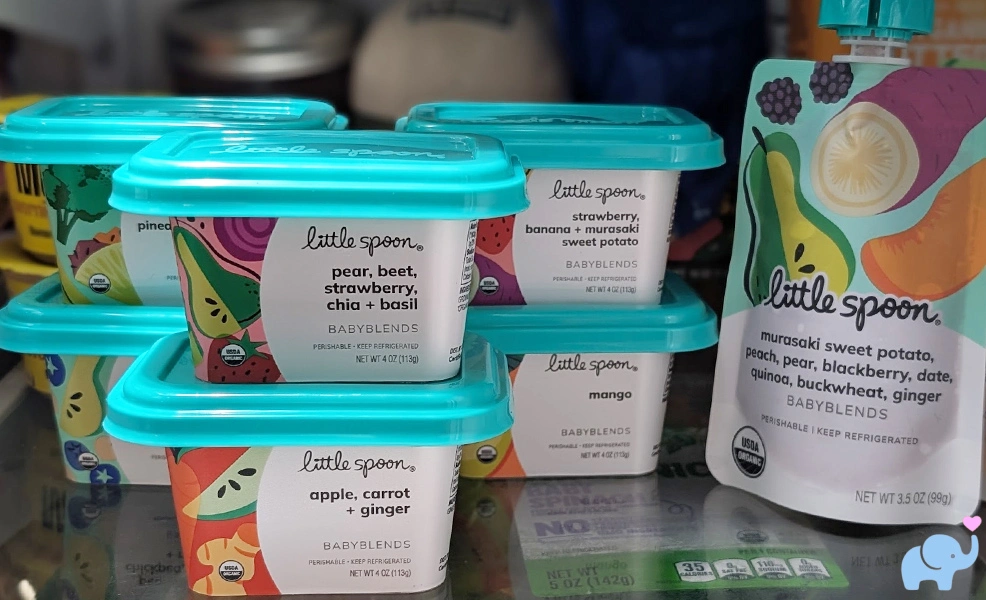
We strongly prefer the containers: they stack easily and function as a built-in bowl for spoon-feeding. No extra dirty dishes!
Under the lid, each container has a peel-back inner plastic seal. You’ll want to scrape a bit of puree off the underside of the seal when opening. Waste not, want not!
First impression: fresh-smelling, vibrant colors, and thoughtful packaging!
Stages, Textures & What They Really Mean
Little Spoon organizes Babyblends into stages that roughly align with a baby’s progression as they start solid foods.
In practice, these stages are best understood as texture and ingredient-complexity guides, not strict nutritional rules.
In our testing:
- Stage 1–style blends (banana, carrot, butternut squash, apple) were very smooth and simple, ideal for first spoon-feeding.
- Most Babyblends fit Stage 2 well, with multiple ingredients and more developed flavor profiles.
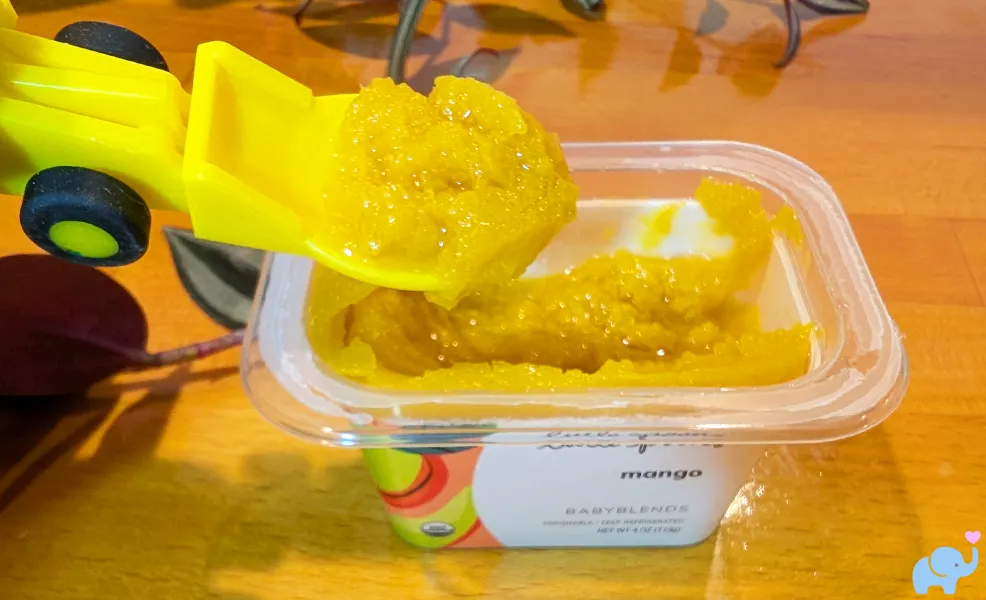
- Some blends clearly fit Stage 3, especially the mango puree, which is thicker and naturally fibrous (just like real mango).
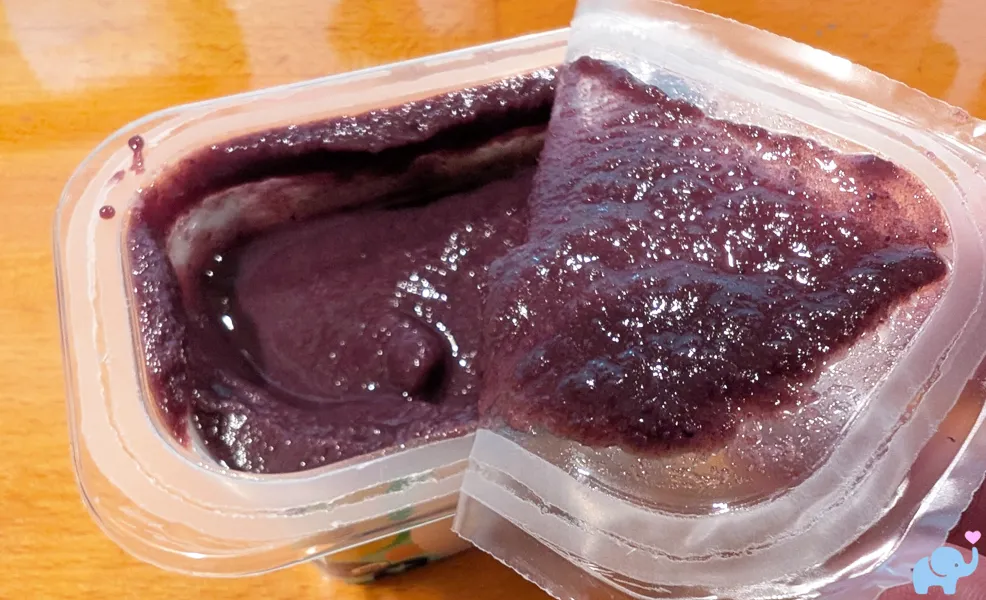
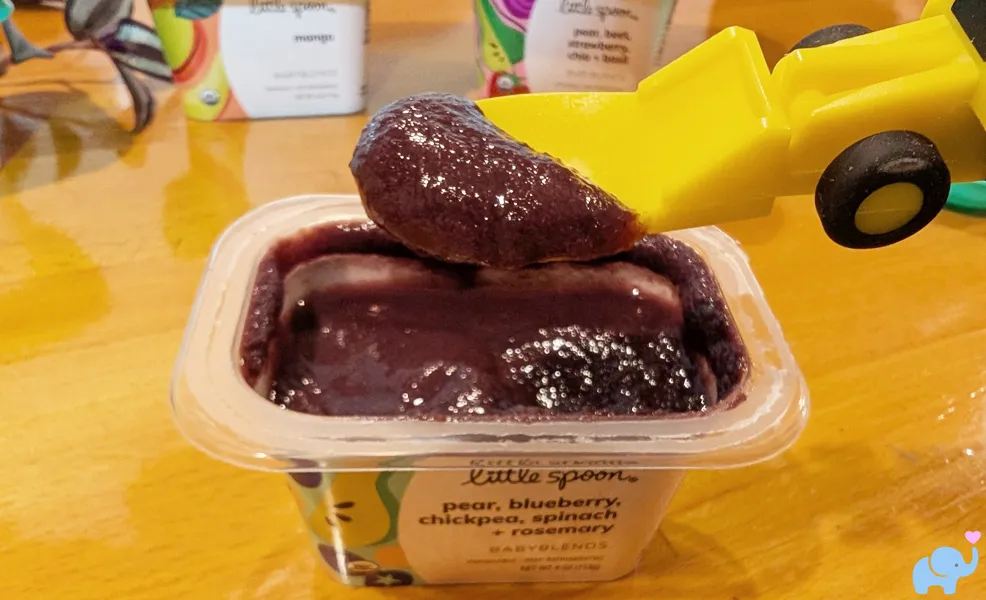
Below you can see the delicious pear, beet, strawberry, chia + basil puree.
Notice the beautiful, rich color - it smelled as good as it looked!
And here you can see the thicker mango texture:
Our takeaway: the stage system is genuinely useful for setting expectations about texture, but parents should still think of Babyblends as part of a broader complementary-feeding diet that also includes iron- and protein-rich foods (like baby cereal, breast milk, and/or formula).
Feeding Experience & Baby Acceptance
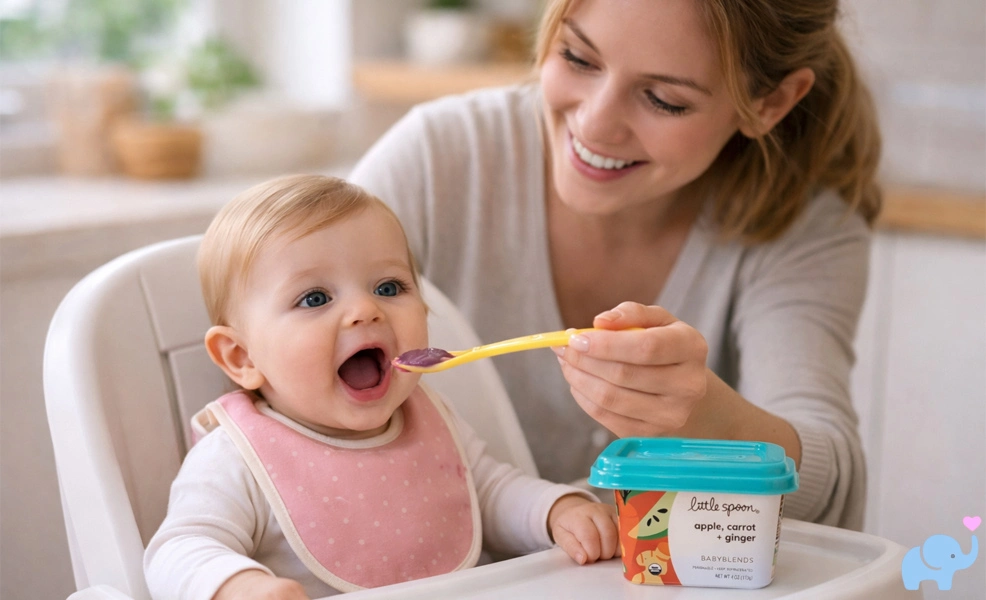
We tested Babyblends with two babies, one five months old and one eight months old, and both accepted the foods enthusiastically and tolerated them well.
The flavors were bright and well-balanced, and the colors were consistently vibrant and appealing.
Our favorite varieties included:
- Apple Carrot Ginger – smooth, gently spiced, and well-balanced.
- Broccoli Pineapple Banana Hemp Seed – surprisingly delicious and nutrient-dense.
Our tasting notes:
| Variety | Tasting Notes |
|---|---|
| Strawberry, banana + murasaki sweet potato | Light, fresh, yummy strawberry banana smoothie. |
| Mango | Thick, textured, fresh sweet yellow-orange mango. |
| Broccoli, pineapple, banana + hemp seed | Light green color, broccoli-forward flavor, light and smooth, more pineapple than banana. |
| Pear, blueberry, chickpea, spinach + rosemary | Dark purple color, rosemary- and blueberry-forward flavor, delicious! |
| Apple | Light yellow, slightly acidic, low sweetness. |
| Pear, beet, strawberry, chia + basil | Dark fuchsia color, beet-forward flavor. |
| Apple, carrot + ginger | Light orange color, our favorite flavor with notes of carrot and just a hint of ginger. |
One small caveat: the apple variety was slightly acidic to our taste, likely due to the addition of lemon juice (typically used to slow oxidation and lower pH).
Our test babies didn’t seem bothered, but parents of very sensitive eaters may want to keep this in mind.
Ingredients, Sugar & Nutrition Context
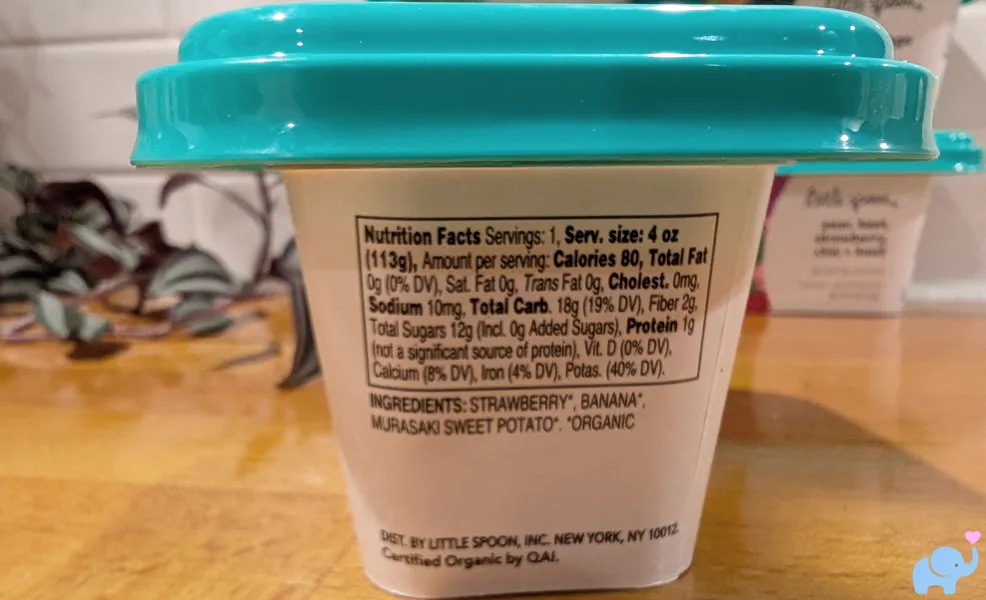
Ingredient lists are refreshingly short, with often just one to three whole foods.
Little Spoon emphasizes no added sugars, fillers, or artificial ingredients.
It’s worth noting (as with all fruit-based purees) that "no added sugar" doesn’t mean low sugar; fruits naturally contain sugars. What matters most is balance over time.
Used alongside vegetables, proteins, and iron-rich foods and cereals, Babyblends fits well within mainstream feeding guidance for infants and young children.
Processing, "Freshness," & Storage Safety
Little Spoon uses high-pressure processing (HPP), a non-heat preservation method that reduces pathogens while helping preserve taste, color, and texture better than traditional heat-sterilized baby foods.
This is why Babyblends must be refrigerated (or frozen) and have a shorter shelf life than shelf-stable jars or pouches.
Importantly, “fresh” here should be understood as refrigerated and pressure-processed, not raw or unprocessed. Because of this, proper cold storage and handling matter, just as they would with any fresh prepared food for infants.
Safety Testing, Heavy Metals & Transparency
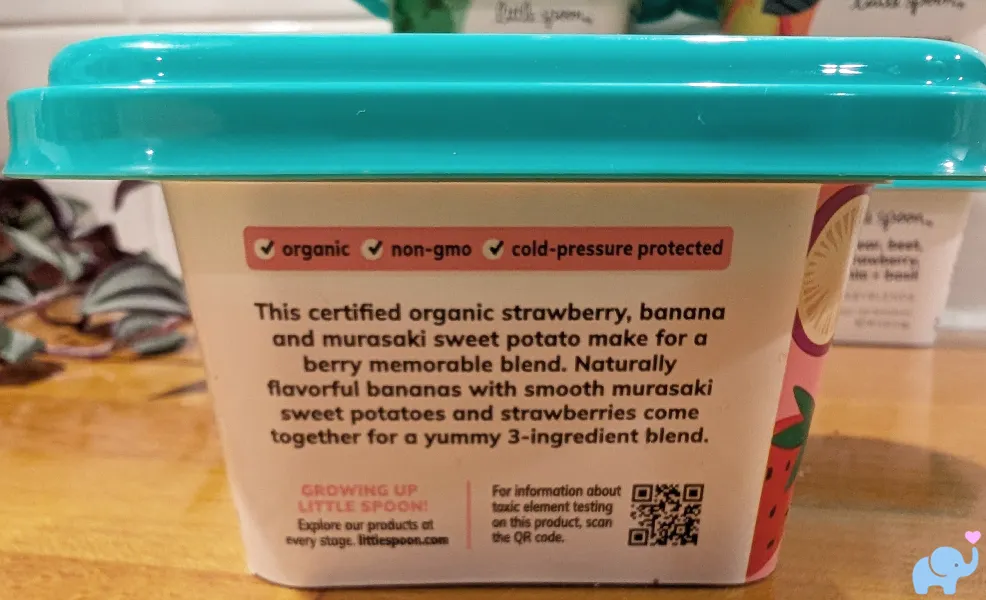
This is where Little Spoon truly stands out.
Each Babyblend container includes a QR code that links to safety testing results for that batch.
The testing covers heavy metals (lead, arsenic, cadmium, mercury), pesticides, glyphosate, and packaging-related chemicals like BPA/BPS.
Little Spoon publishes its internal limits and shows pass/fail status, a level of transparency we rarely see in baby food. For example, their stated lead limit (≤10 ppb) is in the range of FDA action levels for several baby food categories.
All Babyblends are also Clean Label Project certified, which involves third-party screening for a wide range of contaminants and benchmarking against other products in the category.
No testing can guarantee "zero contaminants," but Little Spoon’s approach makes it much easier for parents to understand what’s being tested and how the food performs relative to public standards.
Excellent!
Packaging, Storage & Convenience
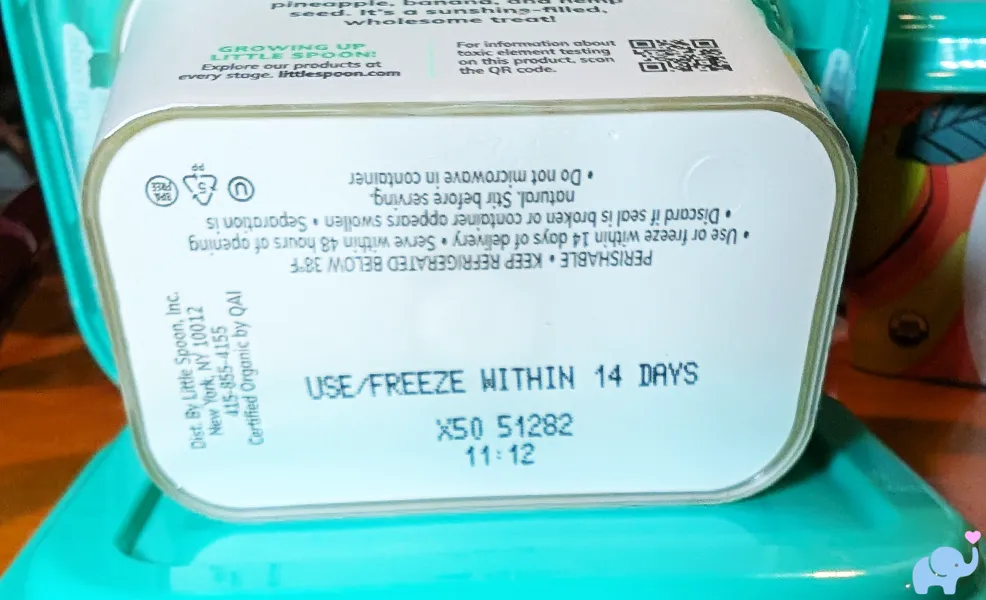
All packaging is BPA-free, recyclable, and thoughtfully sized.
Once thawed, Babyblends should be eaten or frozen within 14 days. We found the containers easy to stack in both the refrigerator and freezer.
Comparison to Other Baby Food Brands
Little Spoon vs Serenity Kids: Little Spoon offers more plant-forward blends and smoother texture progression, while Serenity Kids emphasizes meats and fats.
Little Spoon vs Once Upon a Farm: Both prioritize quality ingredients, but Little Spoon’s frozen-then-refrigerated model allows for simpler ingredient lists and longer refrigerated life.
Little Spoon vs Yumi: Little Spoon stands out for safety transparency and container-based feeding.
Value & Subscription Tradeoffs
Little Spoon Babyblends are priced at a premium compared to shelf-stable baby foods. That's not particularly surprising given the storage and handling requirements.
Plans are typically delivered every two weeks, which reduces shipment frequency but requires refrigerator or freezer space.
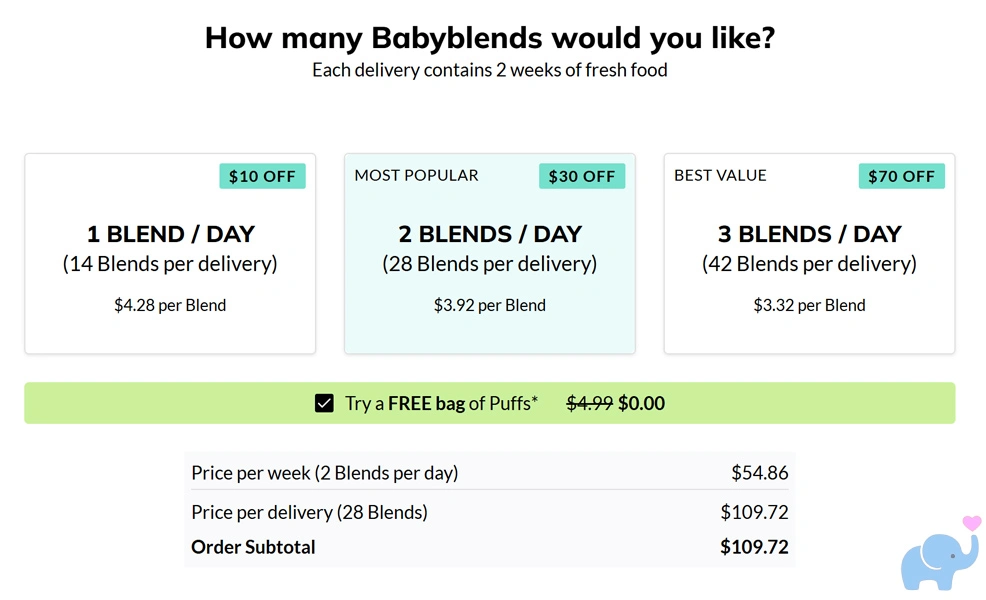
For families who value ingredient quality, safety, transparency, great taste, and developmental texture progression, we think the value proposition is strong.
Our Conclusions
Little Spoon Babyblends are among the most thoughtfully designed baby foods we’ve tested.
They combine real flavors, clean ingredients, clear texture progression, and rare safety transparency into a system that genuinely supports parents during all phases of starting solid foods.
If you’re comfortable with refrigerated storage and planning ahead for thawing, Babyblends are an excellent choice, and one of the most trustworthy fresh baby food options currently available.
We give Little Spoon Babyblends a confident 4.8 out of 5.0 overall.

Best Baby Fruit & Veggie Purees, Tested & Reviewed
Once your baby graduates from eating oatmeal and rice cereals, they can begin trying...
The Best Baby Cereals of 2026, Tested & Reviewed
A baby's first food needs to be gentle, mild tasting, easy and safe to swallow and...
Baby Brezza One Step Food Maker Deluxe Review & Video
The Baby Brezza One Step Deluxe Food Maker Deluxe offers some superior features and...