
Kendamil Organic Baby Formula Review and Analysis
A premium whole-milk formula with an excellent ingredient profile and hands-on testing performance.
 By: Tali Ditye, Ph.D., Co-founder
Mommyhood101 independently curates baby gear to inform decisions; AI may assist with editing. If you buy through links on our site, we may earn a commission.
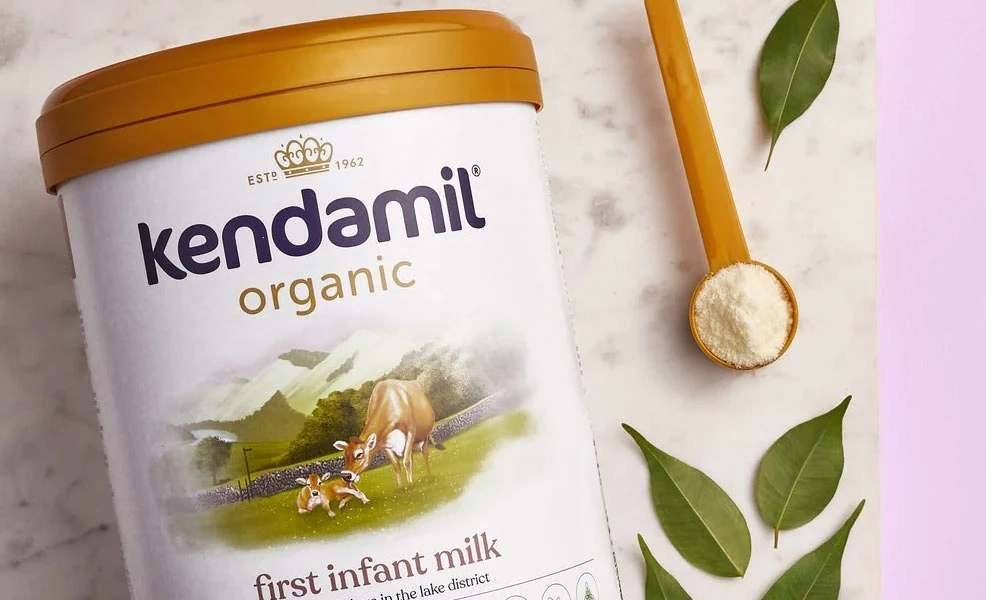
Kendamil has been making infant formula for more than 60 years and is best known for using whole milk, avoiding palm oil, and sourcing dairy from European farms.
For this review, we evaluated the U.S. version of Kendamil Organic Infant Formula for babies 0-12 months, including its ingredients, nutrition, preparation, packaging, certifications, value, and real-world feeding performance.
We also updated the article to reflect Kendamil's permanent U.S. formulation introduced in March 2026.
Full disclosure: Kendamil provided formula for our original hands-on testing; no compensation or sponsorship was provided, and all opinions are our own. Formula labels and recipes can change, so always follow the instructions on your current can and consult your pediatrician before changing formulas.
Important: This article reviews the U.S.-marketed Kendamil Organic Infant Formula for babies 0-12 months. European Kendamil products may use different stage names, labels, nutrient declarations, and preparation directions.
Our Kendamil Organic Formula Review
Nobody wants to read an entire formula review before finding out what we thought, so here are our findings right up front.
Here is a summary of what we loved, along with a few limitations to consider.
✔️ USDA Organic certified.
✔️ European organic certification.
✔️ Organic whole milk is the first ingredient.
✔️ Milk from grass-fed European cows.
✔️ Lactose is the primary carbohydrate.
✔️ Approximately 60:40 whey-to-casein ratio.
✔️ Naturally occurring MFGM components.
✔️ GOS prebiotics.
✔️ Plant-based DHA and ARA.
✔️ Hexane-free DHA extraction.
✔️ No palm oil or palm olein.
✔️ No soybean oil or added soy ingredients.
✔️ No corn syrup solids or maltodextrin.
✔️ No fish oil.
✔️ Includes nucleotides, taurine, choline, and inositol.
✔️ Vegetarian, kosher, and halal positioning.
✔️ Large 28.2-ounce (800 g) can.
✔️ Excellent scoop storage and leveling edge.
✔️ Mixes easily with minimal clumping.
✔️ Rich, creamy taste.
✔️ Strong acceptance in our testing.
✔️ Competitive price for a premium organic formula.
❌ No probiotics.
❌ Hot-water preparation is less convenient.
❌ Older cans and retailer pages may show outdated information.
Overall, Kendamil Organic impressed us with its thoughtful whole-milk recipe, excellent ingredient profile, strong nutrition panel, easy mixing, and high infant acceptance.
Definitely worthy of a spot on our list of the best organic baby formulas!
It is especially appealing for parents who want an organic, lactose-based formula without palm oil, corn syrup solids, soybean oil, or fish oil.
However, it is still a standard intact cow's milk formula. It is not partially hydrolyzed, extensively hydrolyzed, amino-acid based, lactose-free, anti-reflux, or appropriate for a diagnosed cow's milk protein allergy. For that, check out our review of Bobbie Gentle organic infant formula.
Packaging & First Impressions
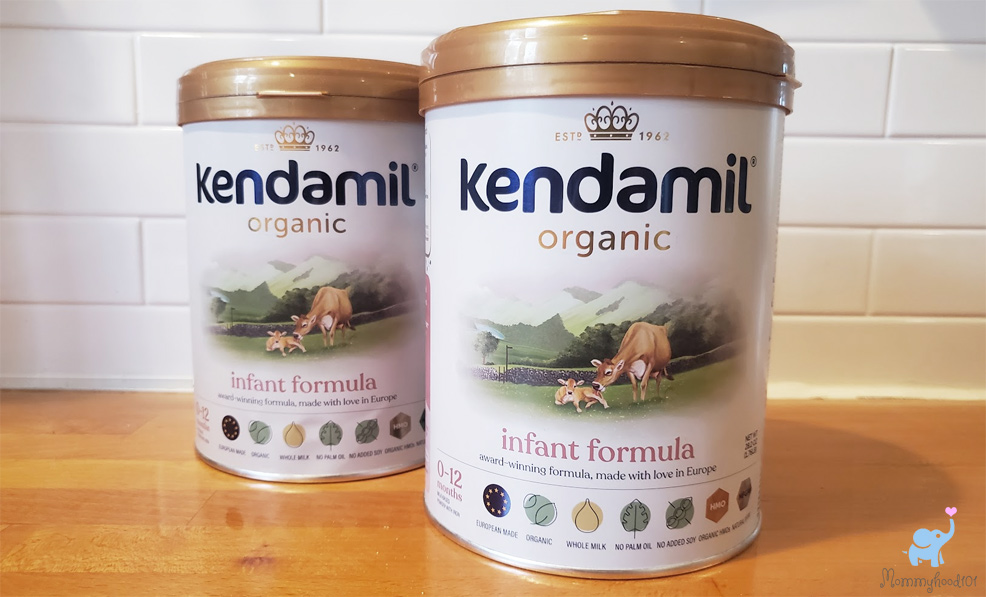
Kendamil Organic comes in a large metal can containing 28.2 ounces, or 800 grams, of formula powder.
The packaging is one of the better designs we have used.
The hinged plastic lid closes securely, the scoop stores in the top rather than disappearing into the powder, and a built-in straight edge makes it easy to level each scoop.
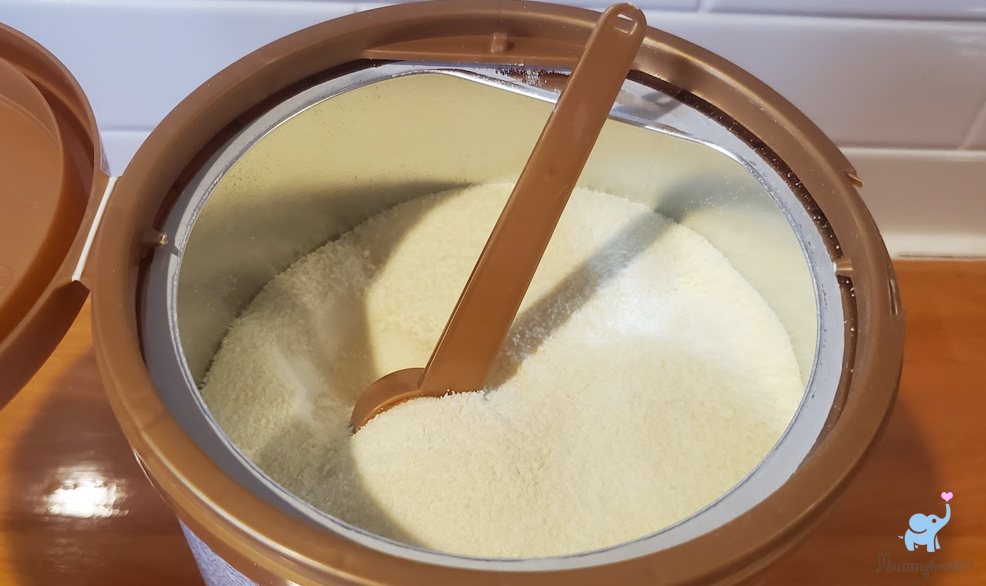
That may sound like a small detail, but it is genuinely helpful when preparing multiple bottles every day.
The powder itself is soft and pale cream to light golden in color. Kendamil notes that the updated 2026 formula may look slightly more golden than the prior version.
Always inspect the can before use. Avoid cans with broken seals, severe dents along seams, swelling, leaks, or an expired use-by date.
Ingredients
The ingredient list is one of Kendamil Organic's strongest features.
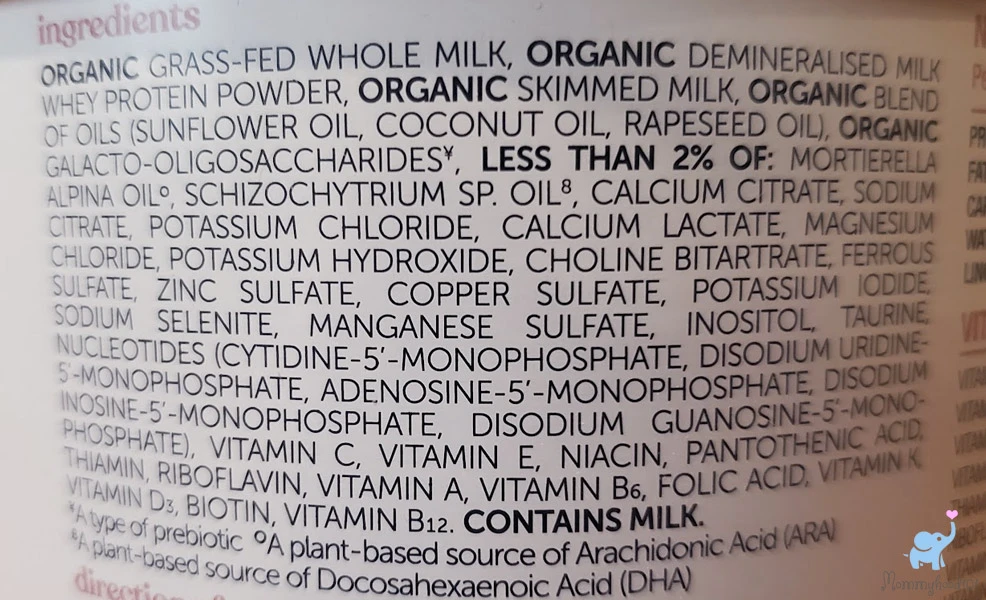
The current March 2026 recipe begins with organic whole milk, followed by organic reduced-minerals whey, an organic vegetable-oil blend, organic skimmed milk powder, and organic GOS prebiotics.
Current U.S. ingredients list:
Organic whole milk, organic reduced minerals whey, organic vegetable oils (sunflower oil, coconut oil, low erucic rapeseed oil), organic skimmed milk powder, organic galacto-oligosaccharides (GOS), less than 2% of: calcium citrate, sodium citrate, potassium chloride, calcium phosphate, magnesium chloride, Schizochytrium sp. oil, ascorbic acid, potassium hydroxide, choline bitartrate, inositol, Mortierella alpina oil, taurine, iron pyrophosphate, nucleotides (cytidine-5'-monophosphate, disodium uridine-5'-monophosphate, adenosine-5'-monophosphate, disodium inosine-5'-monophosphate, disodium guanosine-5'-monophosphate), zinc sulfate, vitamin E acetate, niacinamide, calcium pantothenate, copper sulfate, thiamin hydrochloride, riboflavin, vitamin A acetate, vitamin B6 hydrochloride, manganese sulfate, folic acid, potassium iodide, sodium selenate, vitamin K1, vitamin D3, biotin, vitamin B12, and mixed tocopherols.
Contains milk.
Label note: The image below shows the ingredient panel from the earlier formula we tested. The March 2026 U.S. recipe removes calcium lactate, adds calcium phosphate and mixed tocopherols to the declaration, and changes several ingredient names. Use the written list above and your current can for the most recent information.
Some noteworthy formulation highlights include:
- Organic whole milk: Whole milk is the first ingredient and provides milk fat along with naturally occurring MFGM components.
- Lactose-based carbohydrate: Kendamil does not use corn syrup solids, maltodextrin, or sucrose as major carbohydrate sources.
- Approximately 60:40 whey-to-casein ratio: Added whey adjusts the naturally casein-heavy protein balance of cow's milk.
- No palm oil: The fat blend uses sunflower, coconut, and low-erucic rapeseed oils alongside dairy fat.
- GOS prebiotics: Galacto-oligosaccharides are added to support beneficial gut bacteria and may contribute to softer stools.
- Plant-based DHA and ARA: DHA comes from Schizochytrium algae and ARA comes from Mortierella alpina oil. Kendamil discloses that their DHA is extracted without hexane.
- Nucleotides, taurine, choline, and inositol: These are commonly included in modern infant formulas to support normal growth and development.
We also appreciate what Kendamil leaves out.
The formula contains no palm oil, palm olein, soybean oil, corn syrup solids, maltodextrin, fish oil, artificial colors, or artificial flavors.
What About MFGM?
Milk fat globule membrane, or MFGM, surrounds fat droplets in mammalian milk.
Because Kendamil uses whole milk, the formula contains naturally occurring MFGM components rather than relying entirely on skim milk and vegetable oil.
Research involving specific supplemental MFGM ingredients is promising, but Kendamil does not prominently disclose a standardized MFGM dose. We therefore think the most accurate wording is that Kendamil contains naturally occurring MFGM components from whole milk, rather than claiming a product-specific cognitive benefit.
What About HMOs?
Kendamil markets naturally occurring HMO content and identifies milk-derived galactosyllactoses in some product materials.
That deserves some context.
The formula's clearly added prebiotic is GOS, which is not itself a human milk oligosaccharide. Trace or naturally occurring bovine-milk oligosaccharides also do not reproduce the quantity or diversity of HMOs found in human milk.
For that reason, we would not describe Kendamil as having the same HMO profile as breast milk or as formulas containing several specifically added HMOs.
Nutrition Facts
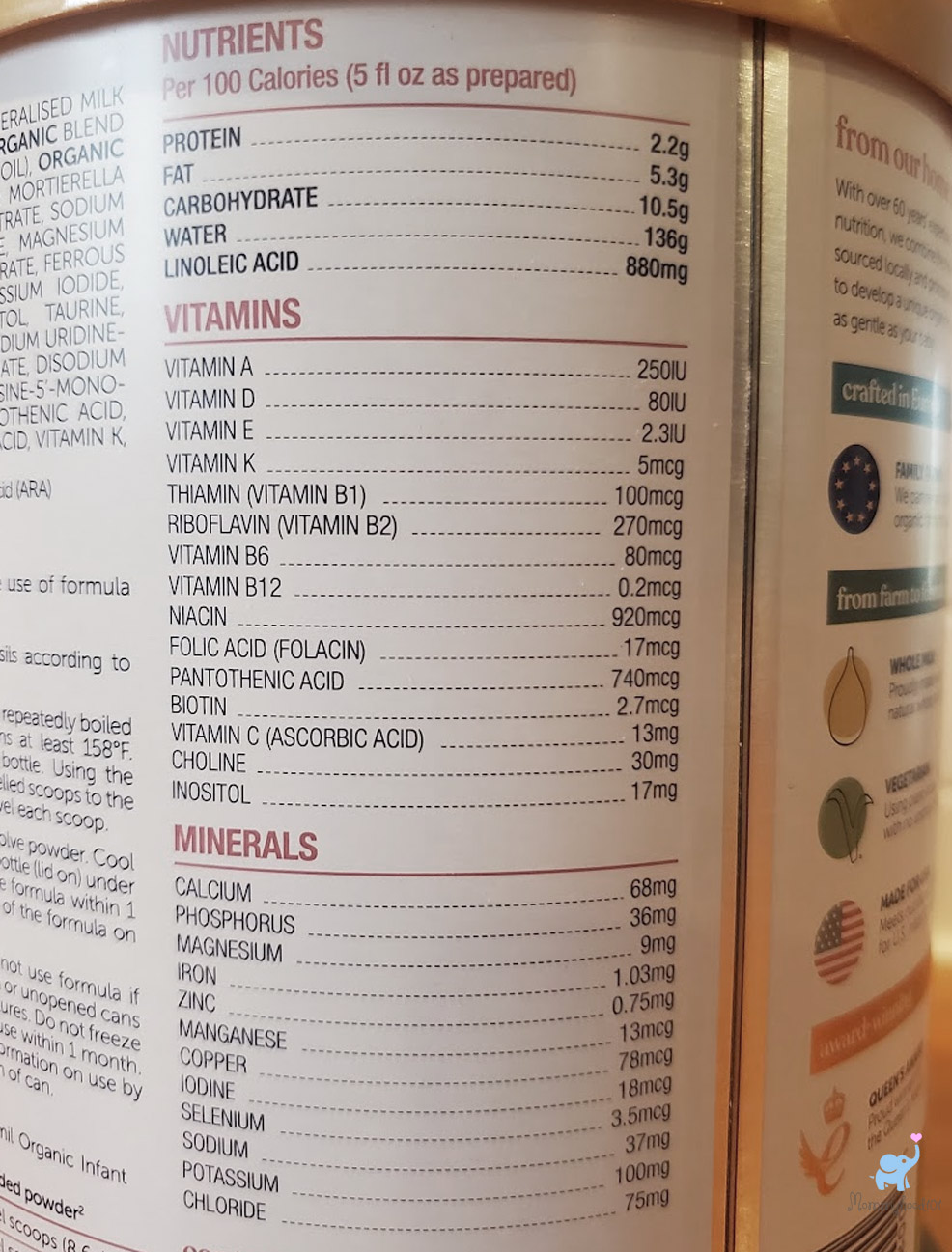
Every 5 fluid ounces of prepared Kendamil Organic provides 100 calories.
Here are the current nutrients listed per 100 calories:
| Nutrient | Amount | Notes |
|---|---|---|
| Protein | 2.2 g | Intact milk proteins with an approximately 60:40 whey-to-casein ratio |
| Fat | 5.3 g | From dairy fat plus sunflower, coconut, and rapeseed oils |
| Carbohydrate | 10.5 g | Primarily lactose from milk and whey ingredients |
| Water | 136 g | Formula as prepared for feeding |
| Linoleic acid | 810 mg | Essential omega-6 fatty acid |
| Vitamin A | 250 IU | Supports vision, immunity, and growth |
| Vitamin D | 60 IU | Supports calcium absorption and bone development |
| Vitamin E | 2.3 IU | Antioxidant vitamin |
| Vitamin K | 5 mcg | Supports normal blood clotting |
| Thiamin (B1) | 100 mcg | Supports energy metabolism and nervous-system function |
| Riboflavin (B2) | 270 mcg | Supports cellular energy metabolism |
| Vitamin B6 | 80 mcg | Important for amino-acid metabolism and development |
| Vitamin B12 | 0.2 mcg | Supports red blood cells and nervous-system development |
| Niacin | 920 mcg | Supports energy metabolism |
| Folic acid | 17 mcg | Supports cell division and growth |
| Pantothenic acid | 740 mcg | Supports energy and fatty-acid metabolism |
| Biotin | 2.7 mcg | Supports carbohydrate, fat, and protein metabolism |
| Vitamin C | 13 mg | Supports antioxidant function and iron absorption |
| Choline | 30 mg | Important for cell membranes and brain development |
| Inositol | 17 mg | Involved in cellular signaling and development |
| Calcium | 60 mg | Supports bone and tooth development |
| Phosphorus | 36 mg | Works with calcium in bone development |
| Magnesium | 7.7 mg | Supports enzymes, muscles, and bone |
| Iron | 1 mg | Supports red blood cells and cognitive development |
| Zinc | 0.6 mg | Supports growth and immune function |
| Manganese | 7.4 mcg | Trace mineral involved in metabolism |
| Copper | 60 mcg | Supports iron metabolism and connective tissue |
| Iodine | 16 mcg | Supports thyroid hormones and brain development |
| Selenium | 3.5 mcg | Antioxidant trace mineral |
| Sodium | 32 mg | Electrolyte involved in fluid balance |
| Potassium | 80 mg | Supports muscle, nerve, and heart function |
| Chloride | 60 mg | Supports fluid and acid-base balance |
Label note: The nutrition-label photo below is from the earlier can used in our testing. Some declared values changed with the March 2026 U.S. label. The table above reflects the current manufacturer listing, but your physical can should always be treated as authoritative.
FDA Nutrition Comparison
Rather than compare infant formula with general daily intake recommendations, we compare the values printed on the label with the specific U.S. infant formula nutrient requirements in 21 CFR 107.100.
Those FDA requirements establish minimum amounts for required nutrients and maximum amounts for several nutrients, all standardized per 100 calories.
| Nutrient | Kendamil Organic | U.S. Standard | Our Take |
|---|---|---|---|
| Protein | 2.2 g | 1.8-4.5 g | Within range |
| Fat | 5.3 g | 3.3-6.0 g | Within range |
| Calories from fat | 47.7% | 30-54% | Within range |
| Linoleic acid | 810 mg | At least 300 mg | Comfortably above minimum |
| Vitamin A | 250 IU | 250-750 IU | At the required minimum |
| Vitamin D | 60 IU | 40-100 IU | Within range |
| Iron | 1 mg | 0.15-3.0 mg | Within range |
| Iodine | 16 mcg | 5-75 mcg | Within range |
| Selenium | 3.5 mcg | 2-7 mcg | Within range |
| Sodium | 32 mg | 20-60 mg | Within range |
| Potassium | 80 mg | 80-200 mg | At the required minimum |
| Chloride | 60 mg | 55-150 mg | Within range |
| Calcium:phosphorus ratio | About 1.67:1 | At least 1.1:1 and no more than 2.0:1 | Within range |
| Vitamin E:linoleic acid ratio | About 2.8 IU/g | At least 0.7 IU/g | Comfortably above minimum |
Based on the current label values, Kendamil Organic aligns with the FDA nutrient requirements for standard infant formula.
That conclusion is also consistent with its inclusion on the FDA's list of non-exempt infant formulas marketed in the United States.
It is worth noting that FDA does not currently require DHA or ARA in standard U.S. infant formula. Kendamil includes both voluntarily and also formulates to meet applicable European DHA requirements.
Preparation & Mixing
Kendamil's preparation method differs from many U.S. formulas because it instructs parents to begin with freshly boiled water.
The updated March 2026 directions specify:
- Wash hands thoroughly with soap and warm water.
- Bring 32 fluid ounces of fresh water to a boil; do not use repeatedly boiled water.
- Allow the boiled water to cool for 5 minutes.
- Pour the required amount into a sterilized bottle, taking care to avoid burns.
- Add 1 level scoop for each 1 fluid ounce of water.
- Attach the nipple and cap, then shake well until dissolved.
- Cool the closed bottle under cold running water until it reaches a safe feeding temperature.
- Test a few drops on the inside of your wrist before feeding.
- Once feeding begins, use within 1 hour or discard.
Mixing chart:
| Water | Powder | Approximate Feed |
|---|---|---|
| 2 fl oz | 2 level scoops | Small bottle |
| 4 fl oz | 4 level scoops | Medium bottle |
| 6 fl oz | 6 level scoops | Larger bottle |
| 8 fl oz | 8 level scoops | Large bottle |
Always measure water first and use only the scoop supplied with the current can.
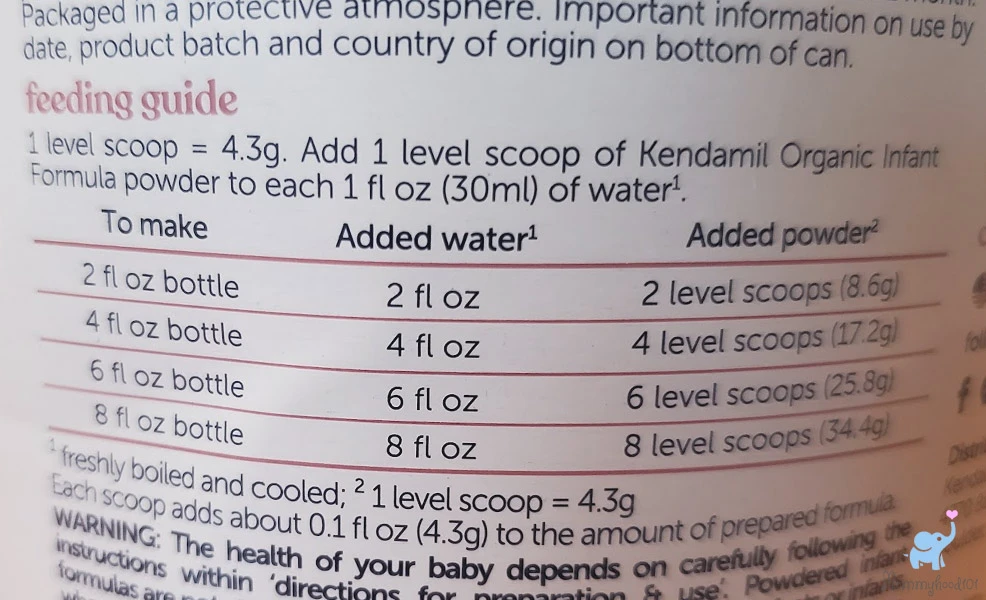
Important update: Older Kendamil directions, including those shown in our original video and feeding-guide photo, instructed parents to cool boiled water for about 30 minutes. The current March 2026 U.S. instructions specify 5 minutes. Follow the directions printed on your can.
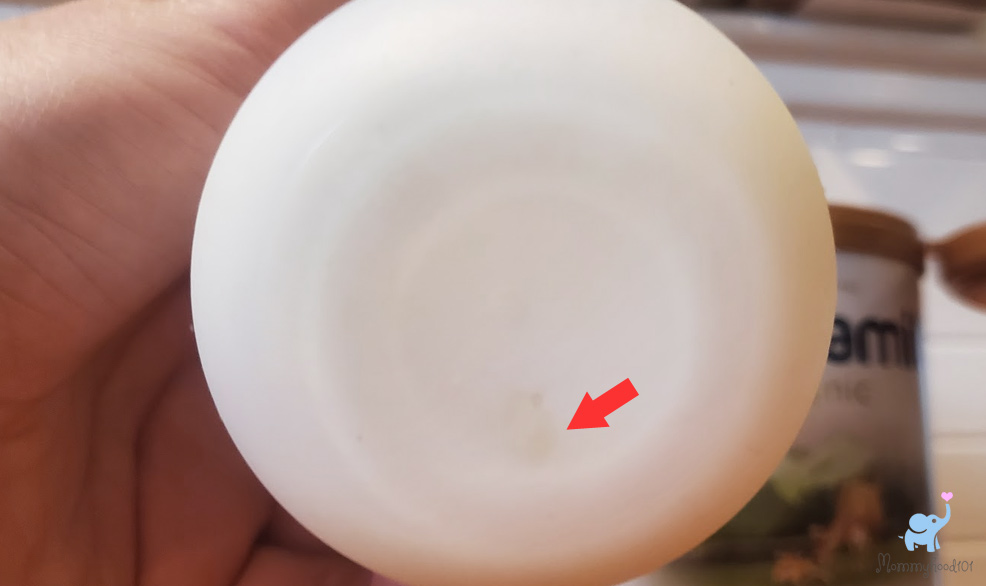
In our mixing test, Kendamil dissolved easily in warm water and left very little film or residue in the bottle.
We also saw minimal foaming compared with many formulas.
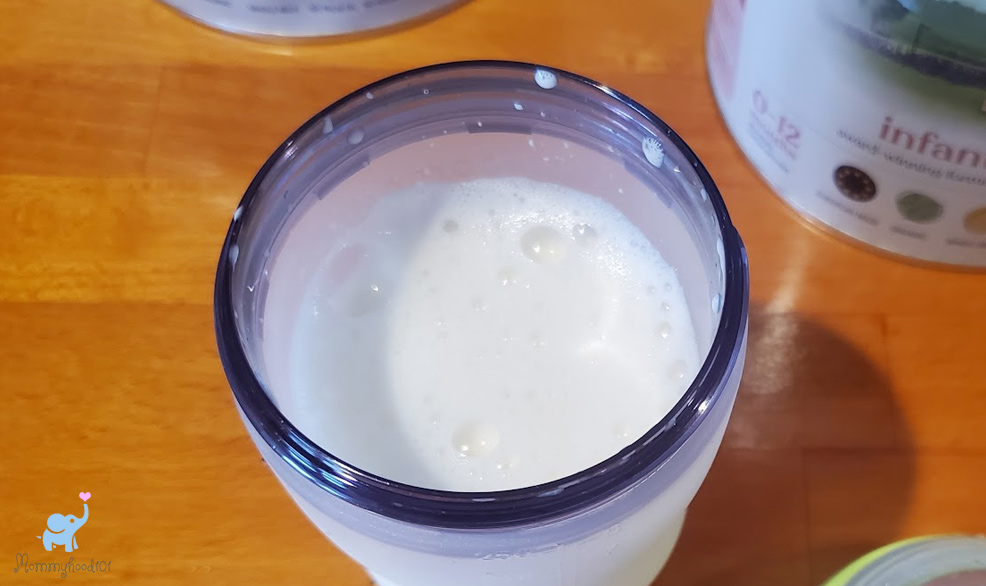
We found only one small clump at the bottom of the bottle, which is excellent performance for a whole-milk formula.
Powdered infant formula is not sterile. Families preparing formula for premature, medically fragile, or immunocompromised babies should ask their medical team for individualized preparation guidance.
Safety First: Never change the powder-to-water ratio unless specifically instructed by a qualified medical professional. Improper dilution or concentration can be dangerous.
Our Hands-On Testing
We originally tested Kendamil Organic with two babies.
One was a 2-month-old formula-fed baby who typically used Similac. The other was a 6-month-old primarily breastfed baby whose mother reported constipation with previous formula attempts.
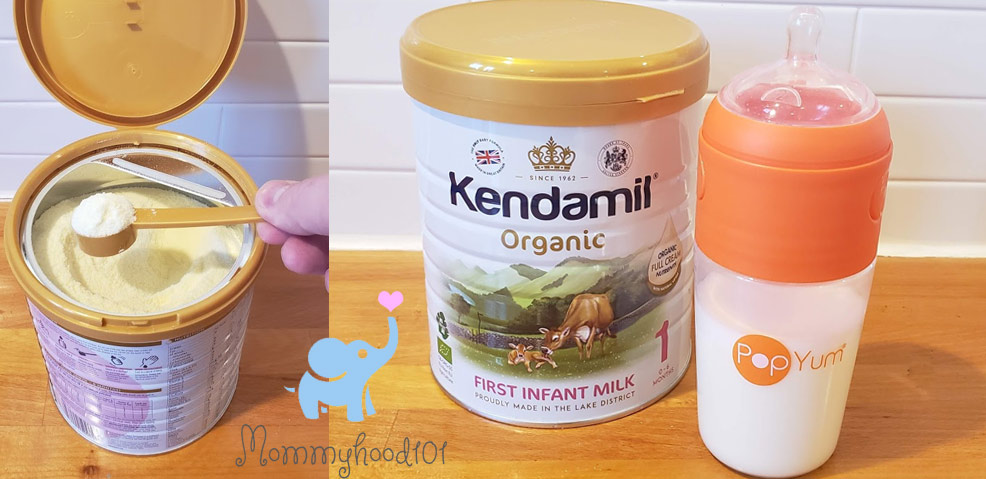
In terms of smell, texture, and taste, we found Kendamil pleasantly mild, rich, and creamy.
It tasted noticeably sweet, which is expected from a lactose-based formula, but it did not have the strong metallic or fishy odor associated with some formulas.
The prepared formula flowed well through slow- and medium-flow nipples.
Both babies accepted it readily, including the primarily breastfed 6-month-old.

The younger formula-fed baby drank his usual amount or slightly more.
The older baby developed some gas after feeding, though his mother reported that this occurred whenever he received formula. We did not observe severe spit-up, refusal, diarrhea, or constipation during the short testing period.
Overall, Kendamil made a very good impression for mixing, taste, acceptance, and short-term tolerability.
Of course, two babies are not a clinical trial, and formula tolerance varies substantially from one infant to another.
A baby who does well on another nutritionally complete formula does not need to switch simply because Kendamil has a premium ingredient list.
Certifications & Claims
Kendamil Organic carries several meaningful certifications and positioning claims:
- USDA Organic
- European organic certification
- Soil Association organic certification
- Clean Label Project certification on updated cans
- Vegetarian
- Kosher
- Halal
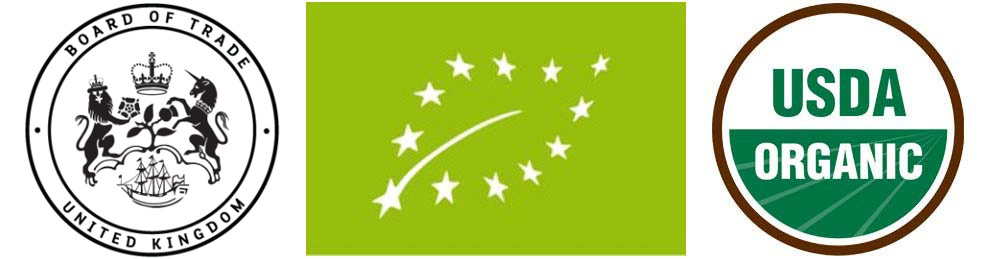
Organic certification restricts genetically engineered ingredients, many synthetic pesticides and fertilizers, and routine antibiotic use in livestock.
It does not prove that a formula is nutritionally superior to every conventional formula or that it is completely free of trace environmental contaminants.
Similarly, Clean Label Project certification indicates comparative contaminant testing, but it should not be interpreted as meaning the product is literally free of all heavy metals or other contaminants.
European Milk and Grass-Fed Claims
Kendamil says its organic whole milk comes from grass-fed cows on certified European farms.
That is an appealing sourcing feature, but the phrase grass-fed does not necessarily mean the cows receive a 100% grass-only diet every day of the year.
Season, climate, certification rules, and supplemental feed can all affect farming practices.
No Palm Oil or Soybean Oil
Kendamil does not use palm oil, palm olein, or soybean oil.
Many parents prefer that approach, especially because palm olein has been associated in some studies with firmer stools and somewhat lower calcium or fat absorption.
That does not mean palm-oil-containing formulas are unsafe or nutritionally incomplete. It is best viewed as a legitimate formulation preference rather than a universal medical requirement.
March 2026 U.S. Formula Update
Kendamil originally entered the U.S. market during the 2022 formula shortage under FDA enforcement discretion.
The company subsequently completed clinical growth studies and a broader FDA review covering nutrition, manufacturing, quality testing, labeling, and ongoing monitoring.
Kendamil says that process is now complete and that the brand has permanent long-term status in the U.S. market.
The updated Organic formula began arriving in stores in March 2026.
Key changes include:
- Calcium lactate was removed. Calcium now comes from calcium citrate and calcium phosphate.
- The vitamin C source changed. Sodium ascorbate was replaced by ascorbic acid.
- Mixed tocopherols are now listed. These antioxidants help protect the oil blend's freshness.
- Some vitamin and mineral declarations changed. U.S. labels must guarantee declared levels through the end of shelf life.
- The powder may appear slightly more golden.
- Preparation changed from 30 minutes to 5 minutes of cooling after boiling water.
Kendamil says both the prior and updated versions remain nutritionally complete, and the core whole-milk formulation principles remain the same.
Still, parents may notice temporary differences in smell, appearance, mixing, stool pattern, gas, or spit-up when transitioning between versions.
Current cans can be identified by updated labeling, Clean Label Project certification on the front, and, during the initial transition, a lid sticker noting an update for families.
Value & Comparisons
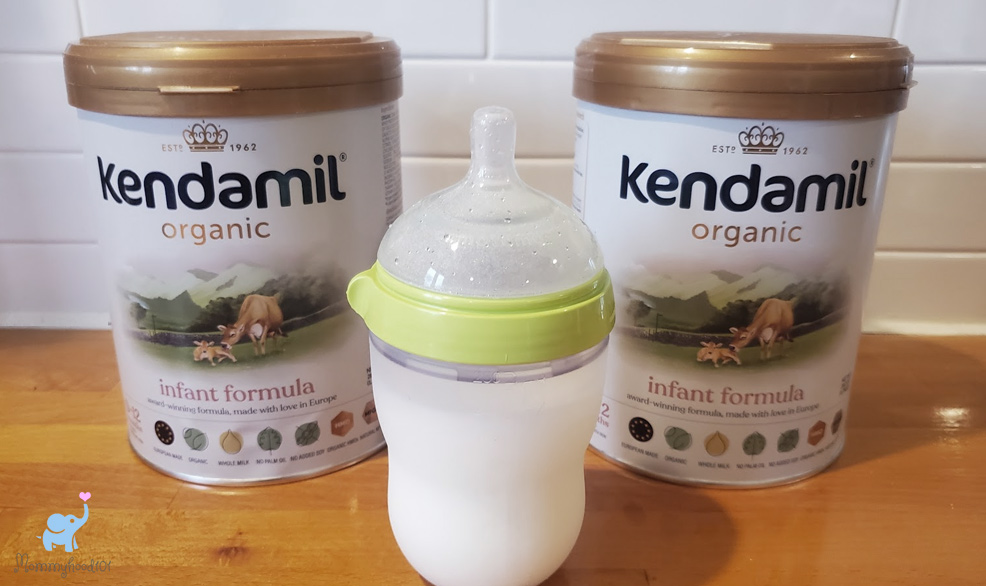
Kendamil Organic is currently sold in a 28.2-ounce can for about $39.99 at major U.S. retailers, or approximately $1.42 per dry ounce.
Prices and promotions can change, but that is competitive for a premium organic whole-milk formula.
| Formula | Key Difference | Best Fit |
|---|---|---|
| Kendamil Organic | Organic whole milk, GOS, no palm or soybean oil, algae DHA, large 800 g can | Parents wanting a premium European-made organic whole-milk formula |
| Kendamil Classic | Similar whole-milk philosophy without organic certification | Better value when organic certification is not essential |
| Little Spoon Organic | Organic whole milk, FOS, U.S.-style preparation, strong testing transparency | Parents prioritizing published testing details and conventional preparation |
| Bobbie Organic | Subscription-friendly premium organic formula with a simpler U.S. feeding workflow | Parents who value predictable delivery and U.S.-based customer service |
| Similac Organic | Broad U.S. distribution and a more conventional domestic formula profile | Parents prioritizing retail availability |
| Kendamil Goat | Whole goat milk and goat whey | Families specifically choosing goat formula with pediatric guidance |
Kendamil Goat is not hypoallergenic and is not an appropriate substitute for babies with a diagnosed cow's milk protein allergy because cow and goat milk proteins can cross-react.
For uncomplicated feeding, Kendamil Organic offers strong value relative to many premium competitors, especially given its large can size and organic whole-milk formulation.
The most important practical consideration is availability. Formula changes can be difficult for some babies, so families who choose Kendamil may want to keep a reasonable backup supply without stockpiling excessively.
Who Might Like Kendamil Organic?
Kendamil Organic may be a particularly good fit for families seeking:
- Organic cow's milk formula for a healthy term infant
- Whole milk as the first ingredient
- Lactose rather than corn syrup solids
- No palm oil, soybean oil, or fish oil
- GOS prebiotics
- Vegetarian DHA and ARA
- A European-made formula officially marketed in the United States
- A large can at a competitive premium price
Who May Need Something Different?
Another formula may be more appropriate for babies who need:
- Extensively hydrolyzed or amino-acid formula
- A formula for confirmed cow's milk protein allergy
- Lactose-free formula
- A thickened anti-reflux formula
- Premature-infant or higher-calorie nutrition
- Sterile ready-to-feed formula
- Partially hydrolyzed protein recommended by a clinician
Our Conclusions
Kendamil Organic is one of the most thoughtfully formulated organic infant formulas currently sold in the United States.
We love the use of organic whole milk, lactose, a whey-forward protein balance, GOS prebiotics, algae-derived DHA, ARA, and naturally occurring MFGM components.
We also appreciate the absence of palm oil, soybean oil, corn syrup solids, maltodextrin, and fish oil.
During our hands-on testing, it mixed easily, produced minimal foam and clumping, tasted rich and creamy, and was readily accepted by both test babies.
The packaging is also excellent, with secure scoop storage and a convenient leveling edge.
Our main reservations are relatively minor.
Kendamil uses intact cow's milk proteins, so it is not a gentle, hydrolyzed, or hypoallergenic formula. It does not include probiotics, and the boiled-water preparation method is more involved than the directions used by many U.S. formulas.
We also think the company's HMO and MFGM messaging requires careful wording. The formula has GOS, naturally occurring milk oligosaccharides, and naturally occurring MFGM components, but that is not the same as reproducing the full HMO complexity of breast milk or providing a standardized supplemental MFGM dose.
The March 2026 changes are meaningful enough that parents should check their current can rather than relying on older retailer listings, photos, or preparation instructions.
Overall, Kendamil Organic remains an excellent premium choice for healthy term infants who tolerate intact cow's milk protein.
At about $39.99 for a large 800 g can, it also provides unusually good value within the organic whole-milk category.
References
Intestinal Effects of Prebiotic GOS in Infant Formula
MFGM and Infant Development Research
European Infant Formula Composition Requirements
United States FDA Infant Formula Nutrient Requirements
Disclaimer: Infant formula labels, ingredients, prices, availability, and preparation instructions can change. This article is informational and does not replace medical advice. Always read the current package, prepare formula exactly as directed, and consult your child's pediatrician regarding feeding concerns, allergies, growth, or formula changes.

Kendamil Goat Baby Formula Review & Analysis
Kendamil goat milk formulas are becoming very popular in the UK and other European...
Loulouka Goat Infant Formula Review & Analysis
Loulouka goat milk infant formulas are made in Austria using premium goat milk sourced...

Best Organic Baby Formulas 2026: Expert Reviews
There are many high-quality organic infant formulas to choose from, including options...
Full Review: Good Start Gentle Pro Infant Formula - Dr. Brown’s
Good Start Gentle Pro is one of the more interesting gentle baby formulas we've tested,...