Less time at the sink, more time with your baby: which cleaning system should you buy?
 By: Tali Ditye, Ph.D., Co-founder
Mommyhood101 independently curates baby gear to help inform decisions; if you buy through links on our site, we may earn a commission.
Anyone who has spent an evening cleaning bottles, nipples, collars, milk collectors, breast shields, and tiny pump inserts knows how quickly feeding cleanup can take over the kitchen.
It's not just the cleaning, either. There's rinsing, sanitizing, drying, putting everything away, and then doing it all again after the next feeding or pumping session.
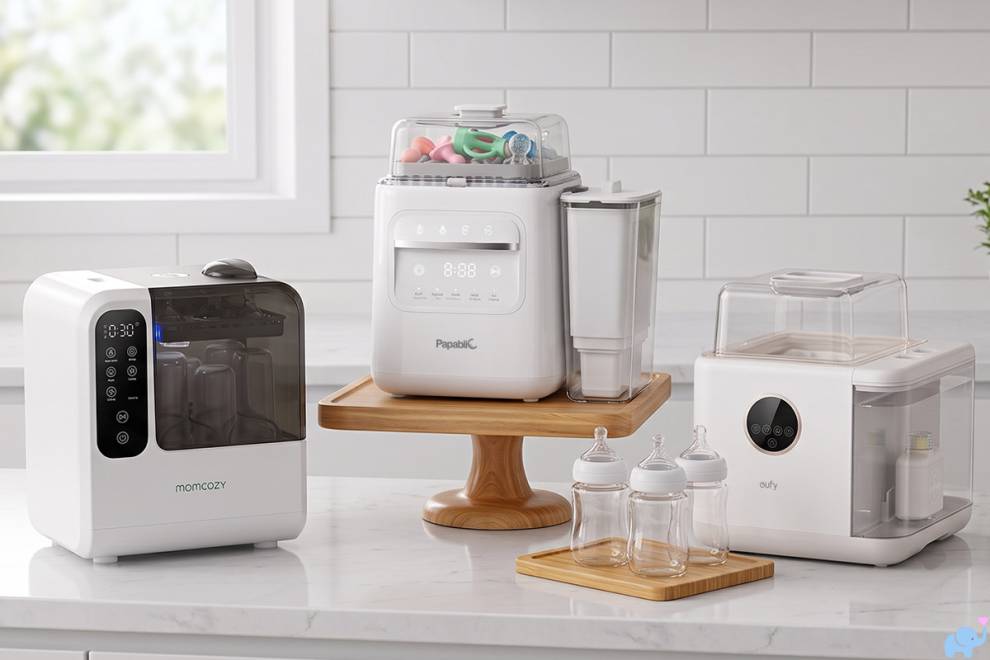
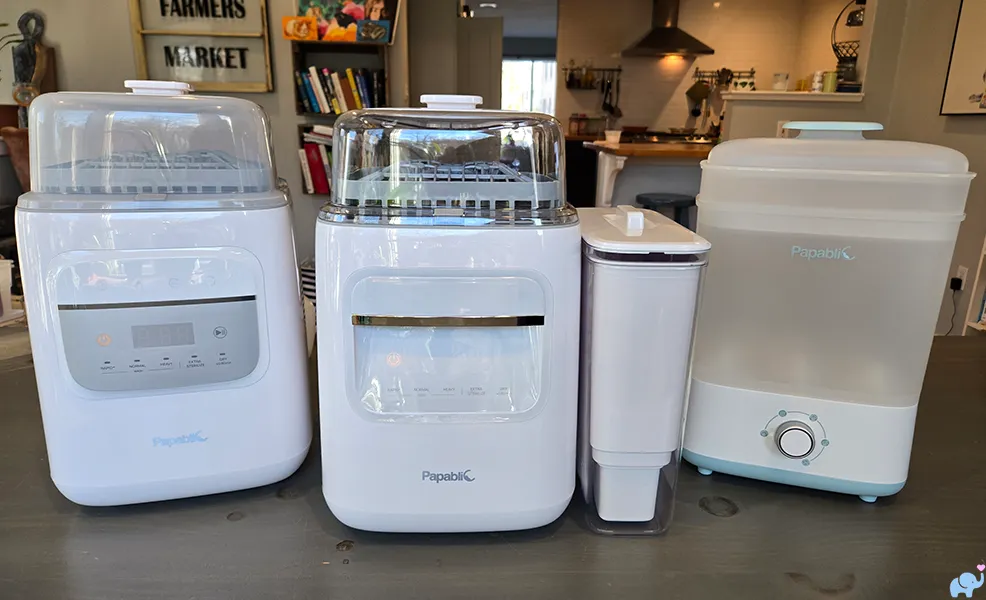
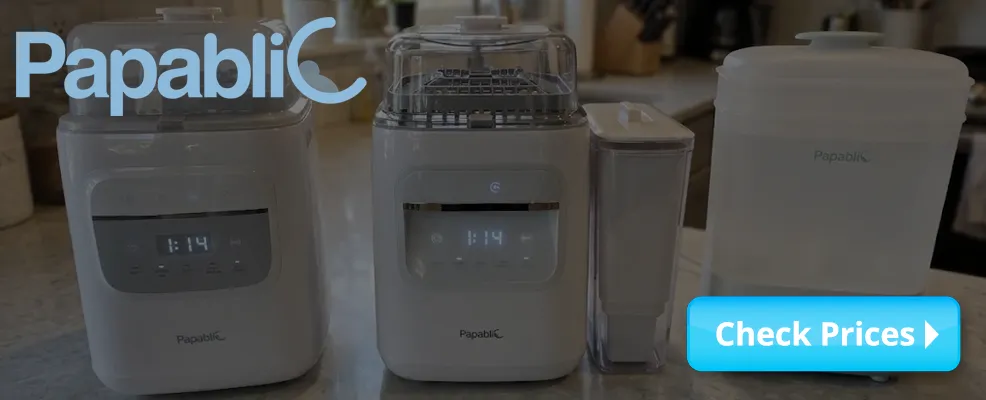
In this article, we review our testing of three different Papablic systems: the new Papablic SafeguardPlus (P8 Plus), the Papablic Standard Bottle Washer (P8), and the Papablic Sterilizer & Dryer.
We then discuss which option might be perfect for your unique family.
-
- Our Take-Home Message
- Review Video
- Papablic Comparison Chart
- 1. SafeguardPlus (P8 Plus): Best Overall
- 2. Standard Bottle Washer (P8): Best Value Washer
- 3. Sterilizer & Dryer: Best Budget Choice
- Does the Water Filter Make a Difference?
- Maintenance and Ownership Costs
- Washing vs. Sterilizing
- Black Friday Papablic Deals
- Our Conclusions
- Research & Sources
-
Most product links lead to an affiliate partner. Mommyhood101 may earn commissions from purchases made through qualifying links.
Full disclosure: Papablic sponsored this article. We've tested all three products. Our recommendations reflect our hands-on experience, published product specifications, and our assessment of each machine's usefulness in real family routines.
Which Papablic Bottle Washer or Sterilizer is Best?
Our overall favorite: Papablic SafeguardPlus (P8 Plus) Baby Bottle Washer System.
We love the combination of automatic washing, steam sterilization, heated drying, protected storage, generous capacity, and built-in water filtration. It does the tedious parts of bottle cleanup in one machine, and its filtration system helps address the mineral deposits and water spots that can make bottle washers annoying to maintain.
We also reviewed third-party laboratory testing documenting large reductions in lead, two specific PFAS compounds, manganese, and BPA.
Our best-value pick: Papablic Standard Bottle Washer (P8). If your main goal is to stop scrubbing bottles and pump parts by hand, the Standard Bottle Washer does the same essential washing, sterilizing, drying, and storing jobs without the higher price or replacement-filter expense. It's a good fit for families who want these essential functions, prioritize value, and do not have significant water quality or water hardness concerns.
Our budget pick: Papablic Sterilizer & Dryer. It won't wash anything for you, but it can sanitize and dry already-clean bottles and compatible accessories. For mostly breastfeeding families who use only an occasional bottle, that may be plenty.
Here's how the three compare, what impressed us, and which we'd choose for different feeding routines.
Quick Review Video
This quick video summarizes some of the key differences between these three bottle cleaning systems:
Papablic Bottle Washers vs. Sterilizer: Comparison Chart
 SafeguardPlus (P8 Plus)
 Standard Bottle Washer (P8)
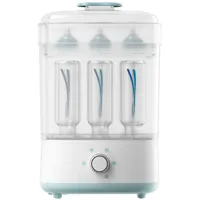 Sterilizer & Dryer

Swipe left or right to compare all three products.
*Prices are manufacturer listings checked in November 2026, before discounts. Always check the Papablic website and Amazon for the latest discounts and gift promotions.
1. Papablic SafeguardPlus (P8 Plus) Baby Bottle Washer: Best Overall
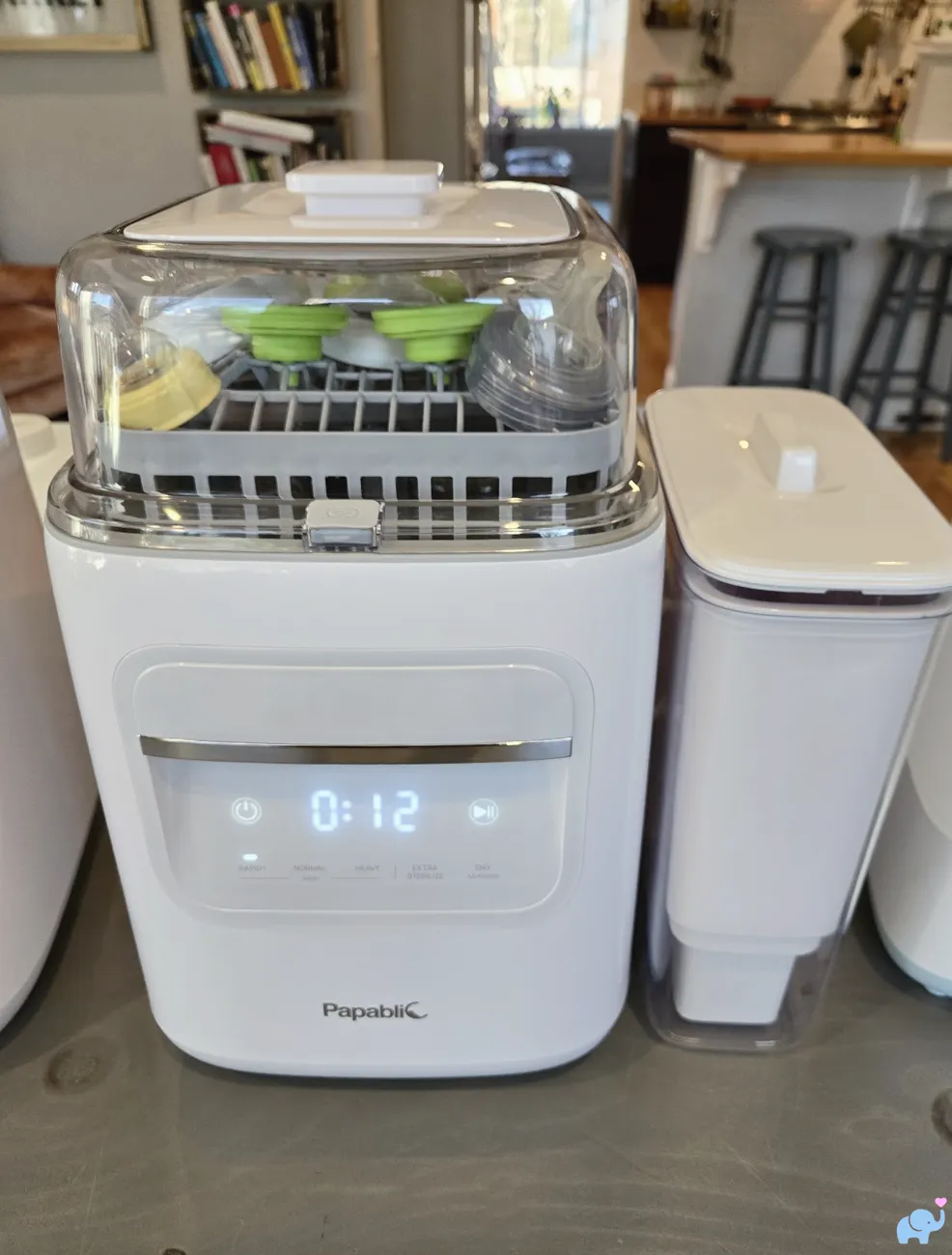
Of the three systems, this is the one we'd choose if we were setting up a bottle-feeding or pumping station from scratch. The SafeguardPlus combines five functions: filtering water, washing, steam sterilizing, drying, and storing feeding equipment.
That sounds like a lot of features, but the real benefit is simple: instead of standing at the sink washing every little component, we can disassemble the bottles and compatible pump parts, load the racks, and let the machine handle the rest of the cleaning cycle.
What We Loved About the SafeguardPlus
First, the cleaning performance impressed us. In our hands-on testing for our best baby bottle washers and sterilizers roundup, bottles, nipples, collars, and vent components emerged looking spotless, without obvious milk residue, detergent residue, or cloudiness. The dual rotating spray arms are designed to reach awkward curves and crevices that are particularly frustrating to clean manually.
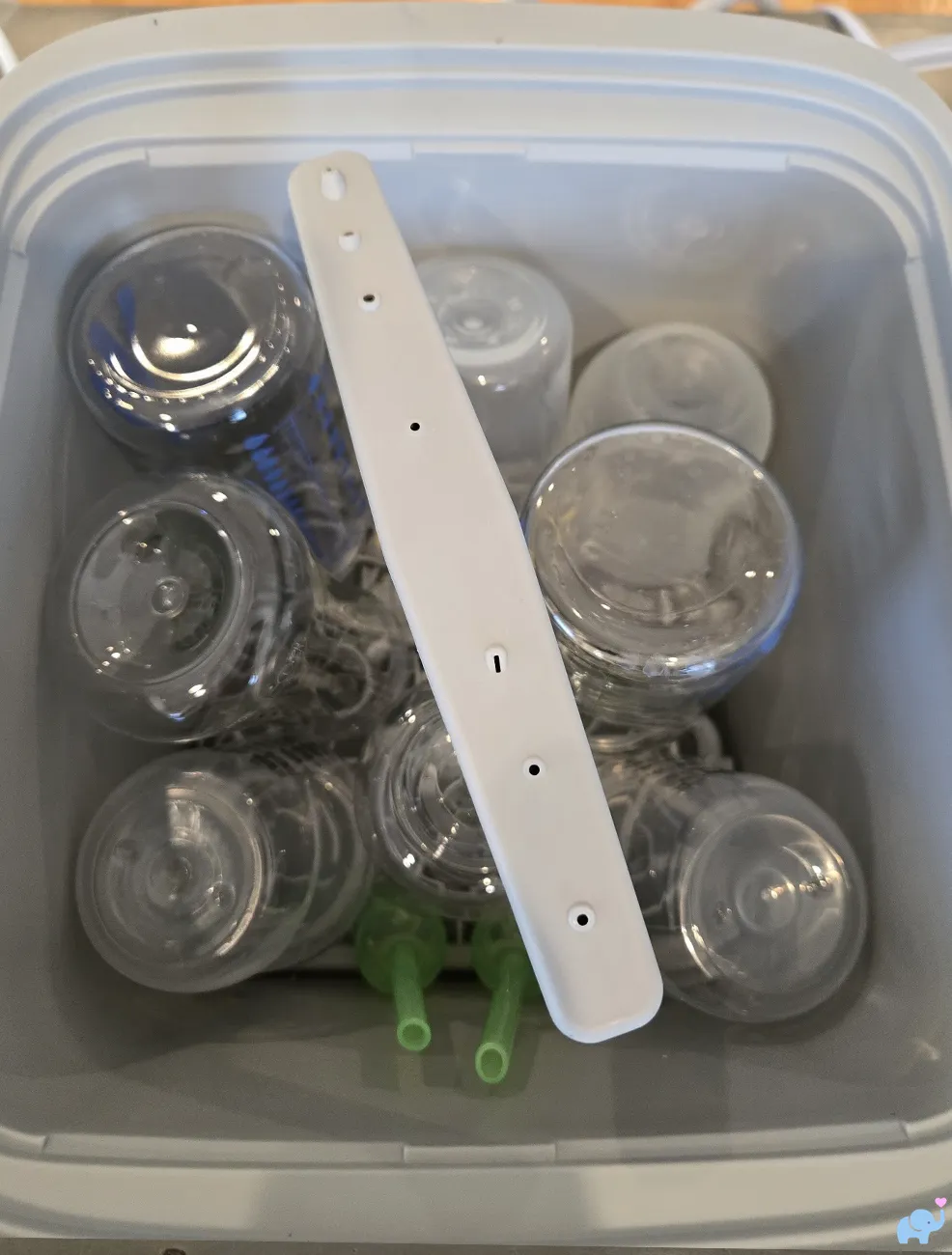
Second, it has room for a realistic daily load. Papablic advertises up to eight bottle sets, and we found the eight-bottle capacity realistic in our testing. Of course, the exact number depends on bottle dimensions and how many extra nipples, valves, and pump components you add. We tested with the relatively large Comotomo and Dr. Brown's bottles and were still able to squeeze in the eight bottles.
Here is the lower (main) rack filled with 8 bottles and the reservoir tubes from the Dr. Brown's anti-colic valves. The bottles (see our list of the best baby bottles here!) included:
- 2 x Dr. Brown's Options glass baby bottles
- 1 x Medela baby bottle
- 1 x Comotomo baby bottle
- 2 x Tommee Tippee baby bottles
- 2 x Chicco Duo baby bottles
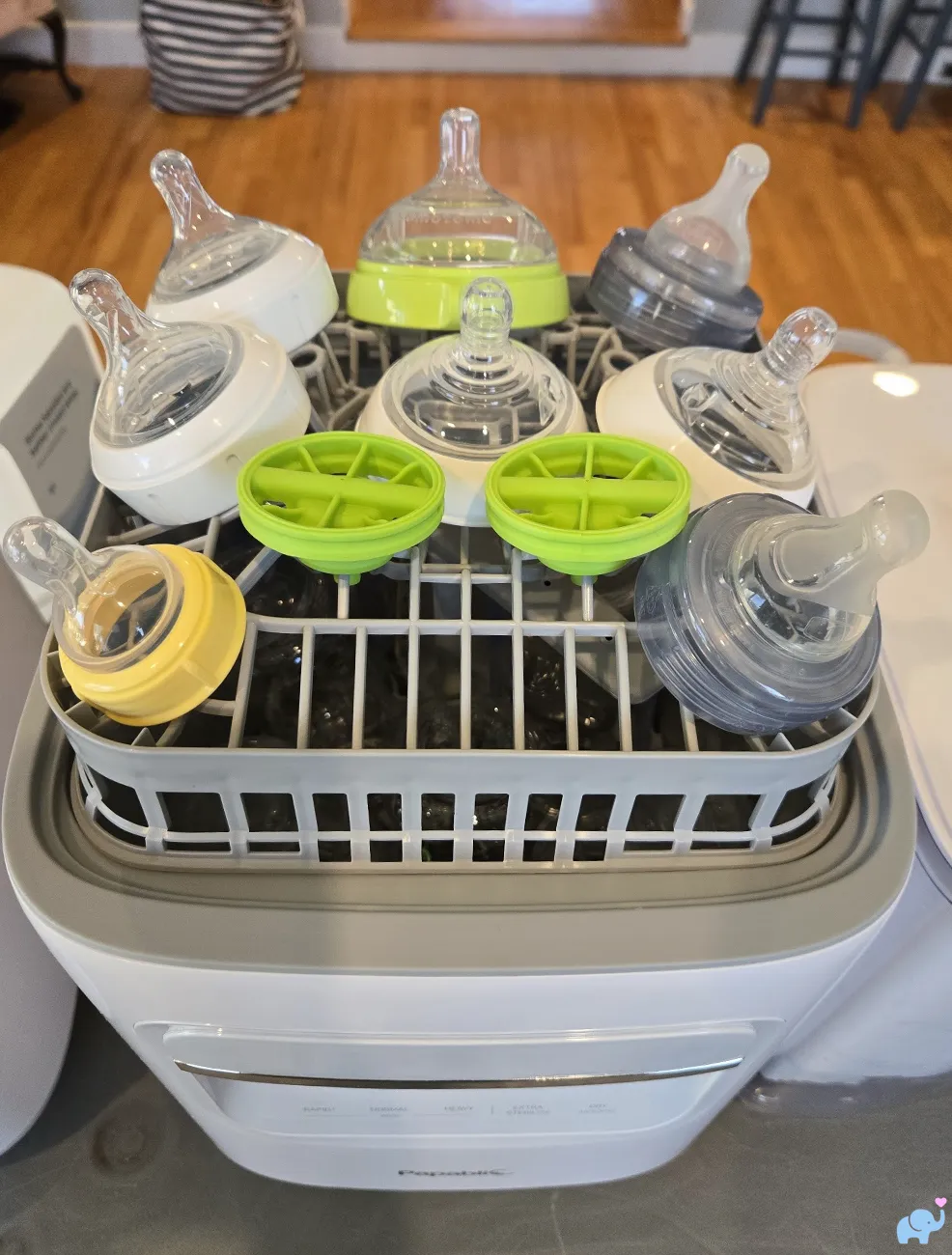
And here is the top rack with all the bottle nipples and anti-colic inserts:
Third, the drying performance was excellent. The upper rack was essentially completely dry in our testing, and the eight bottles on the bottom had only an occasional tiny droplet remaining. We were especially pleased with how little water collected on the concave bottoms of upside-down bottles, which can be a trouble spot for other appliances.
We also appreciated how straightforward the machine was to use. Setup took us about three minutes, the controls were intuitive, and operation was relatively quiet. The separate water reservoir was easy to position; we even left ours in the sink during use for convenient refilling.
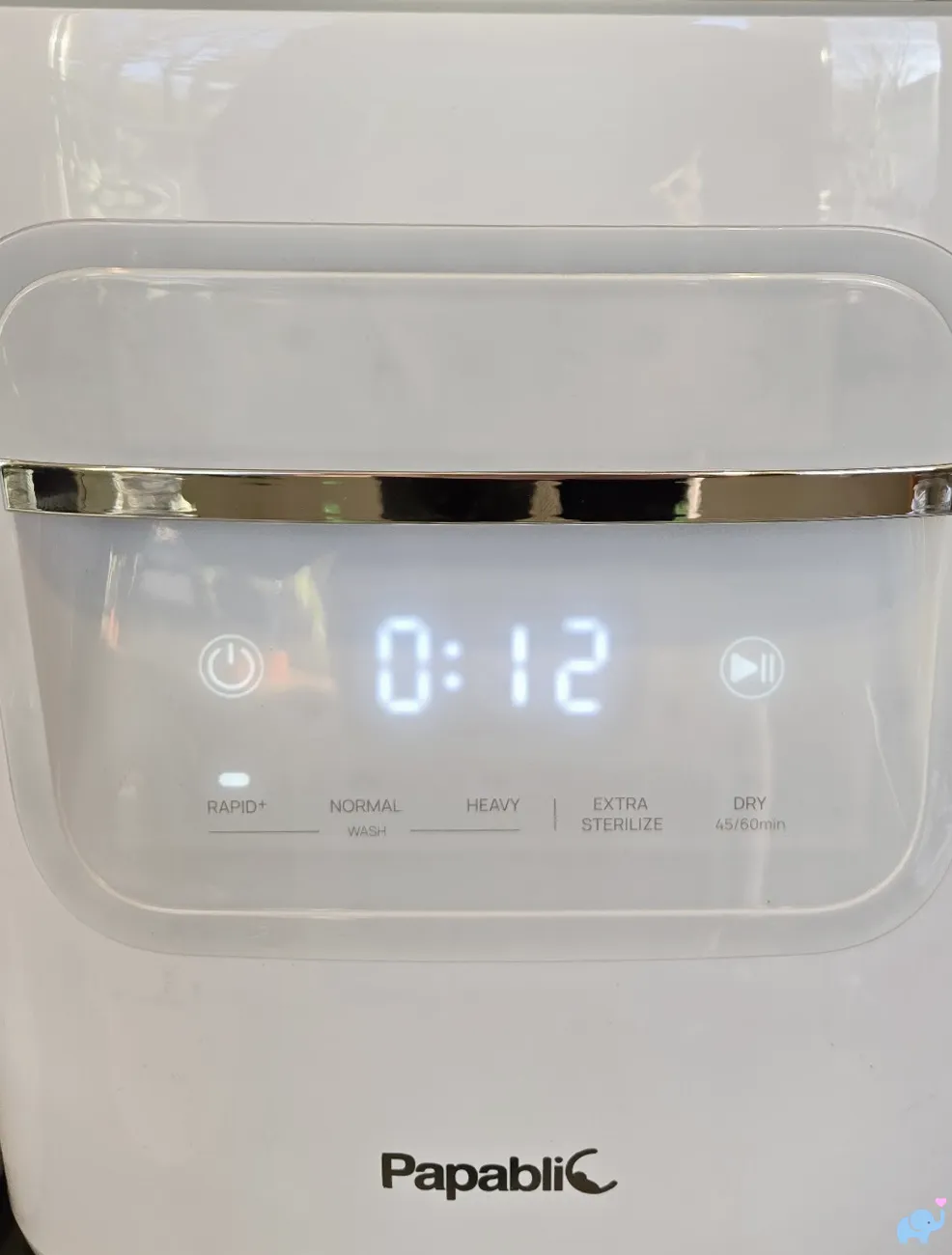
And for families who don't need the full wash cycle every time, the machine offers a rapid-wash option that takes 12 minutes. That refers to the cleaning portion, not necessarily a complete wash, sterilize, and dry routine.
Here's a close-up of the controls on the SafeguardPlus, with the Rapid+ cycle selected:
The Water Filtration Upgrade
The SafeguardPlus's biggest differentiator is its replaceable PurifyClean water filter. Rather than sending untreated tap water directly into the cleaning system, it filters incoming water to reduce dissolved minerals. An SGS laboratory report supplied by Papablic also documents reductions in several specific contaminants under controlled test conditions, which we'll examine below.
Why do we care? Because anyone who has dealt with hard water knows the familiar white film on glassware, spotting on bottles, and crusty mineral deposits around appliances.
A filtration system that reduces those deposits could mean fewer water spots and less frequent descaling.
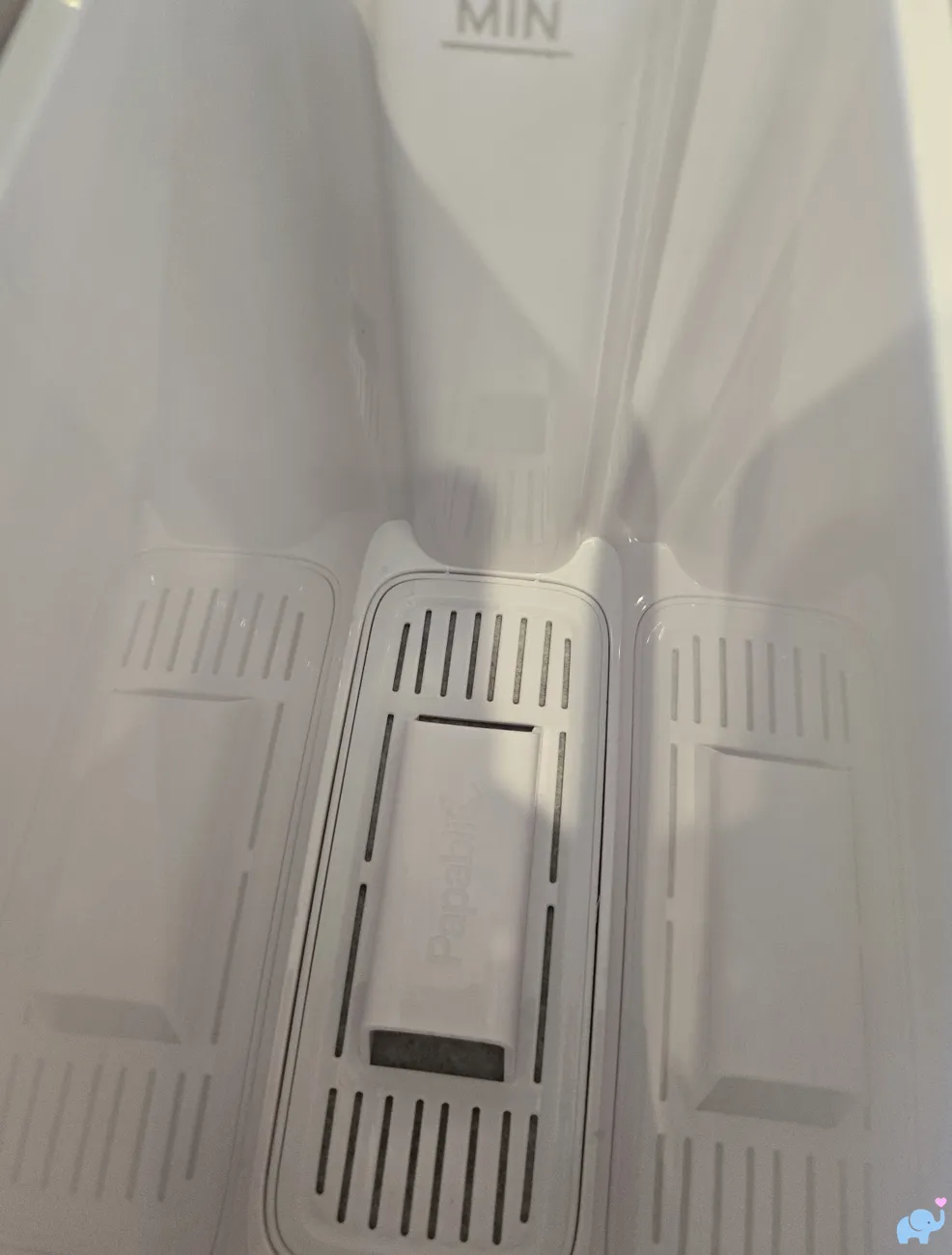
Inside the water reservoir is the replaceable water filter cartridge, as shown here:
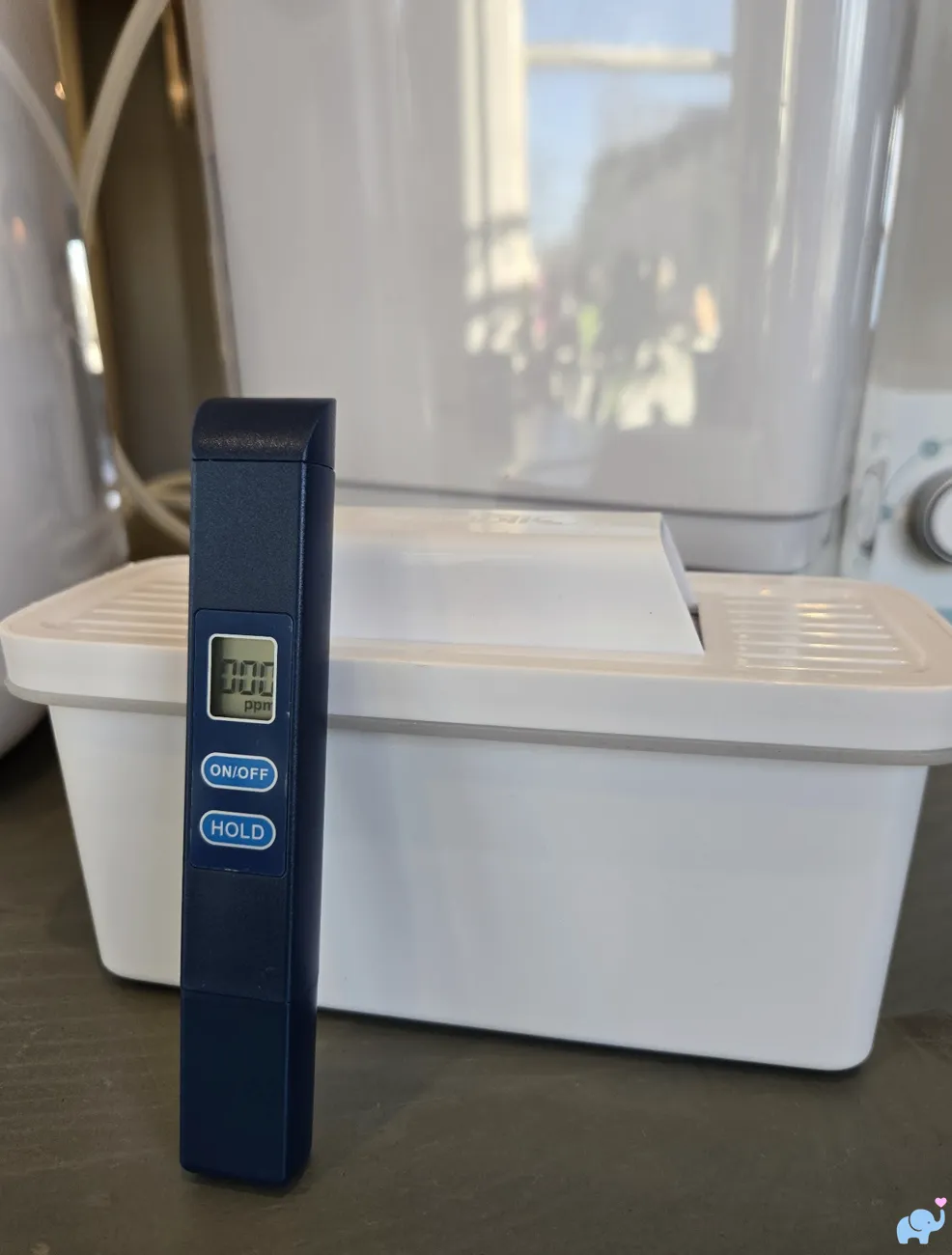
Conveniently, Papablic includes a TDS (total dissolved solids) water meter with the SafeguardPlus system:
We also like that the washer has a filter-replacement reminder (though replacement frequency varies depending on local water hardness, water quality, and usage frequency).
It makes maintenance easier to track, although you still have to buy and install new cartridges. We'll discuss the evidence for filtration, and the cost, in more detail below.
What Could Be Better?
At a published list price of $399.99 before promotions, this is a premium appliance. It also takes up meaningful counter space, requires compatible detergent tablets for the recommended cleaning routine, and needs periodic filter replacements. But see our Black Friday deals page for deep discounts!
Replacement filters cost about $23 each. Actual replacement frequency will vary based on local water hardness and quality. Papablic suggests replacement around every 30 wash cycles as a general guideline, but most families will be able to use it for more cycles before replacement.
The SafeguardPlus doesn't necessarily offer a major advantage in basic cleaning ability over the Standard Bottle Washer (P8). Papablic says both models share the same core wash performance. With the SafeguardPlus, you're paying extra for the filtration system and its convenience.
Bottom line: We think the SafeguardPlus is the best all-around choice for families who use lots of bottles or pump parts, especially those who value filtered wash water, reduced mineral buildup, and the additional contaminant reductions documented in laboratory testing. It's our favorite, but the replacement-filter cost is worth considering before you buy.
Check the Papablic SafeguardPlus and current offers here.
2. Papablic Standard Baby Bottle Washer (P8): Best Value for Hands-Free Cleaning
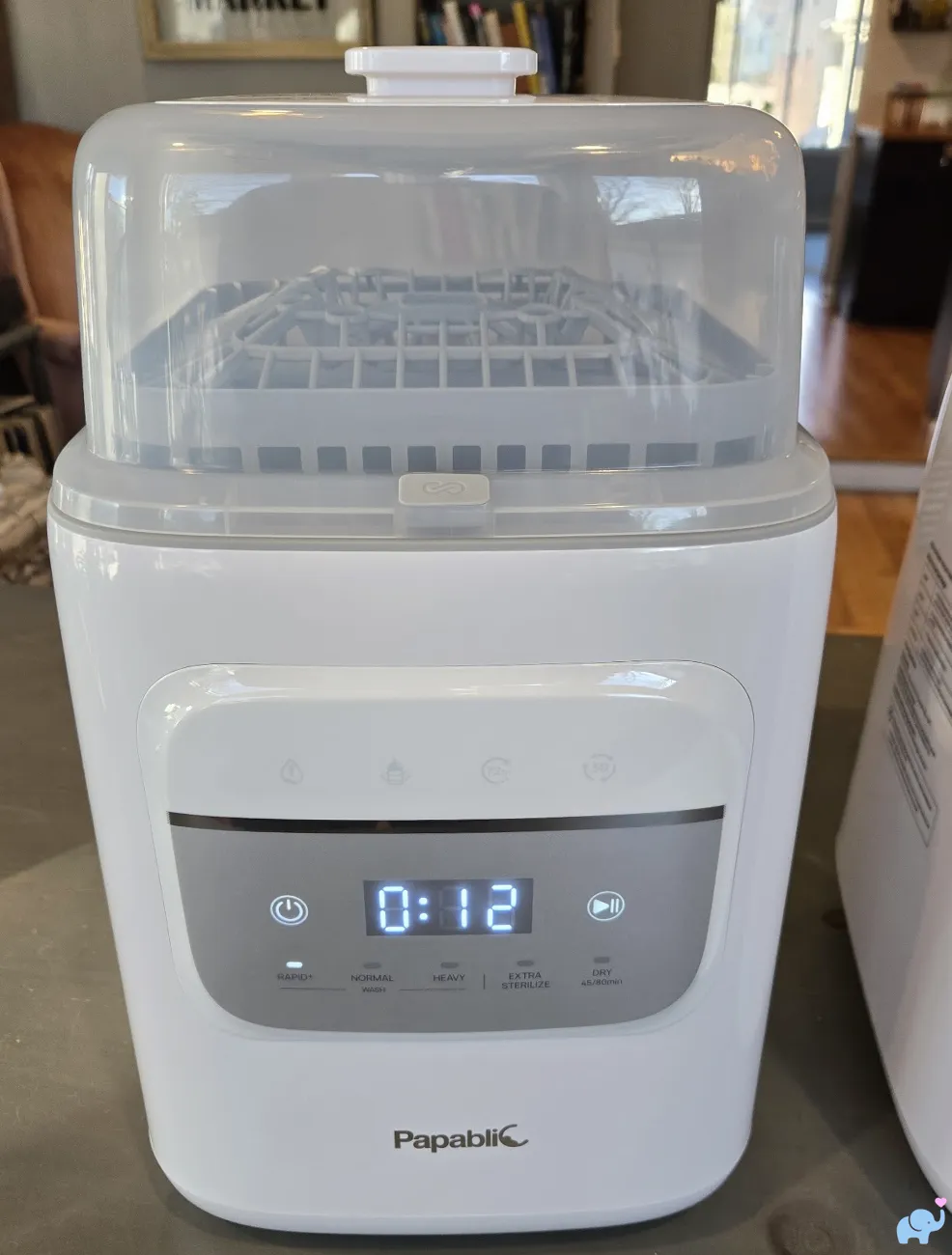
Here's the thing: if your biggest goal is simply to stop cleaning bottles by hand, you may not need to spend extra on the SafeguardPlus.
The Papablic Standard Bottle Washer (P8) already handles the four jobs that make the biggest difference to everyday feeding cleanup: cleaning, steam sterilizing, drying, and storing your bottles and compatible accessories.
Like the SafeguardPlus, the Standard Bottle Washer is designed to accommodate up to eight bottles or two full pump sets, depending on their size and configuration.
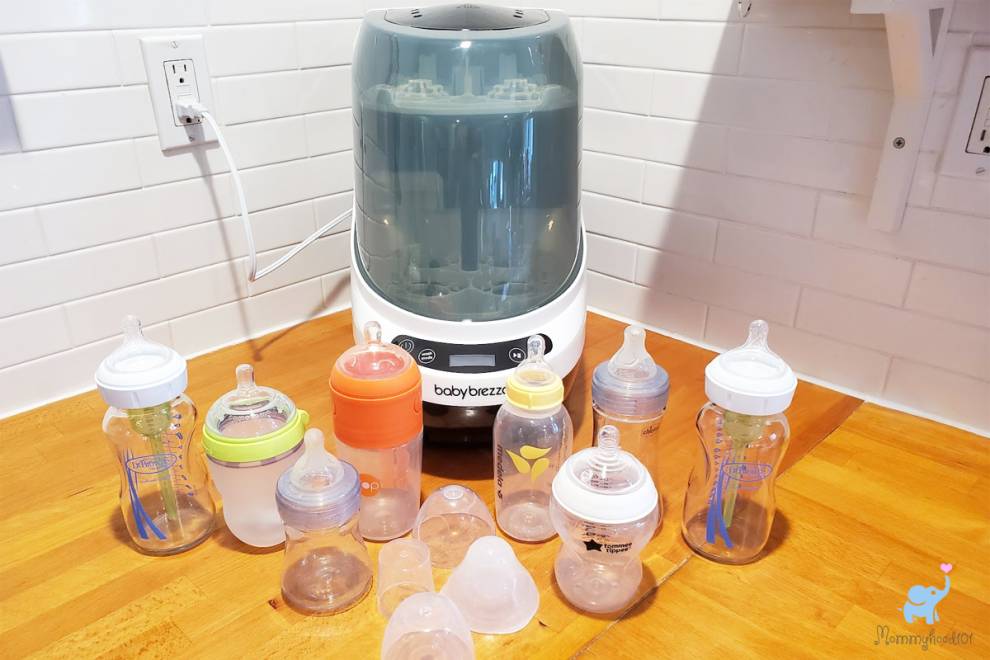
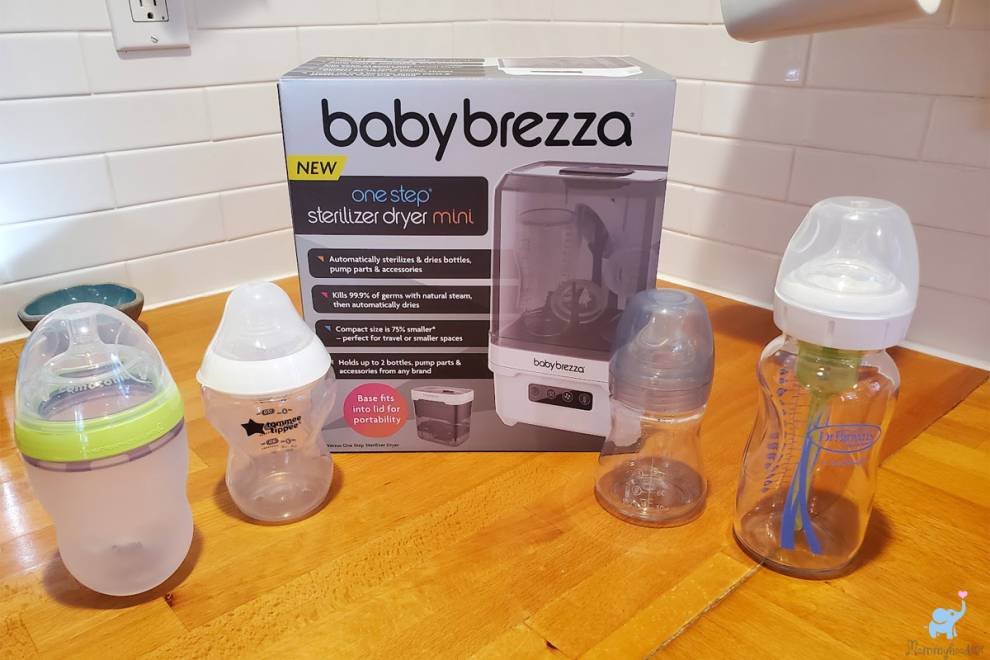
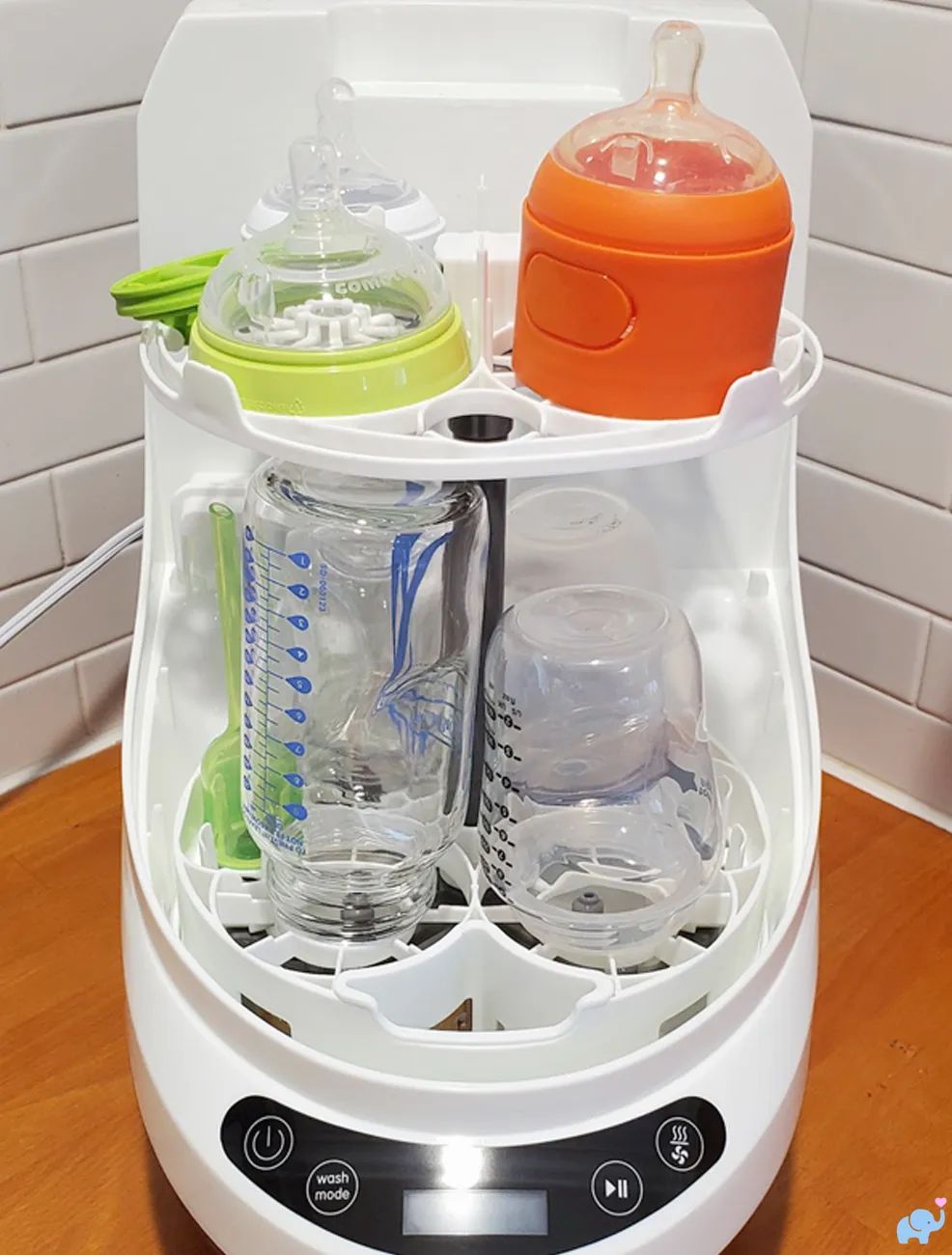
Relative to the older generation of bottle washers (like the Baby Brezza Bottle Washer Pro), it has twice the capacity.
For example, here's a traditional baby bottle washer with the small 4-bottle capacity:
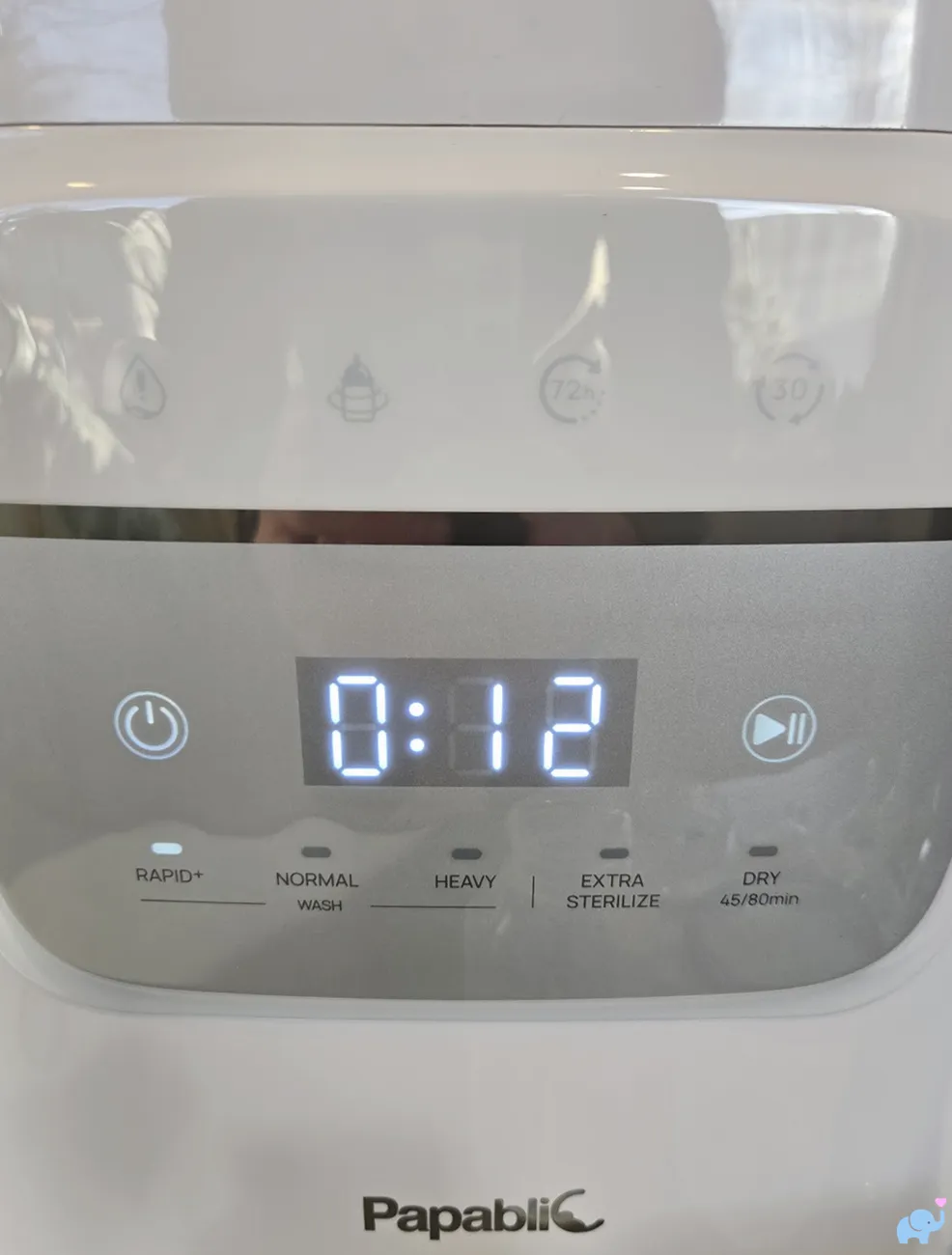
It also improves upon both the Standard Bottle Washer and old generation washters by offering a 12-minute rapid wash, dual-fan drying, and up to 72 hours of storage.
Here's a close-up of the control panel where you can see those options on the P8 system:
We especially like this option for families who are exclusively pumping, combination feeding, preparing for a return to work, or simply exhausted by the daily pile of bottle and pump components.
Those are the situations where eliminating repetitive hand-cleaning can make the biggest difference.
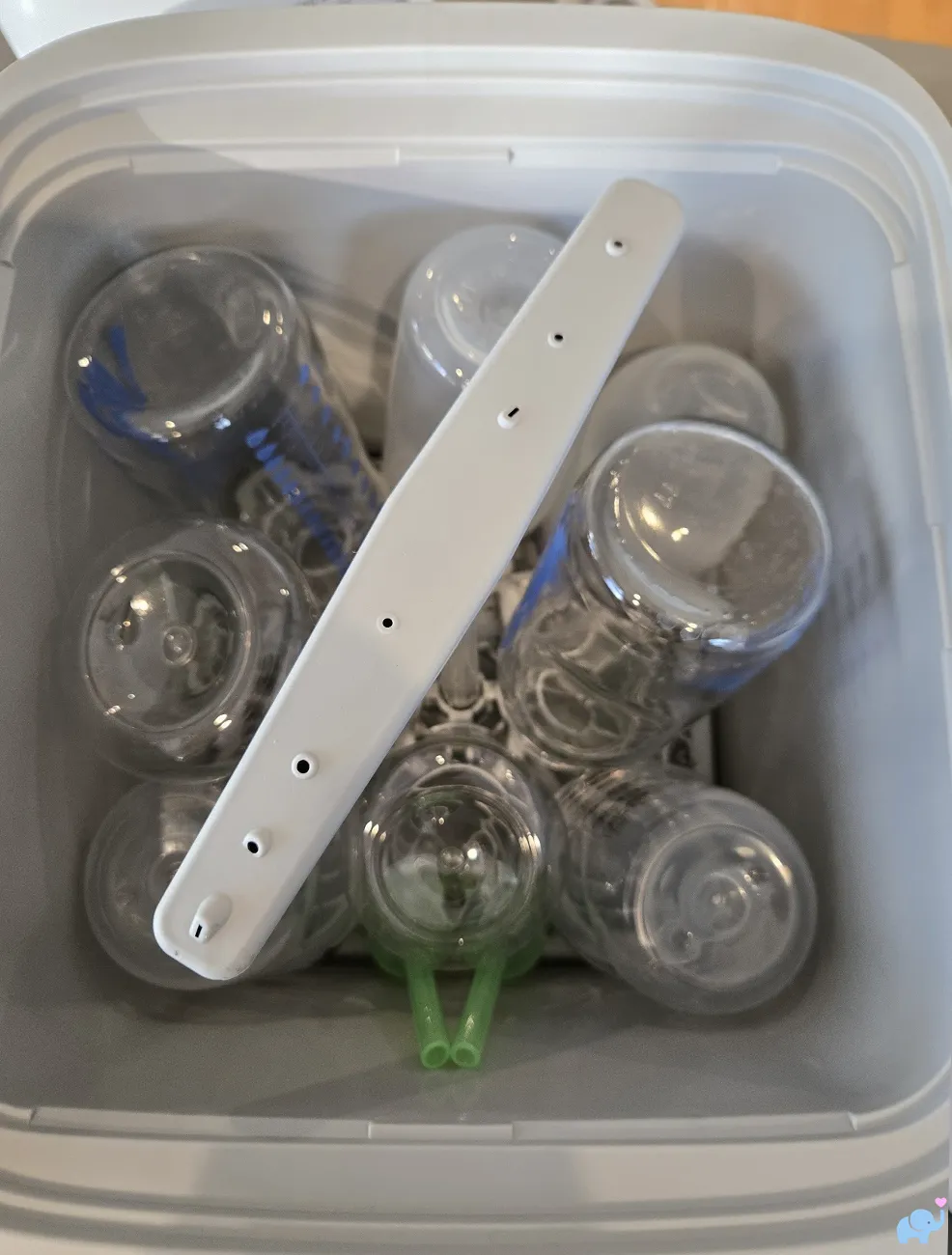
Here's the loaded lower rack of the Standard bottle washer (P8):
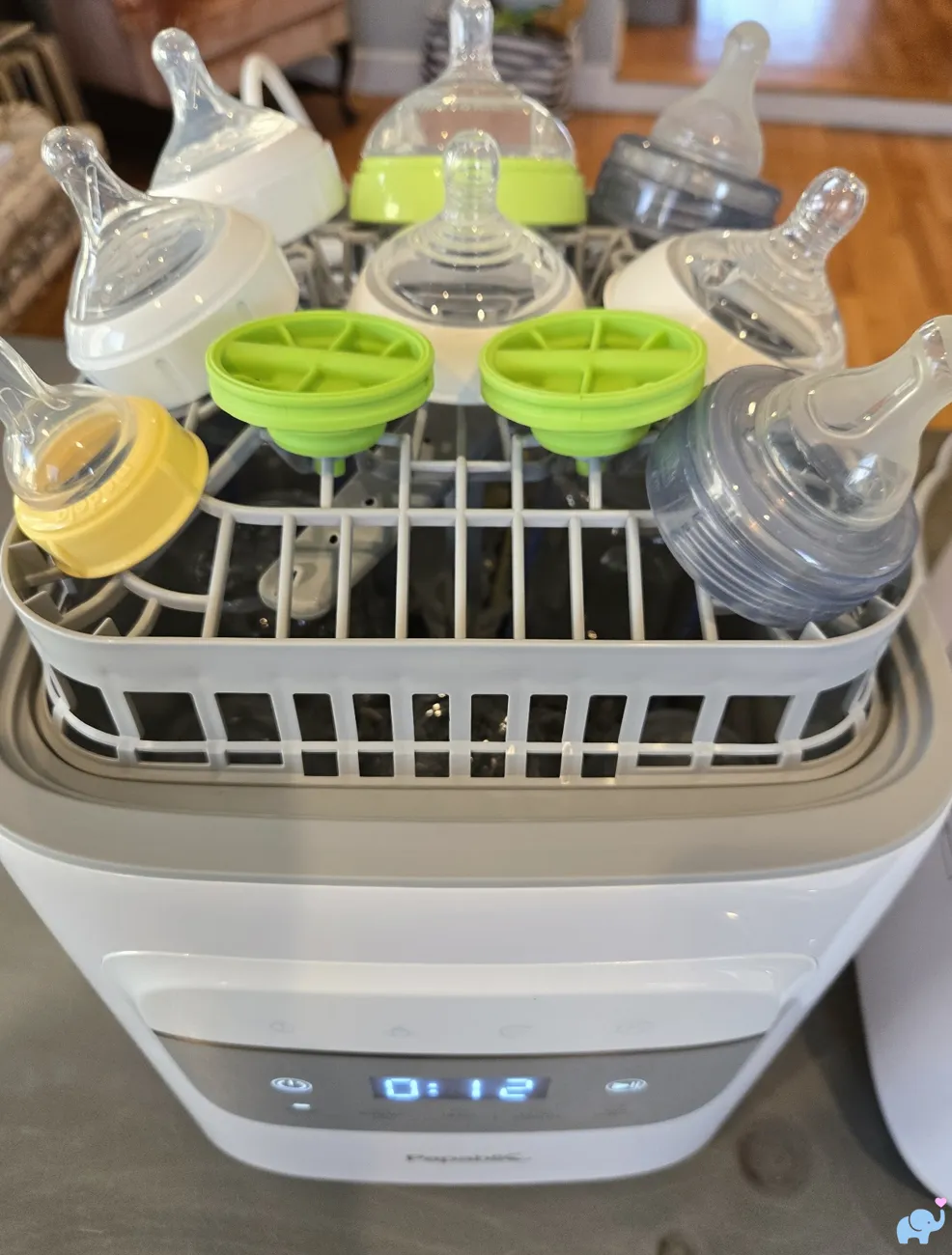
And just like the SafeguardPlus, here's all 8 nipples and anti-colic inserts on the top rack of the Standard baby bottle washer (P8):
What We Loved About the Standard Bottle Washer (P8)
Its greatest strength is that it delivers the essential automatic bottle-cleaning routine without making you pay for the premium filtration feature. The washer's removable water tank is straightforward to fill, and the machine can handle much of the repetitive work that otherwise piles up in the sink.
It also has the larger-capacity design introduced in Papablic's 2026 generation. Compared with smaller washers, the ability to load several bottles and their parts together can be a genuine advantage when you're feeding or pumping around the clock.
At a published list price of $299.99, the Standard Bottle Washer (P8) is about $100 less than the SafeguardPlus before discounts, and there are no proprietary water-filter cartridges to replace.
What Could Be Better?
The Standard Bottle Washer doesn't include PurifyClean filtration. If your household has hard water, you may notice more spotting on bottles or mineral scale inside the machine, and you'll need to descale as required. Papablic provides a maintenance reminder every 30 cycles, but that doesn't mean you'll need to replace every 30 cycles (we ended up replacing at 45 cycles).
It's worth clarifying that the Standard Bottle Washer can use ordinary tap water. We do suggest using distilled water to reduce scaling and mineral deposits, but that does add another thing to buy and keep on hand.
Like the SafeguardPlus, the Standard Bottle Washer also requires loading, unloading, detergent, routine cleaning, and checking that every component is compatible with machine cleaning.
Bottom line: For many families, the Standard Bottle Washer (P8) may be the smartest value. It automates the time-consuming parts of bottle cleaning, offers excellent capacity, and costs less to purchase and potentially maintain. We'd choose the SafeguardPlus for its water-filtration upgrade, but we wouldn't hesitate to recommend this washer to budget-conscious parents.
Check the Papablic Standard Bottle Washer and current offers here.
3. Papablic Sterilizer & Dryer: Best Budget-Friendly Choice
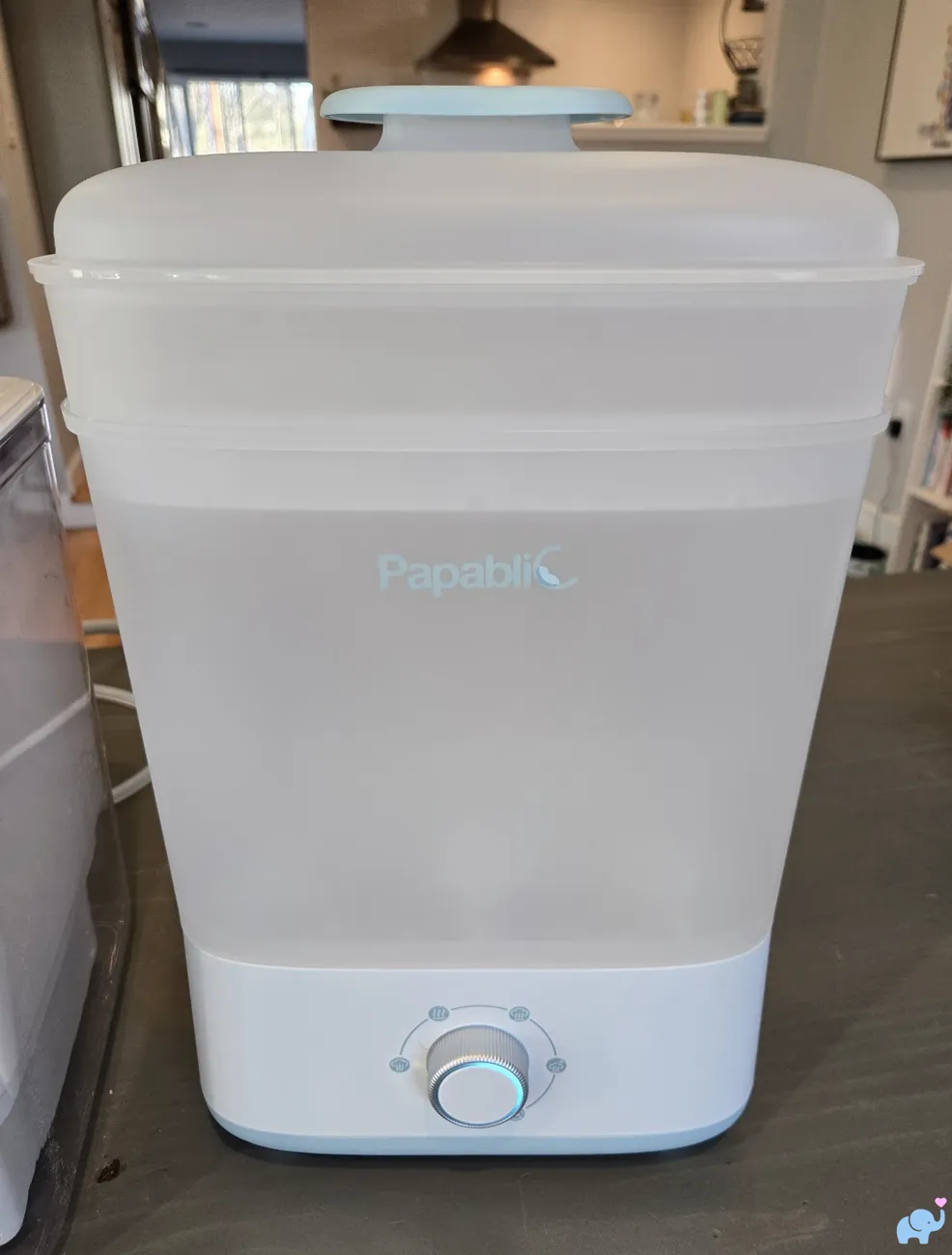
Not every family needs a bottle washer. If you're mostly nursing and only use a couple of bottles a day, you might be perfectly happy cleaning those bottles by hand and letting a dedicated sterilizer take care of the next steps.
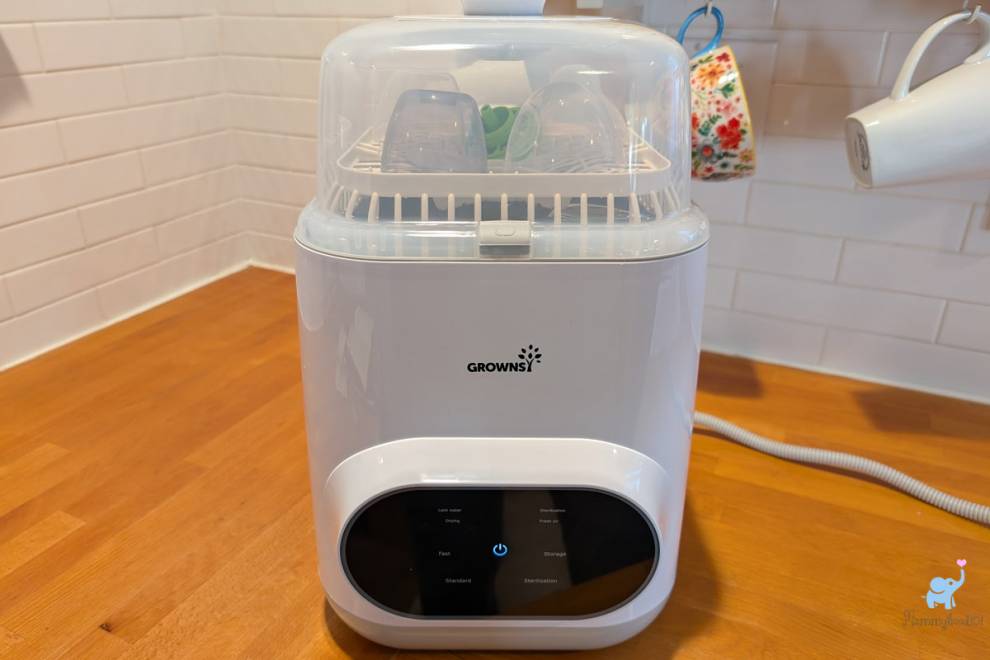
That's where the Papablic Sterilizer & Dryer comes in. It uses steam to sanitize already-clean bottles and compatible feeding accessories, then dries them so you don't have to leave everything spread out on a drying rack.
We like its relatively simple purpose: it doesn't try to replace your entire cleaning routine. Instead, it makes the sanitizing and drying portions more convenient.
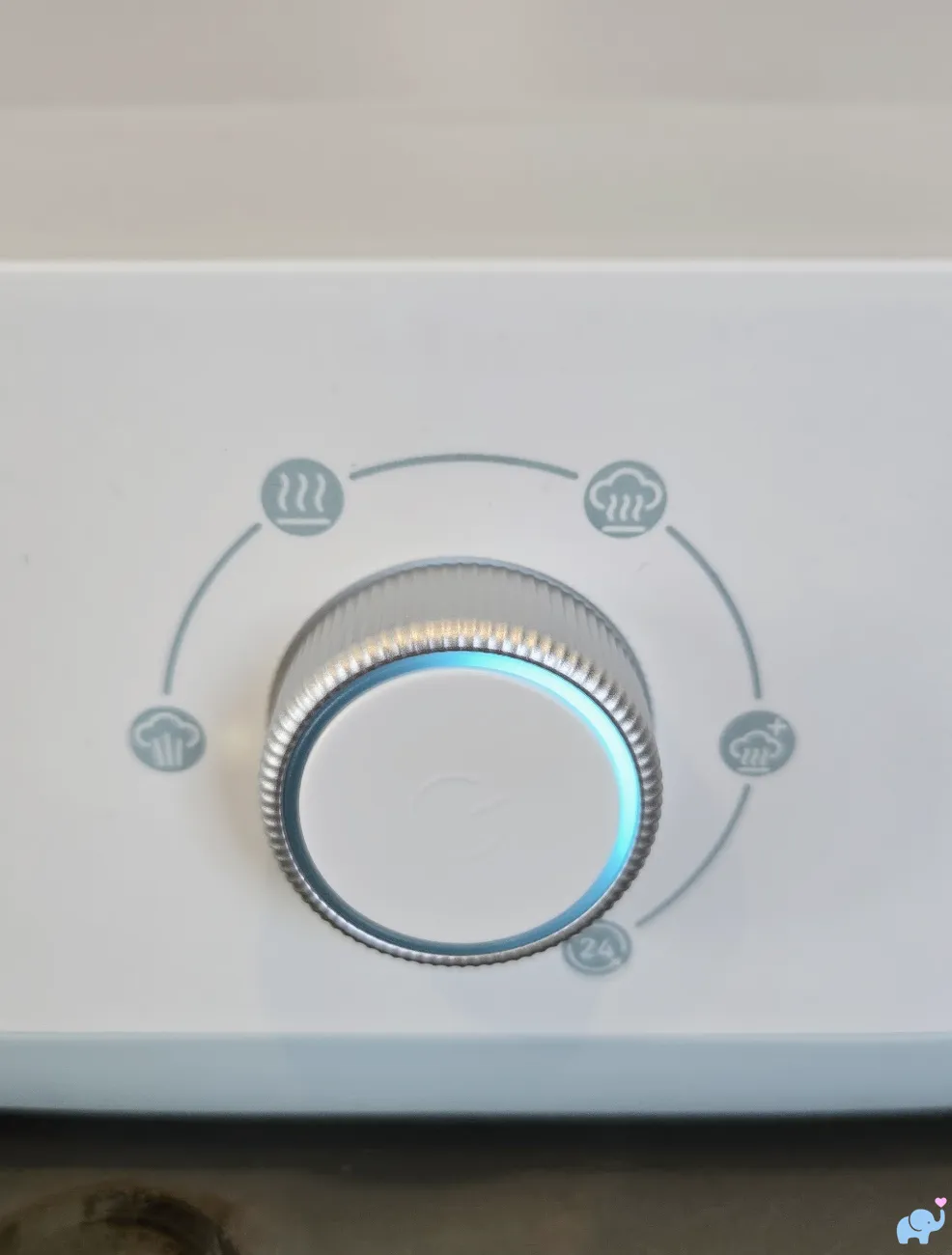
Here's a close-up of the dial-based controller on the sterilizer & dryer system:
What We Loved About the Sterilizer & Dryer
First, it's substantially less expensive than either full washer system. That makes it appealing for a baby registry, a small apartment, or families who don't expect to use many bottles.
Second, it can be a useful way to manage clean bottles and pump parts after hand-washing.
Instead of boiling equipment in a pot or waiting for everything to air-dry, you can use a dedicated appliance for the steam and drying stages, provided the components are approved for those processes.
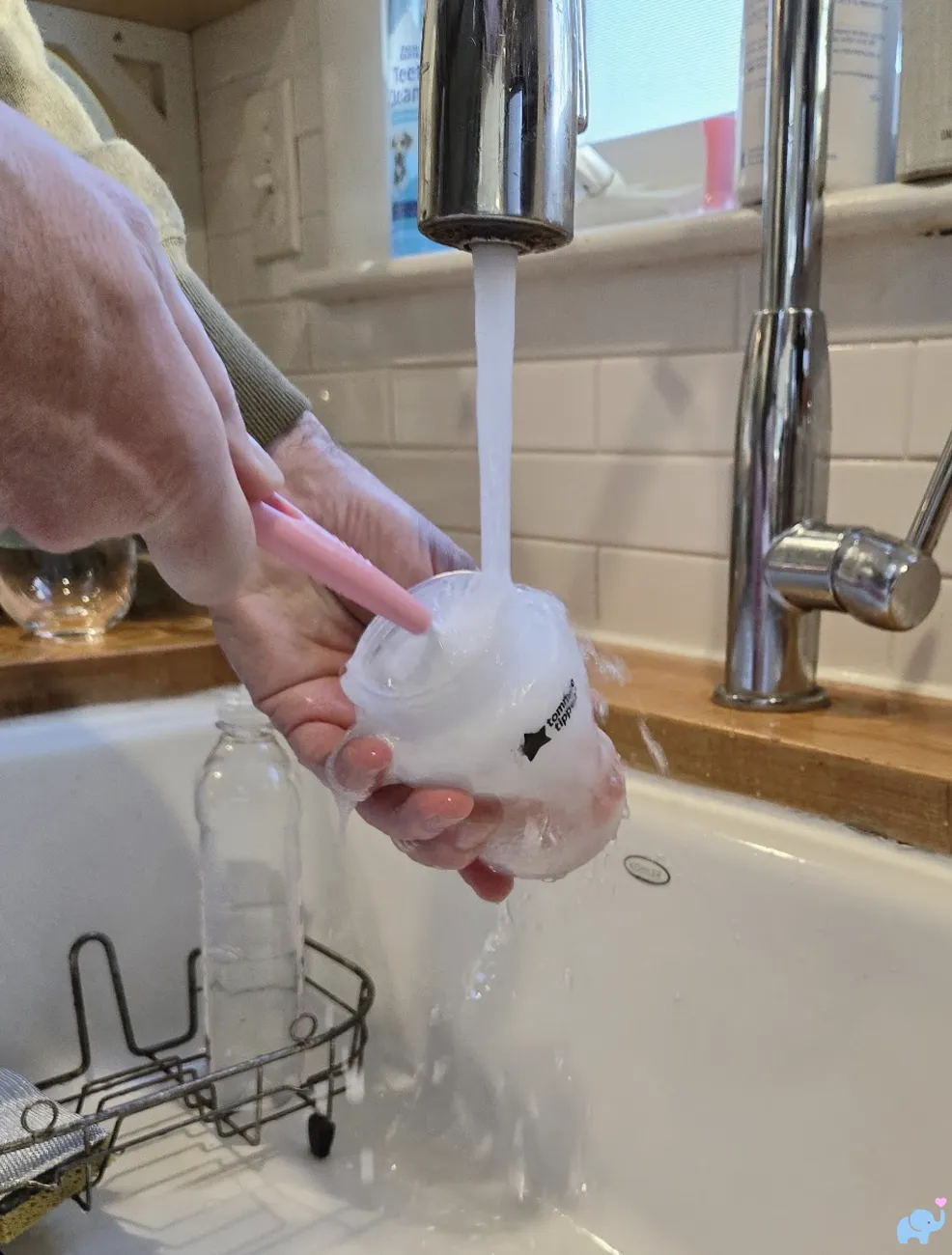
Of course, you still need to hand-wash and rinse the bottles first:
What Could Be Better?
The biggest limitation is also the most important distinction in this comparison: the Sterilizer & Dryer does not wash bottles. You still have to remove milk residue and clean all the parts thoroughly before they go inside. Steam sanitizing is not a substitute for cleaning.
It also doesn't include the SafeguardPlus's water filter, so the heating area may require descaling, especially with mineral-rich water. Capacity and exact drying/storage features vary across Papablic sterilizer versions, so be sure to match the appliance to your particular bottles and pump parts.
Bottom line: If you use bottles only occasionally and don't mind cleaning by hand, the Sterilizer & Dryer may be all you need. But if you're cleaning multiple bottles and pump parts every day, we'd strongly consider upgrading to the Standard Bottle Washer or SafeguardPlus.
Does the SafeguardPlus (P8 Plus) Water Filter Really Make a Difference?
This is the question that matters most when deciding whether to pay more for the SafeguardPlus instead of the Standard Bottle Washer (P8). After reviewing laboratory documents supplied by Papablic, we have more evidence to work with than the usual water-filter marketing claims.
Papablic's PurifyClean filter is designed to reduce dissolved minerals in incoming water. Those minerals can contribute to spotting and limescale, so filtration may help keep both bottles and the washer chamber cleaner-looking over time.
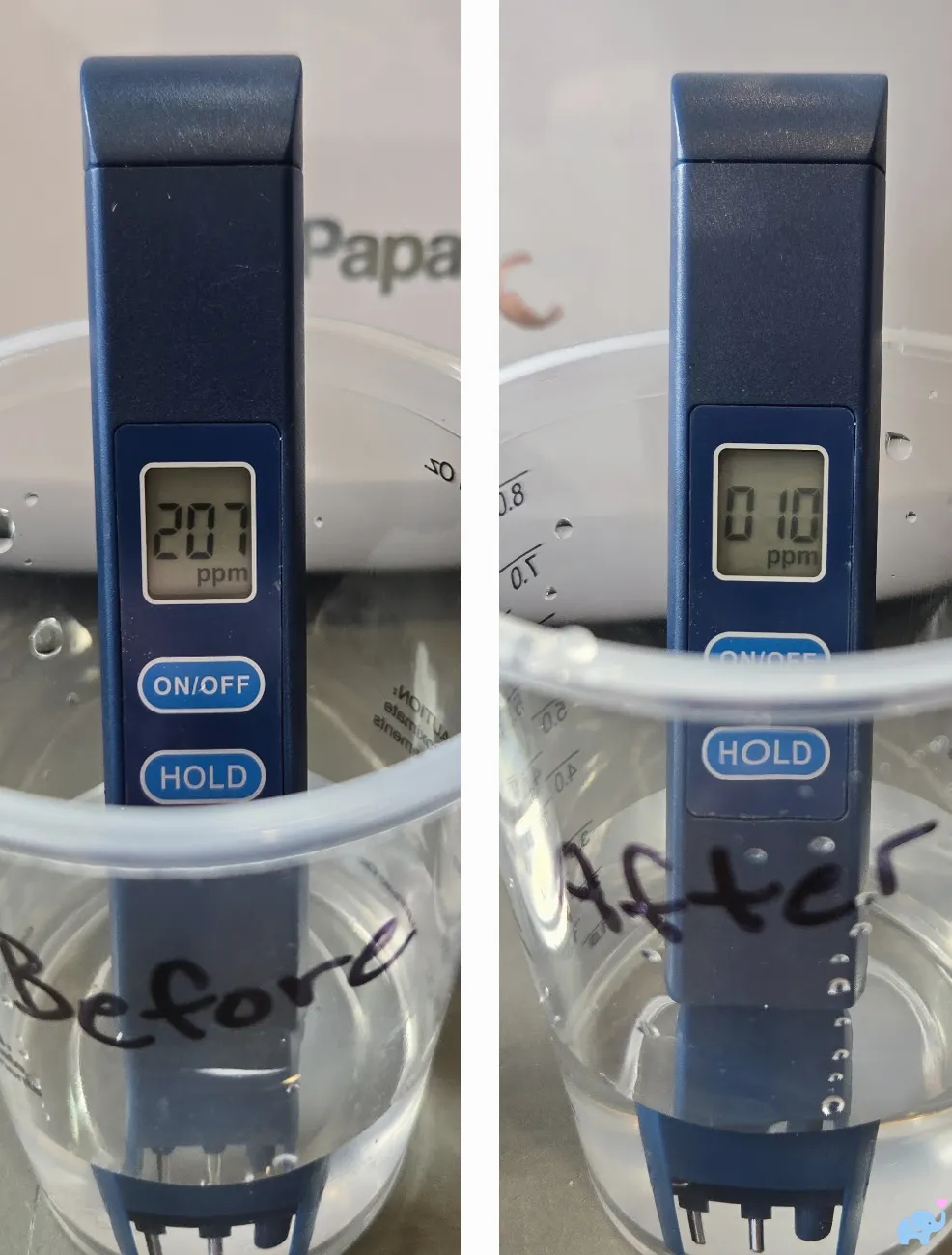
Published user evaluations offer some encouraging examples. In one review shared on Papablic's website, a digital total dissolved solids (TDS) meter measured tap water at 180 parts per million (ppm) and filtered water at 9 ppm, a 95% reduction. Another reviewer reported about 132 ppm before filtration and near zero afterward.
In our testing, our medium-hardness tap water (~200ppm) was reduced by over 95%, to only 10 ppm. That is a huge reduction!
Independent Laboratory Testing: Lead, PFAS, Manganese, and BPA
Papablic provided us with a four-page test report from SGS-CSTC Standards Technical Services (Ningbo), dated May 6, 2026 (report NBF26-0008189-01), for the PurifyClean Water Purification System.
The report describes five submitted filter sets and contaminant challenge testing at 85 liters of service life, with a stated flow rate of 1 liter per minute. Unlike a household TDS reading, this testing measured individual contaminants using analytical methods appropriate to each substance.
Here are the reported reductions at the 85-liter test point:
| Contaminant | Measured reduction | Filtered-water concentration |
|---|---|---|
| Lead (pH 6.5) | 99.59% | 0.0007 mg/L |
| Lead (pH 8.5) | 99.65% | 0.0004 mg/L |
| PFOS (a PFAS compound) | 98.76% | 0.000008 mg/L |
| PFOA (a PFAS compound) | 98.52% | 0.000010 mg/L |
| Manganese | >99.63% | <0.005 mg/L |
| Bisphenol A (BPA) | >99.78% | <10 ng/L |
Source: SGS report NBF26-0008189-01, pages 2–3, supplied to Mommyhood101 by Papablic. Results apply to the submitted samples under the stated laboratory conditions; “greater than” values reflect concentrations reported below the analytical threshold.
Those are substantial reductions. SGS referenced challenge-testing methods from NSF/ANSI 53 for lead, PFOA, and PFOS, NSF/ANSI 42 for manganese, and NSF/ANSI 401 for BPA. The report also identifies instrumental or laboratory methods used to measure the contaminants.
How Much Does Each Papablic System Cost to Maintain?
Purchase price is only part of the decision. The two washers use cleaning tablets, the Standard Bottle Washer (P8) may require descaling more often with hard water (and purchasing distilled water, and time to clean), and the SafeguardPlus adds a replaceable filter.
When to Replace the SafeguardPlus Water Filter?
The device itself will illuminate a filter replacement light every 30 cycles. But that doesn't necessarily mean it needs replacement.
Replacement frequency will vary as a function of local water quality, water hardness, and how often you use the system.
Here's the general rule of thumb:
- If your tap water has low hardness according to the TDS meter (0-100 ppm): Up to 60 cycles between replacements.
- If your tap water has medium hardness according to the TDS meter (101-300 ppm): Up to 30 cycles between replacements.
- If your tap water has high hardness according to the TDS meter (301-350 ppm): Up to 15 cycles between replacements.
- If your tap water has extremely high hardness according to the TDS meter (351+ ppm): use distilled water.
As shown below, our tap water was approximately 200 ppm:
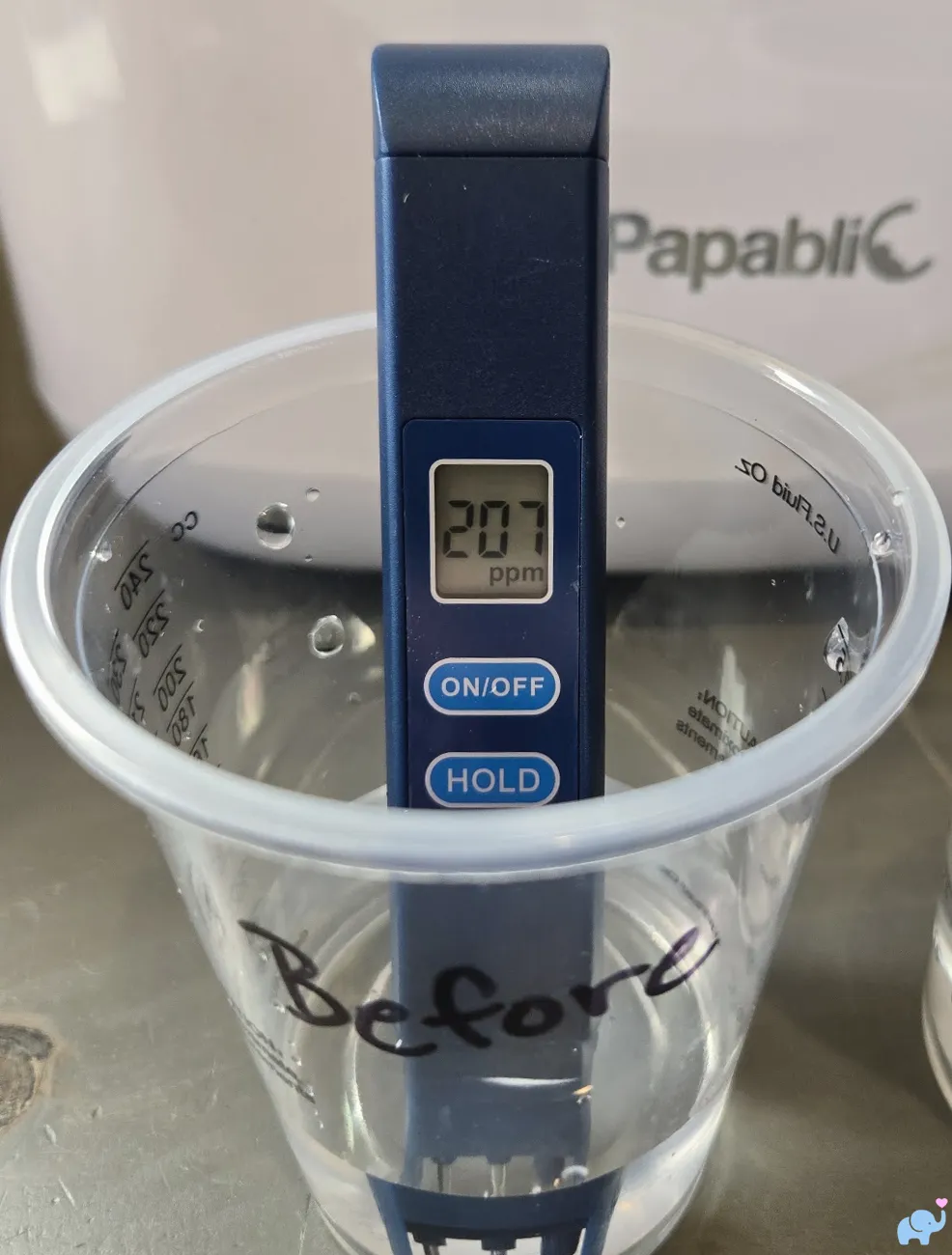
That means we should replace our filter roughly every ~30-45 cycles.
At approximately $23 per SafeguardPlus replacement filter, and doing 1-2 cleaning cycles per day, the cost seems reasonable for most families:
| Wash frequency | Filters/month | Monthly cost |
|---|---|---|
| 1 load daily | .67 | $15 |
| 2 loads daily | 1.34 | $30 |
| 3 loads daily | 2 | $46 |
Illustrative estimates based on 365 days of use, 45 cycles per filter, and $23 per replacement. Actual spending will vary with included filters, discounts, replacement timing, and household water conditions.
For some families, this might make the Standard Bottle Washer appealing from a long-term value standpoint. Its maintenance costs aren't zero, but it doesn't have the same recurring filter purchase.
The SafeguardPlus could save money by eliminating distilled water or reducing descaling. Depending on how frequently you wash, replacement filters may cost considerably more than those alternatives.
For us, the upgrade is better understood as a convenience and water-quality feature, not a guaranteed money saver.
Of course, without the filtration you would need to purchase more descaling tablets, use distilled water, and spend more time cleaning.
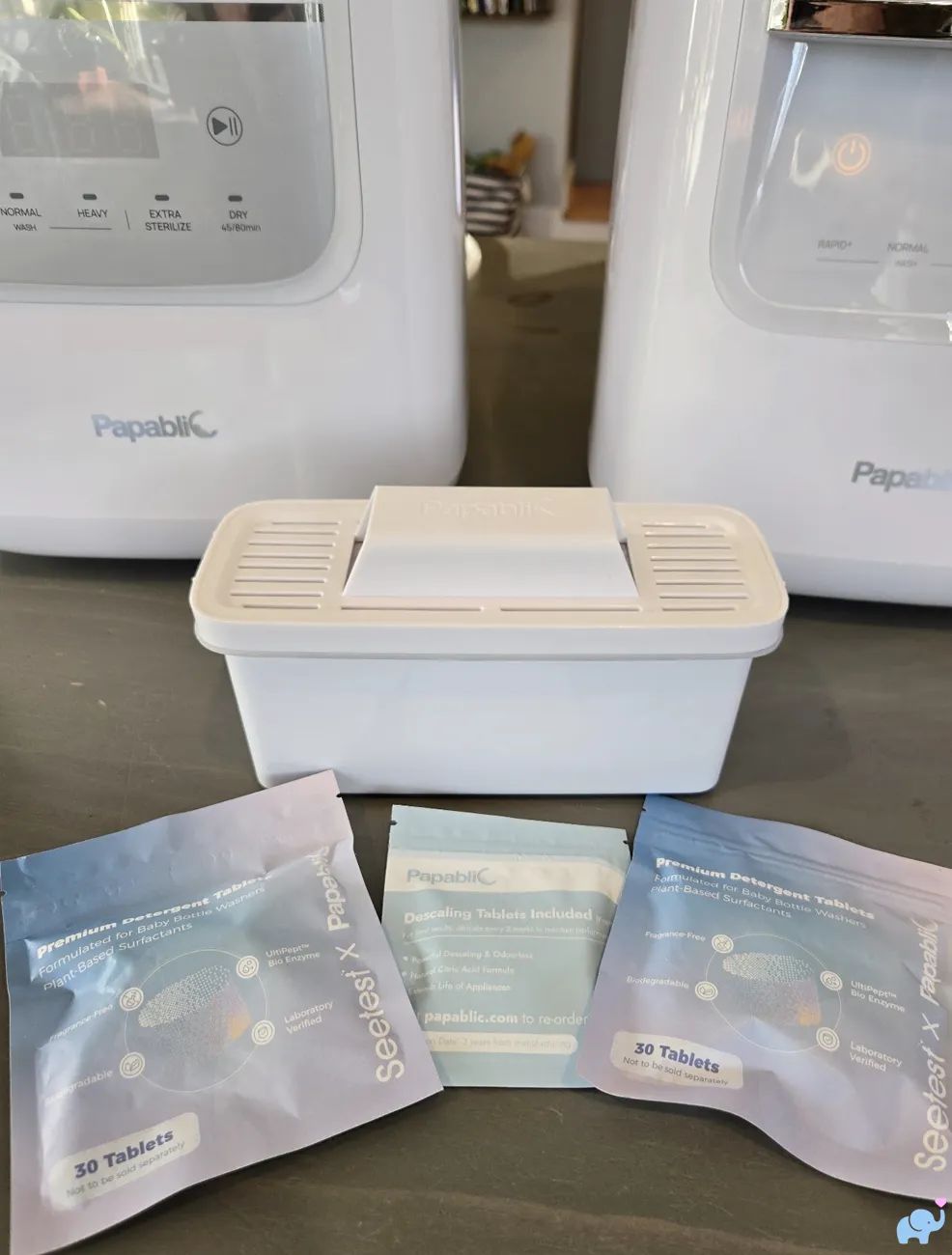
Conveniently, Papablic does include some descaling tablets alongside the detergent tablets:
Do You Need a Bottle Washer, a Sterilizer, or Both?
It's easy to assume cleaning and sterilizing are interchangeable, but they serve different purposes.
Cleaning (washing) removes milk, formula, and other residue from bottles and feeding parts.
Sanitizing reduces germs on items that have already been cleaned.
Drying and protected storage help keep clean equipment ready for the next use.
The CDC recommends cleaning bottles after every feeding. Daily sanitizing is particularly important for babies younger than two months, babies born prematurely, and those with weakened immune systems. For older, healthy babies, careful cleaning may make daily sanitizing unnecessary.
That's why we see the SafeguardPlus and Standard Bottle Washer as fundamentally different conveniences from the Sterilizer & Dryer: they remove most of the repetitive cleaning work. The sterilizer is still useful, but it comes after cleaning.
One more practical note: always disassemble bottles and pump parts before cleaning, and follow the equipment manufacturer's instructions. Some valves, membranes, tubing, wearable pump components, and electronics should not be placed in a washer or exposed to high-temperature steam.
Papablic Black Friday Deals: How to Save
If you've been considering a bottle washer, Black Friday is a good time to compare the actual checkout prices, especially for the premium SafeguardPlus.
Papablic website offer: Use code MOMMYHOOD101 for extra 28% off eligible purchases during the campaign at the Papablic website. There are also savings of up to $180, bonus gifts valued at up to $199.99, and an exclusive three-year warranty. Eligibility, bundles, and whether offers stack should be confirmed on the checkout page.
Amazon offer: Additional 15% off at Amazon, with possible further savings through an eligible Amazon Baby Registry completion discount. Registry eligibility, exclusions, and whether discounts can be combined depend on Amazon's current terms.
Our Conclusions: Which Papablic Would We Buy?
After using all three products, we think the right choice comes down to one simple question: How much of your bottle-cleaning routine do you want to automate?
If you're exclusively pumping, combination feeding, or using several bottles a day, a washer can take a meaningful chore off your plate. And if you also want built-in water filtration to help with water spots and mineral scale, along with laboratory-documented reductions in several specific contaminants, the SafeguardPlus is our favorite all-around choice.
For families who mainly want the freedom to stop hand-cleaning, the Standard Bottle Washer (P8) is the better value. It provides the same core cleaning and drying capabilities, without the added filtration expense.
And for families who mainly breastfeed, use only occasional bottles, and don't mind cleaning by hand, the Sterilizer & Dryer is an economical, practical option.
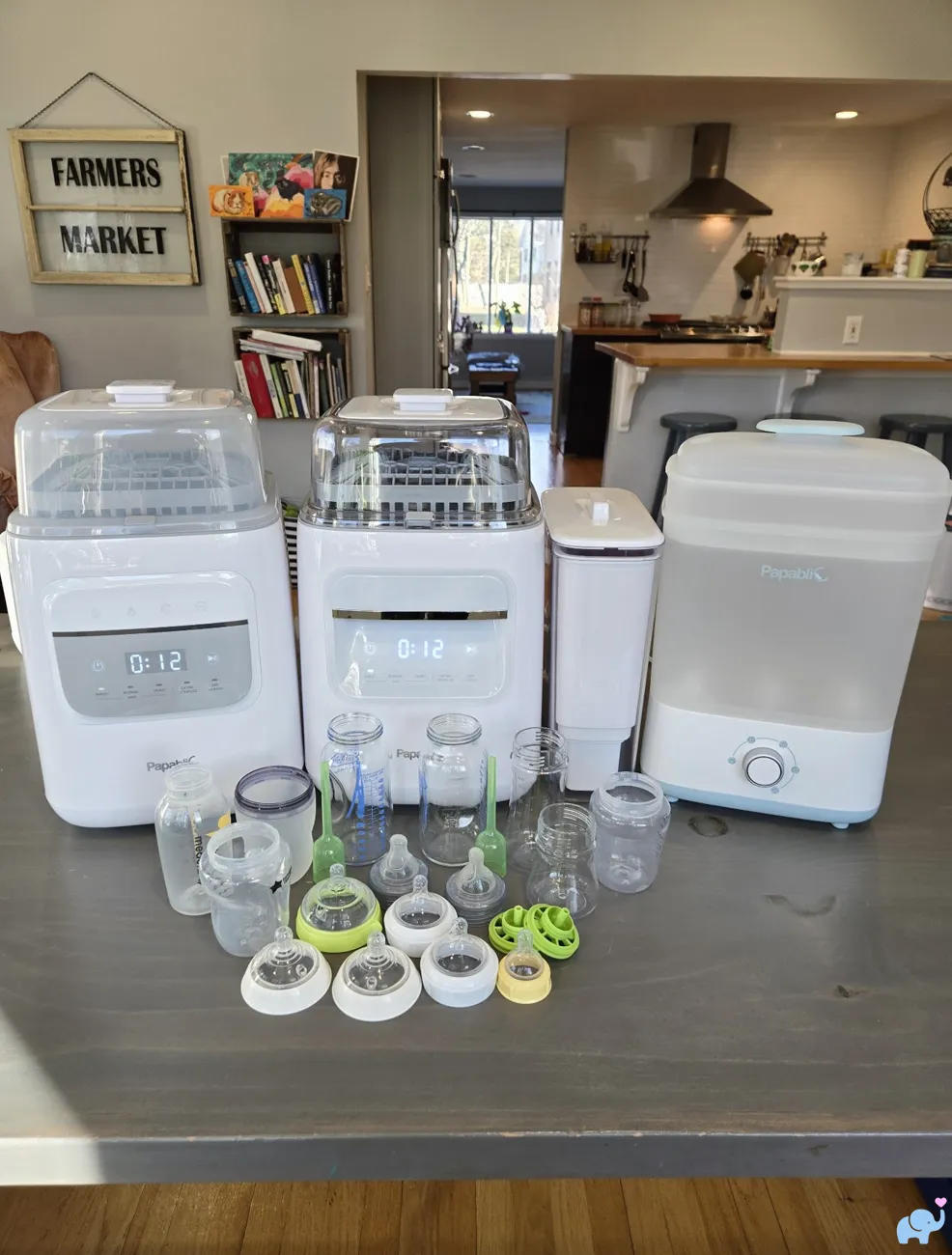
Our favorite part of using a bottle washer isn't a specification on a box. It's having one less chore to tackle when we'd rather be feeding, cuddling, or spending time with our baby.
Bottom line: The SafeguardPlus is our top pick for the most complete routine, the Standard Bottle Washer is our pick for value, and the Sterilizer & Dryer is the right choice when simple and affordable is enough.
Research & Sources
Our hands-on observations are supplemented by current Papablic product specifications, published user accounts, and public-health guidance. We also reviewed SGS contaminant-specific laboratory test results and a WQA Gold Seal certificate supplied by Papablic. Laboratory testing, manufacturer claims, and product certification have different scopes and should not be treated as interchangeable.
- Mommyhood101 (2026) Best Bottle Washers. Our round-up of the best bottle washers of the year, where the SafeguardPlus is in a top position.
- Mommyhood101 SafeguardPlus Bottle Washer Review. Our hands-on review of the SafeguardPlus bottle washing system.
- Papablic. SafeguardPlus Baby Bottle Washer System: specifications, filtration, filter maintenance, and current offers.
- Papablic. Standard Bottle Washer (P8): capacity, cycle options, and water/maintenance FAQ.
- Papablic (2026). SafeguardPlus vs. Standard Bottle Washer: feature comparison.
- SGS third party testing for lead and PFAS reduction.
- Centers for Disease Control and Prevention (2025). How to Clean, Sanitize, and Store Infant Feeding Items.
- SGS-CSTC Standards Technical Services (Ningbo) Co., Ltd. (May 6, 2026). Test Report NBF26-0008189-01: PurifyClean™ Water Purification System. Four-page laboratory report supplied to Mommyhood101 by Papablic; contaminant-reduction results at 85 L of service life.
- Water Quality Association (July 13, 2026). Gold Seal Certificate and Official Gold Seal Listing, Hongkong Qingkuai Co., Limited. Supplied by Papablic; lists model PAPA328AG to NSF/ANSI/CAN 372-2024 for lead content in water-contact components.
- NSF. Lead in drinking water and relevant product certification standards.