
Best Organic Baby Formulas 2026: Expert Reviews
Keep your little one nourished and happy with these carefully reviewed organic infant formulas.

 By: Tali Ditye, Ph.D., Co-founder
Mommyhood101 independently curates baby gear to help inform decisions; if you buy through links on our site, we may earn a commission.
Breast milk offers important nutritional and immune benefits, but breastfeeding is not possible or practical for every family. Many parents use infant formula to supplement breastfeeding or as their baby's primary source of nutrition, and no parent should feel guilty for choosing a safe feeding approach that helps their baby grow and thrive.
The good news is that several high-quality organic formulas are available on the U.S. market.
We've been reviewing infant formulas for over 15 years.
Here's what we look for:
✔️ Certified organic.
✔️ Meets U.S. standards.
✔️ Meets EU standards.
✔️ Lactose is primary carb.
✔️ Clear protein sources.
✔️ Essential Omega-3 fatty acids.
✔️ Essential Omega-6 fatty acids.
✔️ Prebiotics & MFGMs.
✔️ HMOs & nucleotides.
✔️ Choline, inositol, lutein
✔️ No added syrups or sucrose.
✔️ No starches or thickeners.
✔️ Nothing artificial.
✔️ Clean Label Project certified.
✔️ Transparent sourcing.
✔️ Transparent manufacturing.
✔️ Transparent testing.
✔️ Easy preparation.
✔️ Good acceptance.
✔️ Reasonably priced.
In our hands-on tests, we also evaluate how easily each formula mixes, how readily babies accept it, and whether our test families observe unusual gas, reflux, spit-up, constipation, or other digestive discomfort.
-
- Top 5 Organic Infant Formulas Comparison Table
- Highly Recommended:
- 1. Best Overall: Little Spoon Organic Infant Formula
- 2. Runner-Up: Bobbie Organic Infant Formula
- 3. Kendamil Organic Infant Formula
- 4. HiPP Dutch Combiotik Organic Formula
- 5. Holle Organic Formula
- 6. Bubs Organic Grass Fed Infant Formula
- 7. Earth's Best Organic Formula
- 8. Happy Baby Organic Formula
- 9. Lebenswert Organic Formula
- 10. Similac Organic Formula
- Nara Organics Safety Recall
- Cost Comparison Table
- Understanding Formula Ingredients
- Preferred Ingredients and Features
- Ingredients to Consider in Context
- Contaminants and Safety Concerns
- Frequently Asked Questions
- Conclusions
- Disclosures
- References
Full disclosure: Little Spoon, Kendamil, Bubs, Bobbie, Nara Organics, and selected HiPP formulas were provided to us as free test samples. Receiving a sample does not determine our rankings or conclusions. Always consult your pediatrician before changing formulas, especially when feeding a premature infant or a baby with suspected allergy, poor growth, or a medical condition.
Here are the top five formulas we've tested, followed by several additional options. Once your little one begins transitioning to solid foods, see our guides to the best baby cereals and purees for babies.
The Top 5 Best Organic Infant Formulas of 2026
| ★★★★★★★★★★ (10/10) | Our top pick and one of the most thoughtfully designed new formulas we've tested, featuring organic whole milk, organic lactose, a 60:40 whey-to-casein ratio, FOS prebiotics, DHA, ARA, and naturally occurring MFGM components. It contains no palm oil, corn syrup, maltodextrin, or added soy and showed excellent tolerance in our testing, along with impressive safety transparency. | CHECK PRICES | READ FULL REVIEW | |
| ★★★★★★★★★★ (10/10) | A European-inspired, USDA Organic formula made in the USA. It uses lactose as its primary carbohydrate, has a 60:40 whey-to-casein ratio, and contains no palm oil, corn syrup, or maltodextrin. It mixed easily and performed very well in our testing. Bobbie Gentle, which uses partially hydrolyzed proteins, may be worth considering for some babies with sensitive digestion. | CHECK PRICES | READ FULL REVIEW | |
| ★★★★★★★★★★ (9.5/10) | A longtime favorite whole-milk European formula made without palm oil, soy, or corn syrup. It features naturally occurring MFGM, the HMO 3′-GL, GOS and FOS prebiotics, and plant-based DHA and ARA. It has a creamy consistency, showed strong acceptance in our testing, and is now officially marketed for infants 0–12 months in the United States. | CHECK PRICES | READ FULL REVIEW | |
| ★★★★★★★★★★ (9.5/10) | A European organic formula with lactose as its primary carbohydrate, GOS prebiotics, probiotic lactic-acid cultures, and essential fatty acids. It mixed smoothly and showed excellent acceptance and tolerance in our testing. It does contain palm oil and is a European-market formula rather than one officially marketed in the United States. | CHECK PRICES | READ FULL REVIEW | |
| ★★★★★★★★★★ (9.0/10) | A long-established European organic formula brand known for simple recipes and Demeter-certified milk in several cow-milk products. Holle Pre and Stage 1 provide DHA and mixed smoothly in our testing, with strong acceptance and tolerance. Most cow-milk varieties contain palm oil, and ingredients differ across stages and between the cow- and goat-milk formulas. | CHECK PRICES | READ FULL REVIEW |
Over the past decade, we have tested and reviewed over 50 different infant formulas with over 150 different babies, including both U.S. and European brands. Note that formulas officially marketed in the United States must meet FDA requirements for safety and nutritional adequacy. European-market formulas follow European regulations and organic-labeling standards, but products imported through third-party sellers may have different labeling, preparation instructions, recall systems, and regulatory status than formulas officially marketed in the United States.
Within each of the reviews below, you can find a link to our full hands-on review of the baby formula option. If you have any questions, please do not hesitate to send us a message!
The Best Organic Formulas: Reviewed
1. Little Spoon Organic Infant Formula
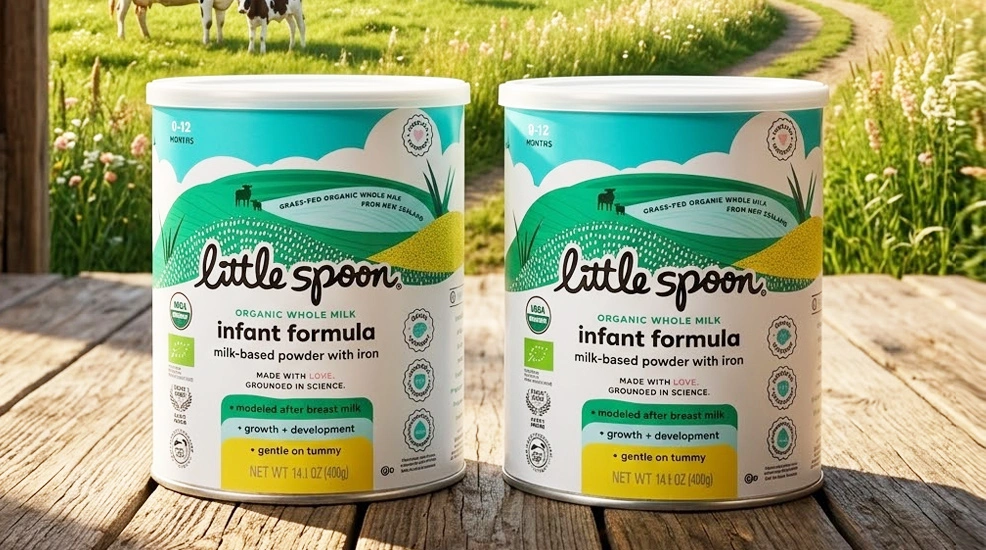
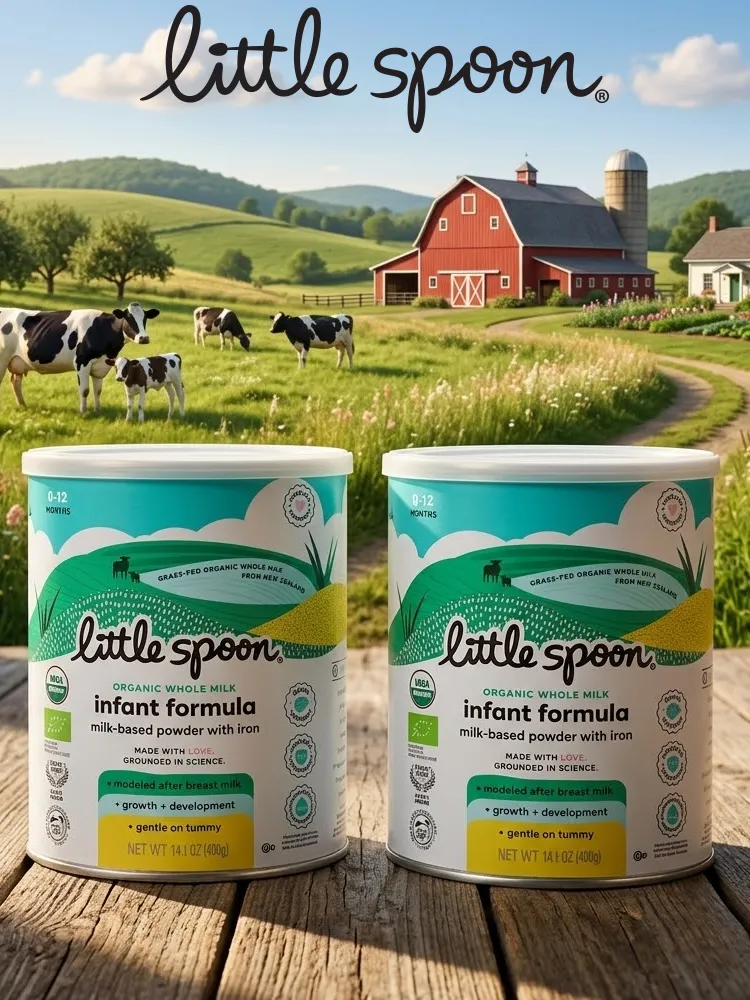
One of the most impressive new formula launches we've tested in years, Little Spoon Organic Infant Formula combines a thoughtfully designed ingredient profile with impressive safety transparency and excellent performance in our hands-on testing. Designed for infants from birth to 12 months, this formula is USDA Organic and certified to the EU organic Equivalency Arrangement, and uses organic lactose, organic grass-fed whole milk from New Zealand, organic whey protein concentrate, and a 60:40 whey-to-casein ratio. It also includes FOS prebiotics, DHA, ARA, and naturally occurring MFGM components from its dairy ingredients. Little Spoon has earned the Clean Label Project Purity Award, and the formula is made without palm oil, corn syrup, maltodextrin, soy, or gluten.
Little Spoon performed excellently in our hands-on testing (see our Little Spoon formula review here). It mixed easily with water, produced minimal foam, and was well tolerated by our test babies, with very little gas or burping and no noticeable reflux during our testing period. The tins arrived well protected, and although we wish the scoop were easier to find and the tin included a leveling edge, those are relatively minor drawbacks. Little Spoon particularly stands out for transparency: the company publishes numerical heavy-metal limits and batch-level test results, uses more than 2,000 safety and quality checkpoints during production, and independently tests every finished batch for more than 500 contaminants and microorganisms. Overall, this premium whole-milk formula meets nearly all of our preferred criteria and is produced in the USA by an experienced infant-formula manufacturing partner, making it our current top pick. Interested? You can check the current Little Spoon formula pricing and availability here!
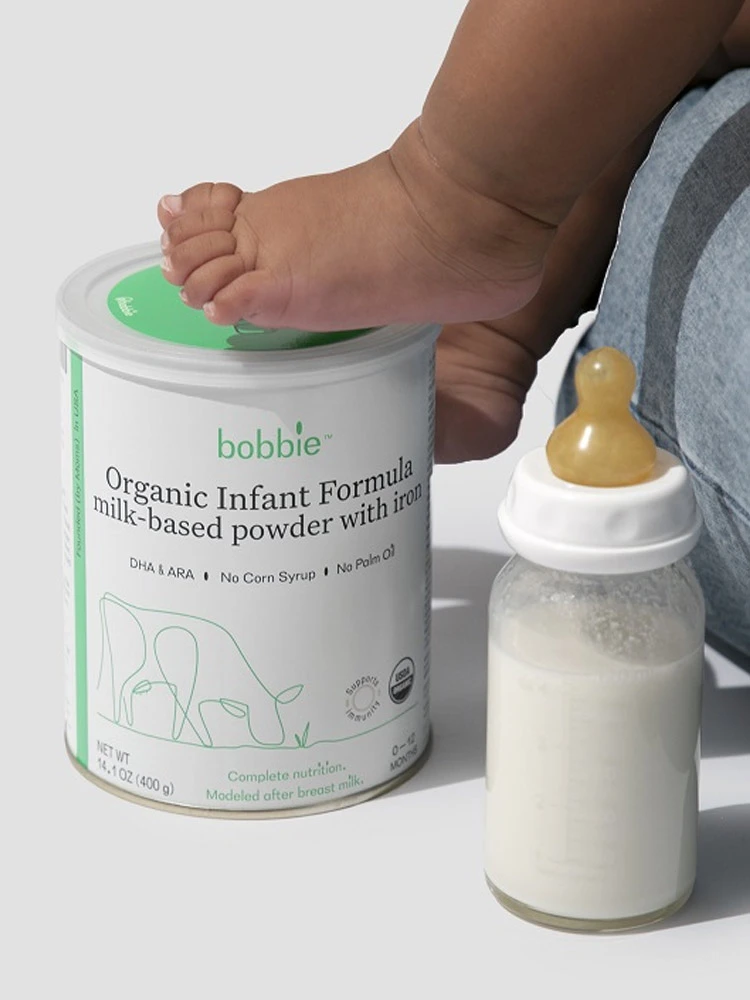
2. Bobbie Organic Infant Formula
Bobbie has become one of the most popular U.S.-made organic formulas, offering a European-inspired approach with organic, non-GMO ingredients and a thoughtfully designed nutritional profile. Founded by two moms and based in San Francisco, Bobbie is USDA Organic certified and meets FDA requirements for infant formula, making it a strong option for families who want a European-style formula made domestically.
The formula uses organic lactose as its primary carbohydrate, along with organic nonfat milk and whey protein concentrate, and has a 60:40 whey-to-casein ratio. Its fat blend includes organic high-oleic sunflower or safflower oil, canola oil, coconut oil, and organic linoleic sunflower or safflower oil. Bobbie also provides DHA, ALA, and LA, along with the vitamins and minerals required for infant nutrition. Like most of the excellent baby formulas on this list, it is made without palm oil, corn syrup, maltodextrin, starch, sucrose, or gluten.
In our testing (see our Bobbie formula review here), Bobbie mixed easily with warm water and produced minimal foam or clumping. Both of our test babies, who were 4 and 8 months old, accepted it immediately and showed no unusual gas, reflux, or fussiness during our testing.
We also appreciate Bobbie's flexible subscription system, which makes it easy to adjust delivery timing and quantities as your baby's needs change. For drawbacks, Bobbie is more expensive than some alternatives, at roughly 24 cents per prepared fluid ounce based on the pricing available during our review. It also does not include added prebiotics or probiotics, and its proteins are intact rather than partially hydrolyzed, so it may not be the best fit for some babies with sensitive digestion. In those cases, options such as HiPP Combiotik or the Bobbie Gentle formula may be worth considering. Interested? You can check current Bobbie formula pricing and availability here.
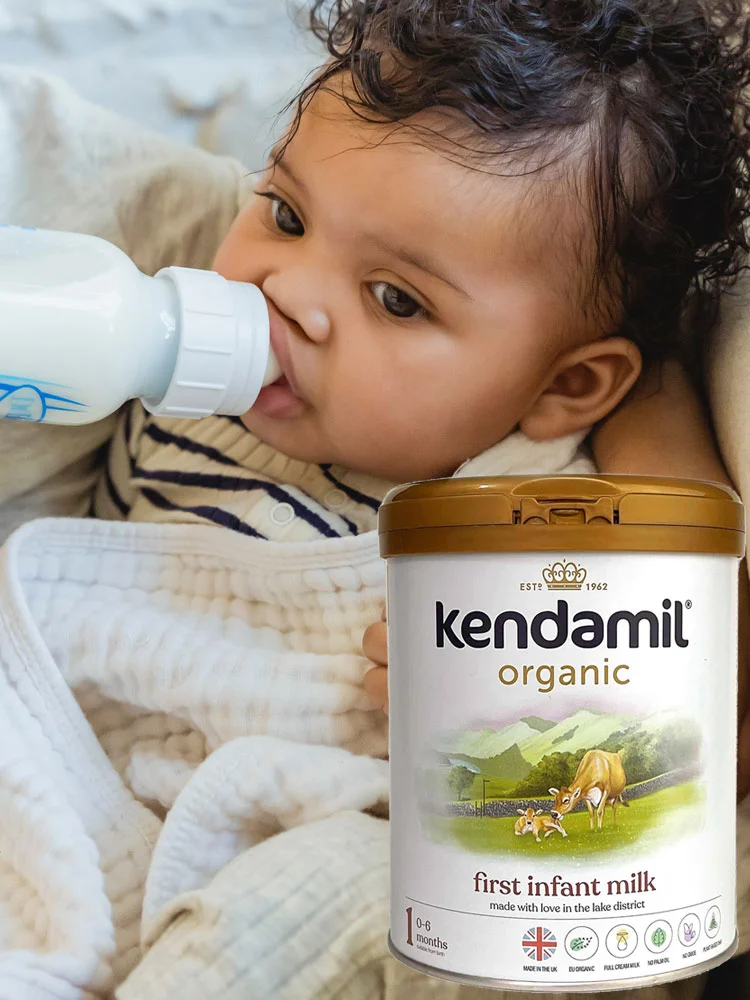
3. Kendamil Organic Baby Formula
A longtime favorite on our list, Kendamil stands out as one of the most established whole-milk organic formula options available to American families. Its British manufacturing facility has a history of producing infant formula dating to 1962, and Kendamil introduced its organic formula range in 2018. The brand has also received international quality awards and has reportedly been used by the British Royal Family, although that connection has not been officially confirmed by the family. Kendamil initially expanded its U.S. availability during the 2022 formula shortage and is now included on the FDA's list of infant formulas marketed in the United States. The U.S. version is labeled for infants from birth to 12 months, while European-market Kendamil products are also offered in Stages 1, 2, and 3.
What makes this formula stand out? Organic whole milk is the first ingredient, giving the formula a creamy taste while allowing some of its fat to come directly from milk. Its remaining fat blend uses sunflower, coconut, and rapeseed oils, with no palm or soy oil. Kendamil also provides plant-based DHA, ARA, ALA, LA, choline, inositol, GOS and FOS prebiotics, and the naturally occurring human milk oligosaccharide 3′-GL. Its whole-milk ingredients naturally contain milk fat globule membrane components, or MFGM, which are also present in human milk and are being studied for their potential developmental benefits. The formula is made without corn syrup, maltodextrin, sucrose, gluten, palm oil, soy, or fish oil.
In our testing, Kendamil mixed very well with warm water, without noticeable clumping, bubbling, or excessive foam. You can see more details in our full Kendamil Organic formula review. We offered it to three infants and two toddlers, and all five readily accepted it and consumed their usual feeding amounts. One of the three infants, a breastfed 4-month-old, developed a little gas, although her mother noted that the same thing occurred whenever she introduced any formula. As with any standard cow's milk formula containing intact proteins, individual tolerance varies, and Kendamil Organic is not intended for babies with a diagnosed cow's-milk protein allergy.
The main drawback is price. At the time of our latest update, Kendamil Organic cost approximately 21 cents per prepared fluid ounce, although prices can vary by retailer and package size. We may also have a “mommyhood101” coupon code available here for 5% off, subject to current availability and terms. Overall, we love Kendamil's creamy whole-milk recipe, thoughtful ingredient profile, and strong performance in our testing, and we're happy to feature it near the top of our list. Interested? You can check current Kendamil Organic formula pricing and availability here!
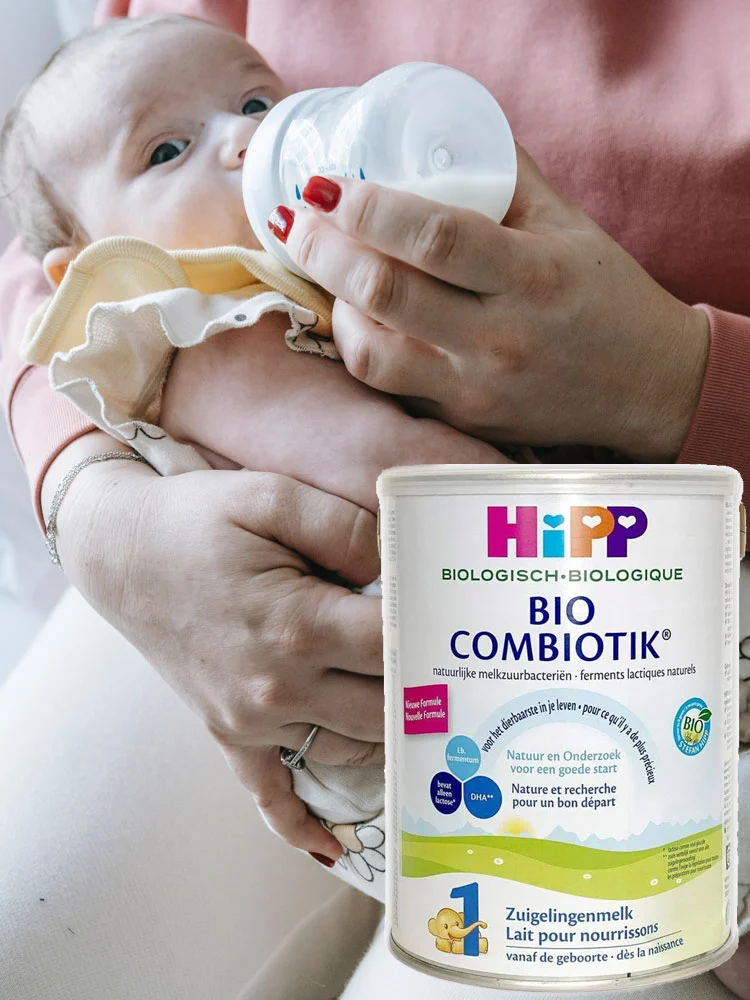
4. HiPP Dutch Combiotik Organic Baby Formula
HiPP Dutch Combiotik is one of our favorite European organic formulas for families seeking a lactose-based recipe with both prebiotics and probiotics. HiPP offers different Dutch, German, and UK formulas, and their ingredients, stage labeling, and preparation instructions are not always identical. After testing several versions, our strong preference is the Dutch recipe (see why here). HiPP Dutch Stage 1 is a certified organic, skim-milk-based formula that uses lactose as its only carbohydrate. It contains GOS prebiotic fibers derived from organic lactose, natural lactic-acid cultures, DHA, and a blend of palm, rapeseed, and sunflower oils.
The combination of GOS and natural lactic-acid cultures is designed to support the developing intestinal microbiome, and research on formulas containing this synbiotic combination has found effects on gut-microbiota composition. However, HiPP Dutch is still a standard formula made with intact cow's milk proteins rather than a medically specialized, sensitive, comfort, or hypoallergenic formula. Individual tolerance varies, and it is not appropriate for babies with a diagnosed cow's milk protein allergy unless specifically recommended by a qualified medical professional.
HiPP Dutch also avoids several ingredients that some parents prefer not to see in formula, including corn syrup, maltodextrin, starch, sucrose, gluten, artificial colors, artificial flavors, and genetically modified ingredients. It does contain the added vitamins and minerals needed to meet European infant formula requirements. Ingredients also vary somewhat across Stages 1, 2, and 3, so parents should follow the age guidance and preparation directions printed on the specific package they purchase rather than assuming the stages are interchangeable.
We tested Dutch, UK, and German versions of HiPP Combiotik (called Combiotic in the UK) with several infants and toddlers and saw excellent acceptance. None of our testers developed noticeable gas, bloating, colic, or discomfort during our testing period. We especially liked the Dutch formula's ingredient profile, smooth consistency, easy mixing, and minimal bubbles after preparation. For complete details, see our in-depth review of Dutch, UK, and German HiPP formulas.
For drawbacks, HiPP Dutch contains palm oil alongside rapeseed and sunflower oils. Palm oil is commonly included in infant formula as a source of palmitic acid, although some parents prefer formulas that use other fat sources. HiPP Dutch can also be relatively expensive in the United States, and because it is a European-market formula, its packaging, stage system, preparation instructions, and regulatory status differ from those of formulas officially marketed for the U.S. market. Families should purchase it from a reputable supplier, inspect every package carefully, and discuss imported formula with their pediatrician. Interested? You can check HiPP Dutch Combiotik pricing and availability here!
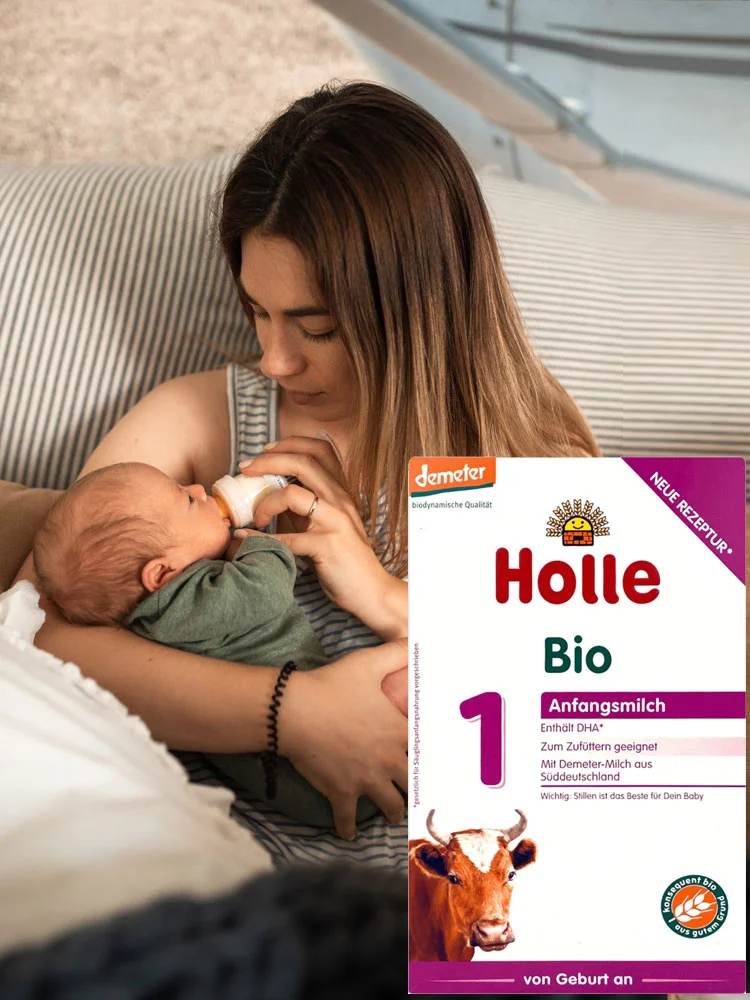
5. Holle Organic Baby Formula
Holle, pronounced “ho-lay,” is one of Europe's longest-established organic baby-food brands. Founded in Switzerland in 1933, the company has more than 90 years of experience producing organic and biodynamic foods for babies and children. Holle is particularly well known for its use of Demeter-certified milk, which comes from biodynamic farms that must meet requirements extending beyond standard European organic certification, including additional animal-welfare, biodiversity, soil-management, and farm-sustainability standards. Although ingredient sourcing varies by product, Holle's current cow-milk Stage 1 formula uses Demeter milk from southern Germany.
The Holle range includes first infant formulas intended from birth, such as Pre and Stage 1, along with follow-on and growing-up formulas for older babies and toddlers. We've personally tested Holle Pre and Stages 1 and 2 in both cow-milk and goat-milk varieties and were impressed by their simple recipes and strong performance. The exact ingredients vary by formula and stage. Current cow-milk Stage 1 uses skim milk and whey powder, followed by palm, sunflower, and rapeseed oils, lactose, algae-derived DHA, ARA, and the required vitamins and minerals. The goat-milk recipe uses full-cream goat milk and is made without palm oil. Stages 2 and 3 have different recipes and currently include maltodextrin and starch, so parents should always review the label of the specific product they are considering.
In our testing, Holle Pre was easy to measure and mixed smoothly with warm water. It also had a high acceptance rate, including among babies who were primarily breastfed, making it a potentially useful option for combination feeding or transitioning to formula. Our test babies showed very little gas, spit-up, reflux, or other obvious digestive discomfort during the testing period, although formula tolerance is highly individual. We also liked that the formula provides essential omega-3 and omega-6 fatty acids, including DHA, ALA, and LA, depending on the specific stage and recipe.
For drawbacks, most Holle cow-milk formulas contain palm oil, which some parents prefer to avoid. Palm oil is commonly used to help approximate the palmitic-acid content of human milk, although research suggests that its position within the formula's fat structure may influence calcium and fat absorption and stool consistency. Holle formulas can also be expensive in the United States. At the time of our review, the formula cost approximately 30 cents per prepared fluid ounce, although pricing varies considerably by stage, package size, retailer, and exchange rate.
American families should also understand that Holle's European-market formulas use European labeling, stage designations, preparation instructions, and nutrient standards, and Holle is not currently listed among the infant formulas officially marketed in the United States by the FDA. Families choosing an imported formula should purchase from a reputable supplier, inspect the packaging carefully, follow the instructions printed on that exact package, and discuss the choice with their pediatrician. For more details, read our full Holle baby formula review. Interested? You can check current Holle Pre and Stages 1-4 pricing and availability here!
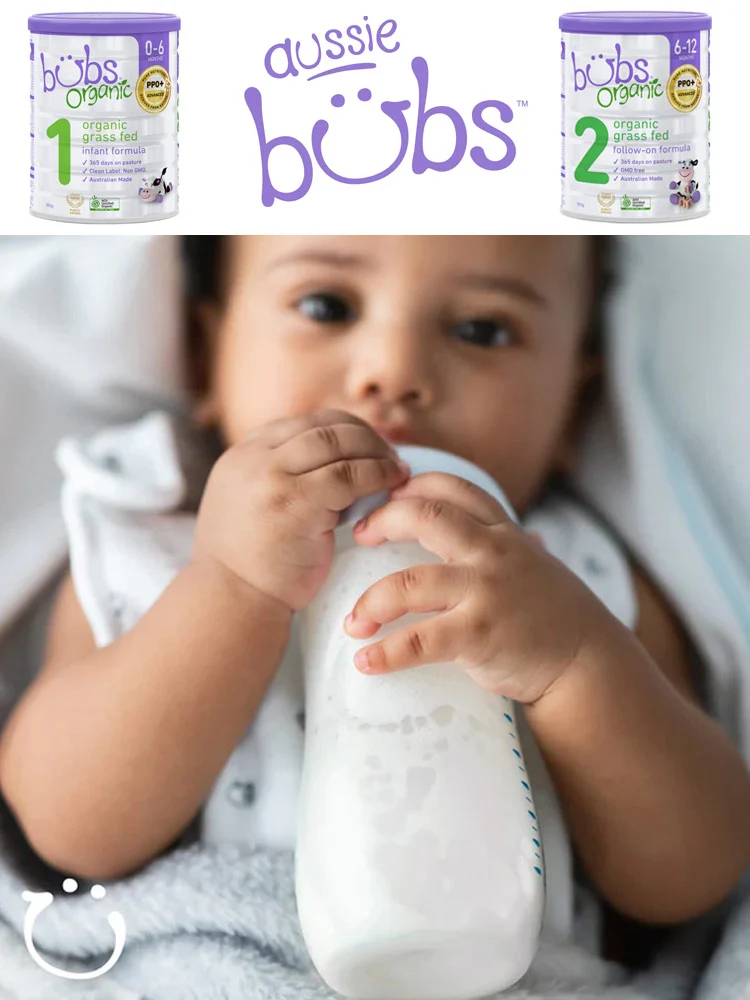
6. Bubs Organic Grass Fed Infant Formula Stage 1
Bubs Organic Grass Fed Infant Formula Stage 1 is a certified-organic Australian formula designed for babies from birth to 6 months. It is made with organic milk from free-range, grass-fed cows and combines organic lactose, whole-milk powder, whey protein concentrate, and skim-milk powder in a whey-dominant formulation. This is the Australian Stage 1 formula, not the separate non-organic Bubs 365 Day formula sold in the United States.
We received samples from Bubs for testing and were impressed by the formula's ingredients, nutritional profile, preparation, acceptance, and tolerance. Bubs Organic Grass Fed Stage 1 has earned Australian organic certifications and has also received Clean Label Project recognition, including the Purity Award and First 1,000 Days Promise certification. It is made without palm oil, maltodextrin, corn syrup solids, sucrose, artificial colors, artificial flavors, preservatives, or genetically modified ingredients.
The formula uses organic lactose as its primary carbohydrate, followed by an organic vegetable-oil blend containing high-oleic sunflower, coconut, soy, and canola oils. It also includes organic whole-milk powder, organic whey protein concentrate, organic skim-milk powder, organic GOS prebiotics, and the probiotic Bifidobacterium longum BB536. The protein blend provides a 60:40 whey-to-casein ratio, while algae-derived DHA and microbial ARA provide important long-chain fatty acids.
In our testing, Bubs Stage 1 was very easy to prepare and mixed smoothly with room-temperature water, without excessive bubbles, foam, residue, or clumps. Our 2-month-old test baby readily accepted it and consumed his usual feeding amount. We did not observe unusual burping, spit-up, reflux, constipation, or other obvious digestive discomfort during our testing period, although formula tolerance varies considerably from one baby to another. Be sure to read our full Bubs Organic Grass Fed Stage 1 review here!
Potential drawbacks include the use of soy oil and soy lecithin, so this will not suit families specifically avoiding soy ingredients. It also does not contain added HMOs or nucleotides, and its DHA level is more modest than what is found in many newer European formulas. However, its combination of certified-organic ingredients, whole milk, lactose, GOS prebiotics, BB536 probiotics, DHA, ARA, and a palm-oil-free fat blend makes it one of the more thoughtfully formulated organic infant formulas we have reviewed. Interested? You can check current pricing and availability here!
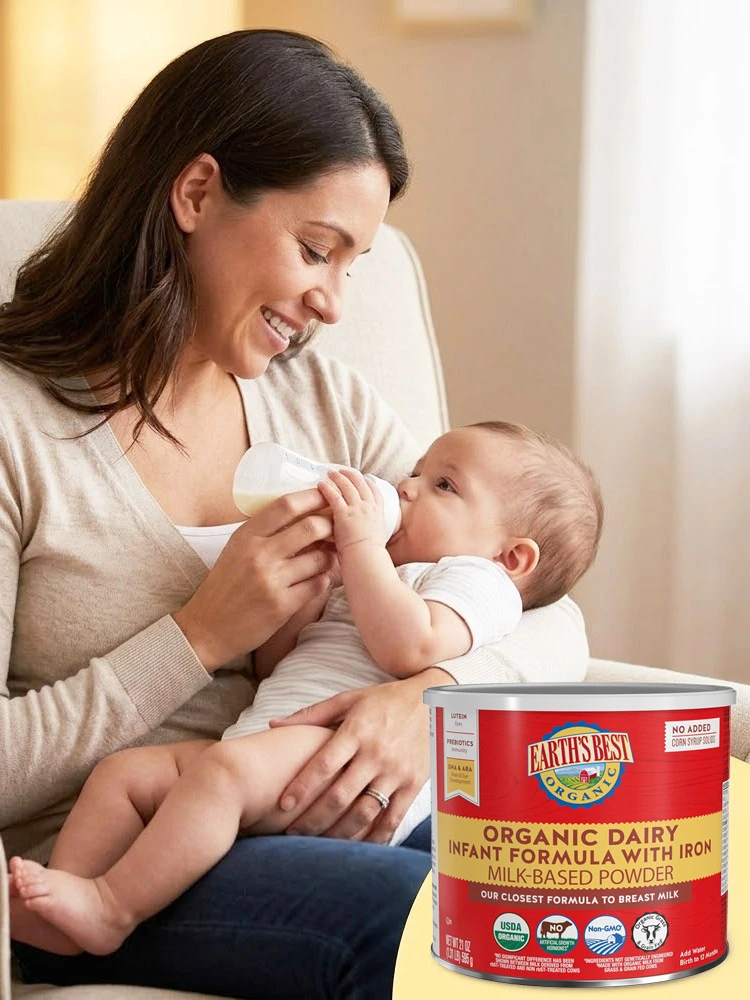
7. Earth's Best Organic Infant Formula
Earth's Best is one of the longest-established organic baby-food brands in the United States, and its Organic Dairy Infant Formula remains a widely available option for families who prefer a USDA Organic formula made for the U.S. market. Designed for infants from birth through 12 months, it is listed by the FDA as an infant formula marketed in the United States and is made with certified organic, non-GMO ingredients.
Like many standard milk-based formulas, Earth's Best uses organic lactose as its primary carbohydrate, followed by organic nonfat cow's milk and organic whey protein concentrate. Its fat blend includes organic palm or palm-olein oil, soy oil, coconut oil, and high-oleic safflower or sunflower oil. The formula also provides DHA from algae oil, ARA from fungal oil, FOS prebiotics, lutein, nucleotides, taurine, L-carnitine, and the vitamins and minerals required for infant nutrition. Overall, it offers a comprehensive nutritional profile, although parents specifically avoiding palm or soy ingredients will want to consider another option.
In our testing, the formula mixed easily with water without forming noticeable clumps, excessive bubbles, or a powdery film inside the bottle. We provided it to two families for testing: one with a formula-fed 3-month-old and another with a 7-month-old who was transitioning from breastfeeding to supplemental formula. Both babies accepted it without difficulty.
One of the babies experienced more spit-up, gas, and constipation than her parents typically observed with her usual formula, HiPP Dutch Combiotik. Because this involved only one baby, we cannot determine which ingredient or formula characteristic was responsible, and individual tolerance can vary considerably. Although Earth's Best contains 1.8 mg of iron per prepared 5-fluid-ounce serving, an iron-fortified formula is not generally considered a cause of constipation. Differences in the overall protein and fat composition, including the use of palm oil, may influence digestion or stool consistency in some babies.
Overall, Earth's Best Organic Dairy Infant Formula is a solid, readily available U.S. option with lactose as its main carbohydrate, organic dairy ingredients, prebiotics, DHA, ARA, and lutein. Its primary drawbacks are the inclusion of palm oil and soy ingredients, along with the digestive symptoms observed in one of our two test babies. For more information about DHA and ARA sources and processing methods, read our guide to DHA in baby formula. Interested? You can check current Earth's Best formula pricing and availability here.
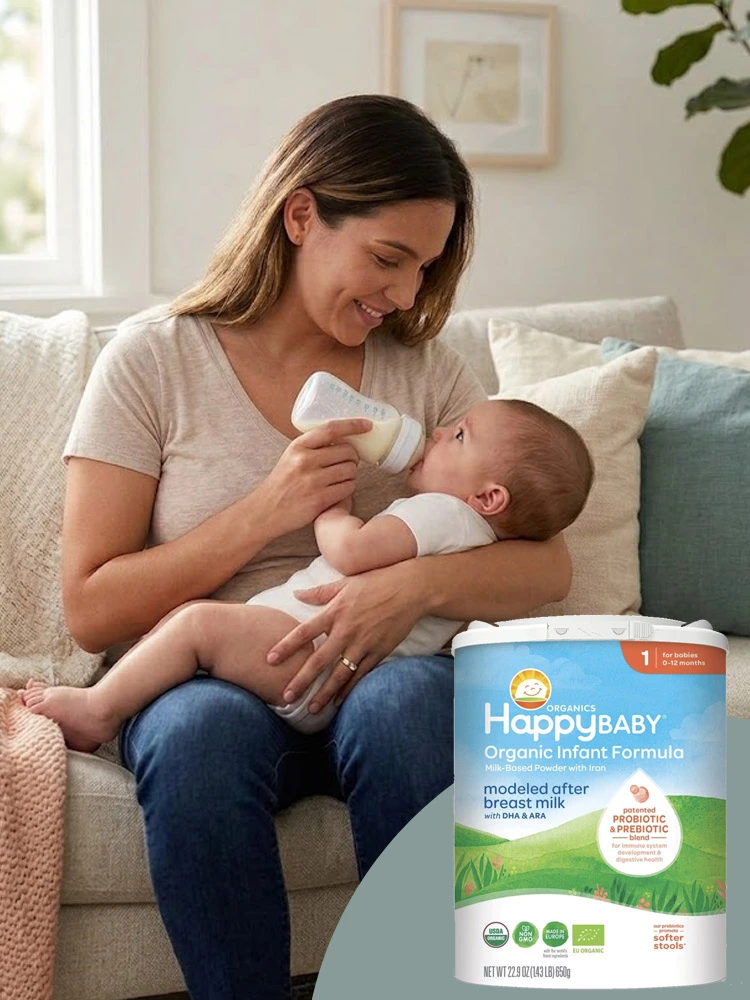
8. Happy Baby Organic Infant Formula
Happy Baby Organic Infant Formula Stage 1 is a USDA Organic, milk-based formula designed for infants from birth through 12 months. It uses organic lactose as its primary carbohydrate, along with organic nonfat milk and organic whey protein concentrate. Its fat blend includes organic palm, coconut, canola, high-oleic sunflower, and sunflower oils. The formula is made without corn syrup solids, maltodextrin, food starch, artificial colors, or artificial flavors.
One of its strongest features is its digestive-support blend. The current formula includes two prebiotics, GOS and FOS, along with the probiotic Bifidobacterium breve M-16V. Happy Baby says this combination is clinically shown to be well tolerated, support normal growth, and help promote softer stools compared with formulas without added prebiotics and probiotics. It also provides DHA from tuna fish oil, ARA from Mortierella alpina oil, choline, inositol, and the vitamins and minerals required for infant nutrition.
In our testing, the formula had a mild flavor and was accepted without difficulty. Some testers thought it tasted slightly less sweet than breast milk, although flavor perceptions are highly subjective. Nutritionally, it provides the standard calorie, protein, fat, vitamin, and mineral profile expected from an iron-fortified infant formula marketed in the United States. It also contains soy lecithin, so families specifically avoiding all soy-derived ingredients should keep that in mind.
Our main complaint was preparation. We found that it required more shaking and stirring than several other formulas on our list, and it occasionally left small clumps behind. The current formula also uses one scoop per ounce of water rather than the more common one scoop per two ounces, so parents should carefully follow the preparation directions printed on the package.
Another potential drawback is palm oil. Happy Baby says its palm oil is sustainably sourced and uses it as a source of palmitic acid, a major fatty acid also found in human milk. However, some research suggests that the structure of palm-derived fat in formula may influence calcium and fat absorption or stool consistency in some babies. For more details, see our discussion of palm oil in infant formula. Overall, Happy Baby offers a strong organic ingredient profile, a useful prebiotic-and-probiotic blend, and broad U.S. availability, though its mixing performance was not among the best in our testing. Interested? You can check current Happy Baby formula pricing and availability here.
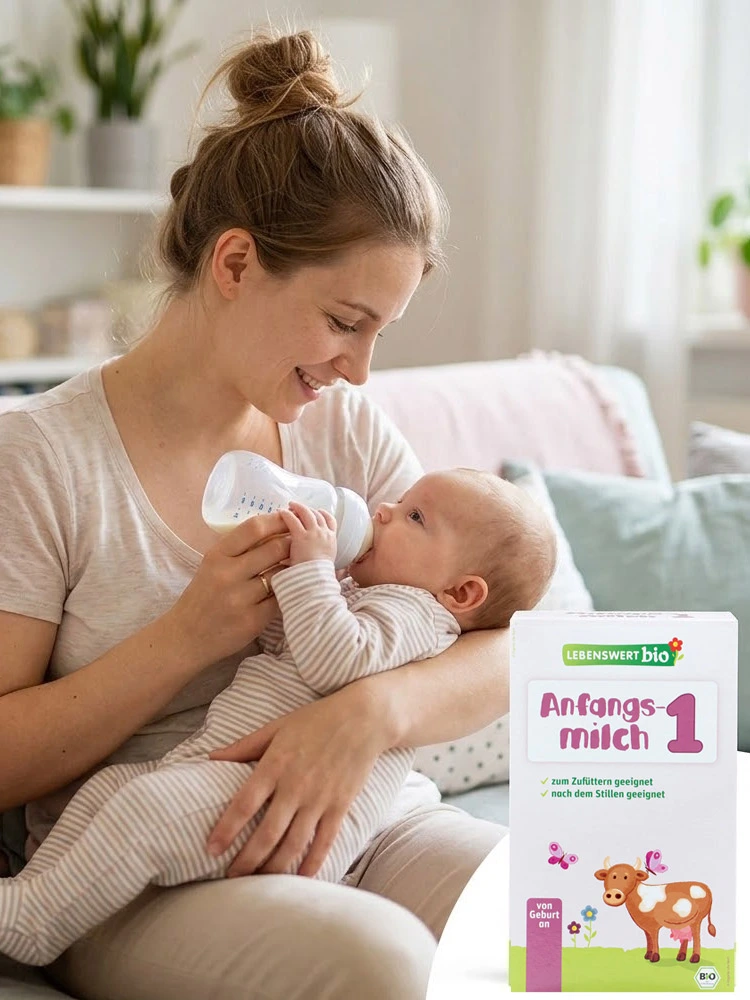
9. Lebenswert Organic Infant Formula
Lebenswert Bio is a German-market organic formula brand introduced by Holle in 2009. Its defining feature is Bioland certification, which builds on European organic requirements with additional standards addressing animal welfare, biodiversity, soil management, and environmentally responsible farming. That makes Lebenswert an appealing option for families looking for a relatively simple European organic formula with carefully regulated ingredient sourcing.
Lebenswert Stage 1 is intended for infants from birth through approximately 6 months. Its current recipe uses organic skim milk, organic demineralized whey powder, organic lactose, and a vegetable-oil blend containing palm, sunflower, and rapeseed oils. It also includes algae-derived DHA, ARA oil, and the vitamins and minerals required under European infant formula regulations. Lactose is its primary carbohydrate, and Stage 1 does not contain added maltodextrin or starch.
In our testing, Lebenswert Stage 1 had a mild taste that was neither overly sweet nor oily, mixed smoothly with warm water, and produced relatively little foam or clumping. Our test babies accepted it readily, and we observed very little gas or other obvious digestive discomfort during the testing period. Those results were especially impressive compared with several other formulas we tested, although tolerance can vary considerably from one baby to another.
Lebenswert is also reasonably priced compared with many other imported European formulas. Its main drawbacks are the inclusion of palm and rapeseed oils, which some parents prefer to avoid, and the use of additional carbohydrates in later stages. Current Stage 2 contains maltodextrin, while Stage 3 contains both maltodextrin and starch, so families should review the ingredient list for the specific stage they are considering. The recipe has also been updated over time to comply with newer European requirements for DHA and other essential fatty acids.
American families should understand that Lebenswert is a European-market formula rather than one officially marketed in the United States. Its package labeling, stage designations, preparation instructions, and nutrient standards therefore differ from those of U.S.-market formulas. Purchase it only from a reputable supplier, inspect the package carefully, and follow the preparation directions printed on the specific box. For English-language ingredients and preparation guidance, visit the Organic Life Start website. For more details, read our full Lebenswert formula review. Interested? You can check current Lebenswert formula pricing and availability here.
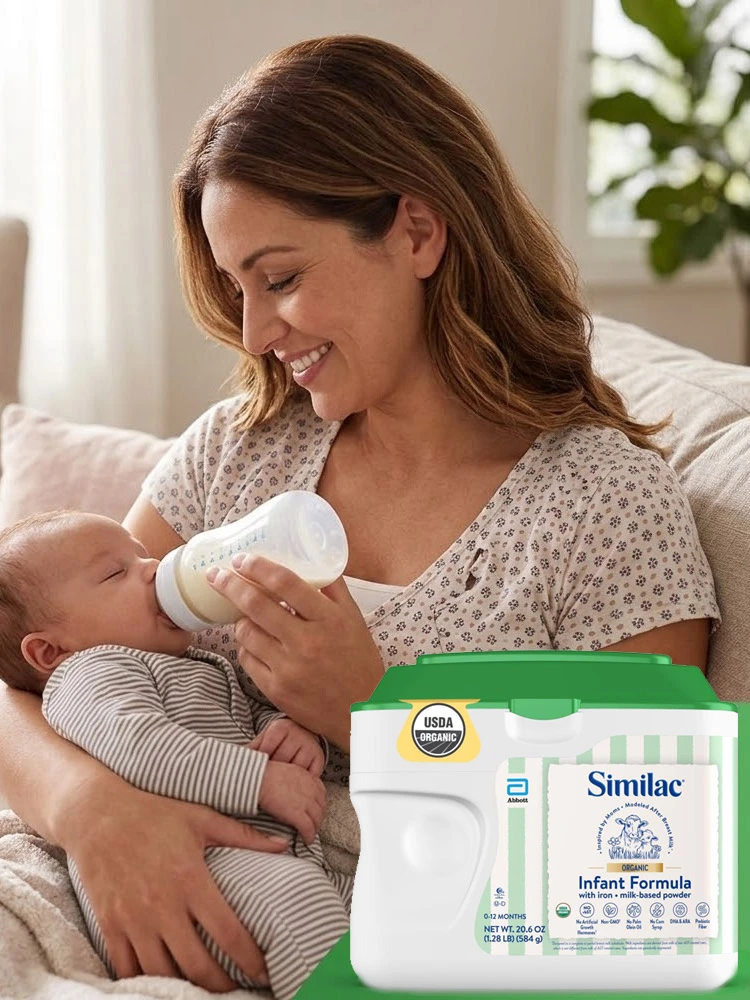
10. Similac Organic Infant Formula
Similac makes a broad range of infant formulas for different feeding needs, and its Organic Infant Formula stands out as a USDA Organic option designed to provide complete nutrition through a baby's first year. It is available in both powder and ready-to-feed formats and is listed by the FDA among infant formulas marketed in the United States.
The current powder formula uses organic lactose as its primary carbohydrate, followed by organic nonfat milk. Its fat blend includes organic high-oleic sunflower oil, organic soy oil, and organic coconut oil, without palm olein oil. It is also made without corn syrup, maltodextrin, added sucrose, or genetically engineered ingredients. Families avoiding soy should note that the formula contains organic soy oil.
Additional ingredients include DHA from Schizochytrium oil, ARA from Mortierella alpina oil, FOS prebiotics, lutein, beta-carotene, nucleotides, choline, taurine, inositol, L-carnitine, and the vitamins and minerals required for infant nutrition. A prepared 5-fluid-ounce serving provides 100 calories, 2.07 grams of protein, 5.63 grams of fat, 1.8 mg of iron, and 1.5 IU of vitamin E.
In our testing, the powder was more difficult to dissolve than several competing formulas. Even after considerable shaking and stirring, we sometimes noticed fine clumps, a slightly grainy texture, and residue inside the bottle. The mixture could also separate somewhat after sitting, requiring another gentle shake before feeding. Shaking produced a fair amount of foam, which may be inconvenient for babies who tend to swallow air or become uncomfortable during feeding.
Both of our test babies readily accepted the flavor, and neither developed unusual gas, reflux, constipation, or other obvious discomfort during our testing period. We found the prepared formula relatively sweet with a mildly tart note, although taste comparisons are subjective and should not be interpreted as meaning that the formula tastes the same as breast milk.
Overall, Similac Organic offers a much stronger ingredient profile than its older formulation, particularly because lactose is now the primary carbohydrate and the recipe contains no maltodextrin, added sugar, corn syrup, or palm olein oil. Its main drawbacks are the inclusion of soy oil and the mixing and solubility issues we observed. At the time of our latest update, Similac listed the 20.6-ounce tub for $26.99, although retailer pricing may vary. Interested? You can check current Similac Organic pricing and availability here.
Nara Organics Safety Recall
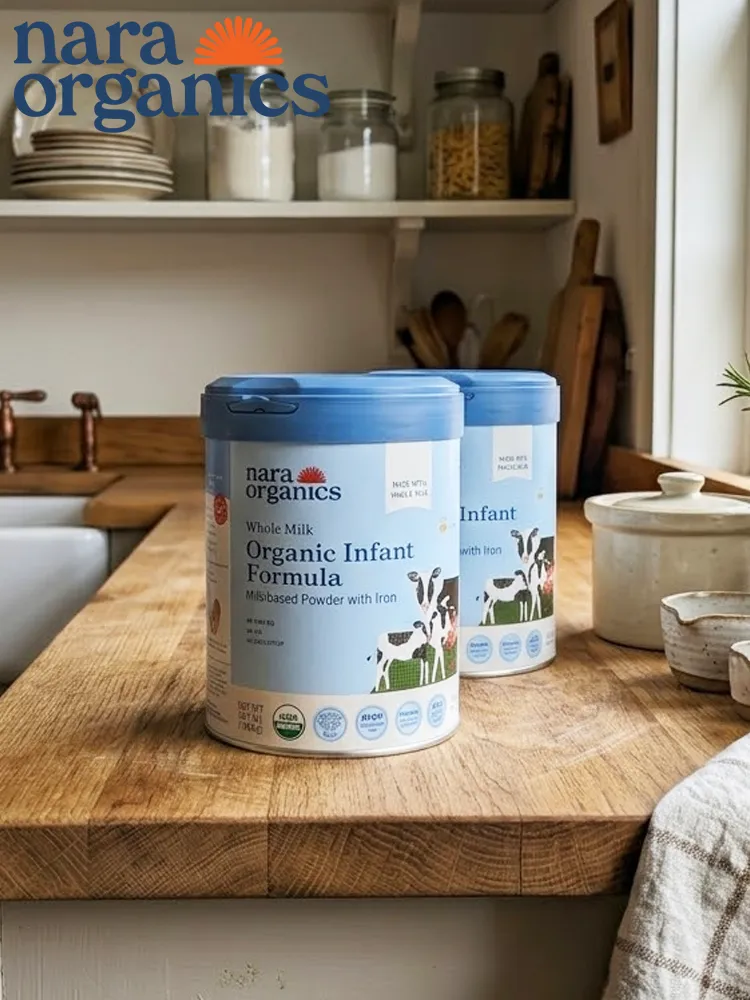
Do Not Use Nara Organics Whole Milk Organic Powdered Infant Formula
Safety alert: Nara Organics recalled all lots of its Whole Milk Organic Powdered Infant Formula on June 13, 2026, during an investigation involving confirmed or suspected infant botulism illnesses. Do not feed this formula to an infant. Stop using it immediately and follow the company's instructions for disposal or return. You can read Nara Organics' recall announcement here.
Contact a healthcare provider immediately if a baby who consumed the formula develops poor feeding, constipation, a weak cry, reduced facial expression, difficulty swallowing, breathing problems, or unusual weakness or floppiness. Because the investigation and recall remain active, we have removed Nara from our rankings and cost comparison and have disabled purchase links. We will reconsider the product only after the investigation is complete and public-health authorities confirm that it can be safely marketed again.
Cost Comparison Table
Because container sizes, scoop sizes, and mixing ratios vary, cost per prepared fluid ounce is more useful than cost per container alone.
Pricing note: These approximate prices were checked in early 2026, and may change. They exclude shipping, taxes, coupons, subscription discounts, and multipack savings. Prepared yield is based on the directions for the specific product and may vary slightly with measuring and rounding.
| Product | Container Size | Approx. Yield | Approx. Price | Price per Prepared Ounce |
|---|---|---|---|---|
| Little Spoon | 400 g (14.1 oz) | 92 fl oz | $30 | $0.33 |
| Bobbie | 400 g (14.1 oz) | 106 fl oz | $25 | $0.24 |
| Kendamil Organic | 800 g (28.2 oz) | 189 fl oz | $40 | $0.21 |
| HiPP Dutch Combiotik | 800 g (28.2 oz) | 189 fl oz | $50 | $0.26 |
| Holle | 400 g (14.1 oz) | 90 fl oz | $27 | $0.30 |
| Bubs 365 Day | 567 g (20.0 oz) | 140 fl oz | $32 | $0.23 |
| Earth's Best | 595 g (21.0 oz) | 137 fl oz | $35 | $0.26 |
| Happy Baby | 650 g (22.9 oz) | 144 fl oz | $38 | $0.26 |
| Lebenswert | 500 g (17.6 oz) | 125 fl oz | $30 | $0.24 |
| Similac Organic | 584 g (20.6 oz) | 140 fl oz | $27 | $0.19 |
Premium formulas with extensive sourcing disclosures, specialized ingredients, or imported distribution often cost more, but price alone does not determine nutritional quality or how well a baby will tolerate a formula.
Understanding Infant Formula Ingredients
Infant formula must provide protein, fat, carbohydrate, vitamins, and minerals in amounts appropriate for infant growth. Some formulas also include DHA, ARA, HMOs, nucleotides, prebiotics, probiotics, lutein, or milk fat globule membrane components. These additions may be useful, but no formula reproduces all of the nutritional, immune, hormonal, and cellular properties of human milk.
Proteins
- Most standard formulas use cow's milk proteins, usually a combination of whey and casein. Goat-milk formula is another nutritionally complete option when appropriately formulated for infants.
- The whey-to-casein ratio varies by product and by stage. A 60:40 ratio is common, but it is not a universal requirement and human milk composition changes over time.
- Partially hydrolyzed formulas may be easier for some babies to tolerate but are not hypoallergenic. Extensively hydrolyzed and amino-acid formulas are used for selected medical indications under professional guidance. You can see our list of the best gentle baby formulas here.
- Soy-protein formula can be nutritionally complete for appropriate infants, but it is not hypoallergenic and is not suitable for babies with soy-protein allergy.
Fats
- Formula fat blends may include milk fat and vegetable oils such as sunflower, safflower, coconut, soybean, palm or palm olein, and rapeseed or canola oil.
- Palm olein helps provide palmitic acid but may influence calcium and fat absorption or stool consistency in some infants. Its presence does not make a formula unsafe.
- Canola is a low-erucic-acid form of rapeseed oil. Food-grade oils used in infant formula must comply with applicable safety and composition standards.
Carbohydrates
- Lactose is the primary carbohydrate in human milk and is our preference for routine milk-based formulas when appropriate.
- Specialized or lactose-reduced formulas may use glucose polymers, corn-syrup solids, maltodextrin, sucrose, or starch. These ingredients should be evaluated in the context of the formula's intended purpose rather than treated as universally harmful.
Vitamins, Minerals, and Optional Ingredients
- Infant formulas must contain specified amounts of essential nutrients, including protein, fat, linoleic acid, iron, calcium, zinc, selenium, and vitamins A, C, D, E, K, and the B vitamins.
- Some formulas also add DHA, ARA, HMOs, nucleotides, prebiotics, probiotics, choline, inositol, lutein, or MFGM components.
- Ingredient sources and amounts vary, so compare the current label of the exact product rather than assuming every stage or regional version has the same recipe.
Preferred Ingredients and Features
- An age-appropriate protein source, such as cow's milk, goat milk, soy protein, hydrolyzed protein, or amino acids
- A clearly identified carbohydrate source, with lactose preferred in most routine milk-based formulas
- A balanced fat blend that supplies essential fatty acids
- All required vitamins and minerals
- Optional additions such as DHA, ARA, HMOs, nucleotides, prebiotics, probiotics, lutein, or MFGM components
- Clear preparation directions, lot identification, expiration dating, recall information, and customer support
- Transparent contaminant testing and manufacturing quality controls
Ingredients to Consider in Context
- Soy protein or soy-derived ingredients: Appropriate for many infants but unsuitable for babies with soy-protein allergy. Soy oil and soy lecithin contain much less protein than soy formula but may still matter to families avoiding all soy-derived ingredients.
- Palm or palm-olein oil: Common and permitted in formula, though some research suggests effects on calcium absorption or stool consistency.
- Alternative carbohydrates: Corn syrup solids, glucose polymers, maltodextrin, sucrose, and starch may be appropriate in specialized formulas, even though we generally prefer lactose in routine milk-based products.
- Thickeners and stabilizers: These may serve a functional purpose in ready-to-feed or anti-reflux formulas. Artificial colors and unnecessary flavors are less desirable.
Contaminants and Safety Concerns
- Environmental metals: Lead, inorganic arsenic, cadmium, and mercury can enter foods through soil, water, ingredients, or processing. Detection does not automatically mean a product is unsafe; concentration, testing methods, safety limits, and quality controls matter.
- Other potential contaminants: PFAS, BPA, pesticide residues, acrylamide, and processing contaminants should be minimized through responsible sourcing, packaging, and manufacturing.
- Microbial contamination: Powdered infant formula is not sterile. Prepare and store it exactly as directed, wash hands and feeding equipment, and discard prepared formula according to package instructions.
Powdered Formula Safety
Use the exact water-to-powder ratio printed on the package. Adding extra powder can provide too little water, while diluting formula can provide inadequate nutrition and dangerously alter electrolyte balance. Ask your pediatrician about extra precautions when preparing powdered formula for infants younger than 2 months, babies born prematurely, or babies with weakened immune systems.
Frequently Asked Questions
What is organic infant formula?
Organic infant formula is made with eligible agricultural ingredients produced and handled according to an organic certification standard, such as USDA Organic or the EU organic regulations. Formula still contains required vitamins, minerals, and other nutrients that may not themselves be agricultural ingredients.
How is organic formula different from conventional formula?
The main difference is how eligible agricultural ingredients are grown, raised, and processed. Organic standards restrict genetically engineered ingredients and many synthetic pesticides and fertilizers. They do not make formula nutritionally superior, contaminant-free, or automatically easier to digest.
Are organic formulas pesticide-free?
No certification can guarantee zero pesticide residue. Organic standards restrict which pesticides and farming methods may be used, but some approved substances are permitted and environmental residues can still occur.
Do organic formulas contain fewer heavy metals?
Organic certification does not guarantee lower levels of lead, arsenic, cadmium, or mercury. These contaminants can enter foods through soil, water, ingredients, and processing. Look for manufacturers that disclose meaningful finished-product testing and safety limits.
Is organic infant formula healthier?
There is no strong evidence that organic formula provides better growth, allergy prevention, digestion, or long-term health than a nutritionally appropriate conventional formula. Families may still prefer organic products because of farming, environmental, sourcing, or ingredient preferences.
Can organic formula reduce the risk of allergies?
There is no good evidence that organic certification itself prevents food allergies. A baby with suspected cow's milk protein allergy may need an extensively hydrolyzed or amino-acid formula under medical guidance.
Is soy formula appropriate for a baby with a dairy allergy?
Not always. Soy formula is not hypoallergenic, and some babies with cow's milk protein allergy also react to soy protein. Ask your pediatrician which formula type is appropriate.
Can organic formula supplement breastfeeding?
Yes. An age-appropriate infant formula can supplement breastfeeding or serve as the primary source of nutrition when breastfeeding is not possible or preferred.
What is the best infant formula?
There is no single formula that is best for every baby. A strong choice is nutritionally appropriate, safely and reliably available, affordable for the family, prepared correctly, and well tolerated by the individual infant.
Do organic formulas contain added sugars?
Some use lactose, while others may use glucose polymers, corn-syrup solids, maltodextrin, sucrose, or starch. Check the current ingredient list. Lactose is our preference for most routine milk-based formulas, but alternative carbohydrates may be appropriate in specialized products.
Do organic formulas come in stages?
European formulas commonly use numbered stages. Most standard U.S. infant formulas are labeled for birth through 12 months, although some now use stage terminology. Use only the product intended for your baby's age and follow the exact directions on that package.
Can standard organic formula be used for premature or low-birth-weight infants?
Premature and medically fragile infants may need specialized formulas or fortifiers. Use only the feeding plan recommended by the baby's medical team.
What signs suggest that a formula may not be a good fit?
Temporary changes in gas or stool patterns can occur during a transition. Contact a healthcare provider for persistent vomiting, blood in the stool, hives or rash, breathing symptoms, severe diarrhea or constipation, dehydration, poor feeding, unusual lethargy, significant discomfort, or inadequate weight gain.
How should powdered formula be stored?
Store unopened and opened containers exactly as directed on the label, keep powder dry, use it before the expiration date, and follow the manufacturer's time limit after opening. Prepared formula should be refrigerated or discarded according to package instructions and should not be saved after a feeding has begun.
How should families transition between formulas?
Many babies can switch directly, while others may tolerate a gradual transition better. Never combine scoops or preparation ratios from different products. Follow each label precisely and ask a healthcare provider for guidance if the baby has a medical condition or develops concerning symptoms.
Conclusions
Breast milk offers important benefits, but many families face medical, professional, logistical, or personal circumstances that make supplementation or exclusive formula feeding necessary. Parents should not feel guilty about using formula; the priority is a baby who is safely fed, growing, and thriving.
Organic formulas follow additional agricultural and processing standards that some families value for environmental, sourcing, or ingredient reasons. Organic certification does not make a formula nutritionally superior, contaminant-free, or inherently easier to tolerate. Both organic and conventional formulas officially marketed in the United States must meet FDA requirements for nutritional adequacy and safety.
Our highest-rated products combine an appropriate nutritional profile with transparent sourcing and testing, reliable availability, easy preparation, good acceptance in our hands-on testing, and reasonable value. Individual tolerance still varies, and a lower-ranked formula may be the best choice for a particular baby because of availability, cost, medical needs, or digestive response.
European formulas such as HiPP, Holle, and Lebenswert use European labeling, stages, preparation instructions, and regulatory standards. Families importing them into the United States should buy from a reputable supplier, inspect every package carefully, monitor recall information, and discuss the choice with their pediatrician. Kendamil's U.S.-market formula is different because it is now officially marketed and labeled for American consumers.
Goat-milk formula is another increasingly popular option. Our related reviews include Kendamil Goat, Nannycare, and Jovie. See our complete guide to the best goat-milk formulas. Goat-milk formula is not suitable for a diagnosed cow's milk protein allergy unless a healthcare professional specifically recommends it.
Whether you're breastfeeding, bottle-feeding, or combining both, our guides to the best nursing pillows and best baby bottles may also help make feeding more comfortable.
Comparing imported formulas? See our guides to HiPP vs. Holle and Lebenswert vs. Holle.
Questions or comments? Visit our Facebook page and send us a message.
Disclosures
Mommyhood101 is based in the United States and serves an international audience. Some products discussed on this page are European-market formulas that are not officially marketed in the United States. Their labels, stage systems, preparation directions, nutrient standards, and recall pathways may differ from those of U.S.-market formulas.
In the United States, infant-formula manufacturers must comply with federal nutritional, quality, manufacturing, registration, and notification requirements. Consumers should verify the current regulatory and recall status of any formula, especially one purchased through an international distributor or third-party marketplace.
Product samples do not determine our rankings or conclusions. Some links on this page may be affiliate links, which means Mommyhood101 may receive a commission if you make a purchase. Before choosing or changing formula, consult your child's healthcare provider, especially if your baby was born prematurely, has poor growth, or has a suspected allergy, metabolic disease, or another medical condition.
Scientific References
Whey and Casein Content of Human Breast Milk
Infant Formulas Supplemented with Probiotics Reduce Colic and Irritability
Benefits of Prebiotics in Infant Formulas
Review of Prebiotics and Probiotics in Infant Formulas
Risks of Palm Oil and Palm Olein in Infant Formulas
Infant Formulas with Canola Oil Support Normal Growth
Review of European Infant Formula Composition
Heavy Metal Content of European Baby Formulas, Concerns about Lead
Heavy Metal Content of US Baby Formulas, Concerns about Cadmium
Milk Fat Globular Membranes (MFGM) in Infant Formula Improves Neurodevelopmental Outcomes


Best Bottle Washers & Sterilizers of 2026, Tested & Reviewed
We all know that the gold standard for sterilizing a baby bottle is to place it in a pot...

Best Bottle Warmers of 2026, Tested & Reviewed
Whether you're thawing frozen breast milk or warming prepared baby formula or baby food...
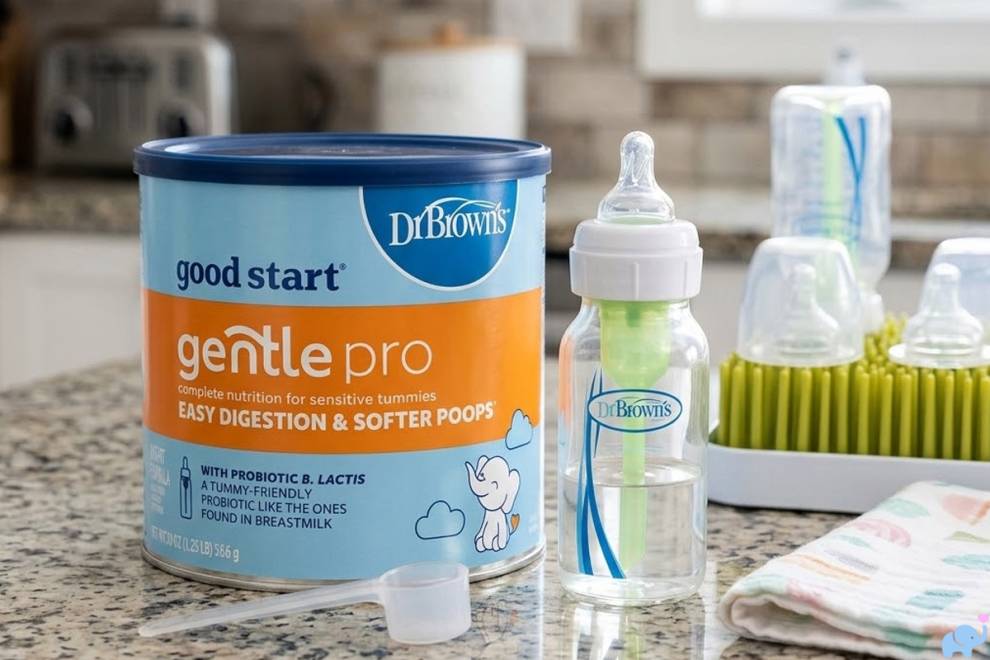
Full Review: Good Start Gentle Pro Infant Formula - Dr. Brown’s
Good Start Gentle Pro is one of the more interesting gentle baby formulas we've tested,...
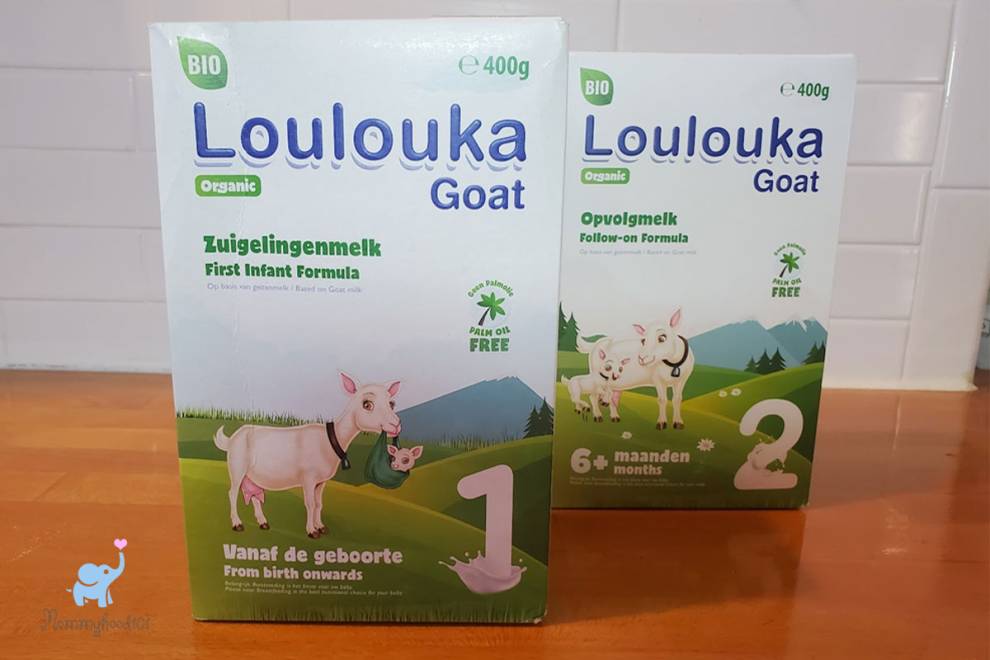
Loulouka Goat Infant Formula Review & Analysis
Loulouka goat milk infant formulas are made in Austria using premium goat milk sourced...