
Best Crib Mattresses of 2026, Tested & Reviewed
Every baby should sleep like a baby. These mattresses make that dream a reality!
 By: Tali Ditye, Ph.D., Co-founder
Mommyhood101 independently curates baby gear to help inform decisions; if you buy through links on our site, we may earn a commission.
Your little one will spend thousands of hours sleeping on their crib mattress, making it one of the most essential nursery purchases and critical for your infant's safety and well-being. But which is the best for your family?
After over 10 years of reviewing crib mattresses, if we made our own, here is what it would look like:
✔️ Dual-firmness.
✔️ Breathable cover & core.
✔️ Natural or organic materials.
✔️ Washable waterproof cover.
✔️ No adhesives.
✔️ Lightweight construction.
✔️ Greenguard GOLD Cert.
✔️ MADE SAFE Certification.
✔️ Ships flat, no unrolling.
✔️ Quality stitching and seams.
✔️ Snug fit to crib perimeter.
✔️ Sustainable material sourcing.
✔️ Reasonably priced.
✔️ No polyurethane foam.
✔️ No memory foam.
✔️ No chemical flame retardants.
✔️ No vinyl covers.
Every year, we put about a dozen crib mattresses to the test, and only the most comfortable, safe, and versatile mattresses make it onto this list.
-
- Top 5 Crib Mattresses
- In-Depth Reviews
- 1. Best: Newton Crib Mattress
- 2. Runner-up: Naturepedic Crib Mattress
- 3. Emily Organic Crib Mattress
- 4. Avocado Green Crib Mattress
- 5. Katu Organic Crib Mattress
- 6. Lullaby Earth Crib Mattress
- 7. Babyletto Pure Crib Mattress
- 8. Organic Dream Baby Mattress
- Other Crib Mattress Reviews
- Complete Crib Mattress Buying Guide
- Basic Features
- Size, Dimensions, and Weight
- Core Materials: Springs & Things
- Edge Support and Corner Angles
- Dual-Sided Support
- Waterproof Covers
- Safety Considerations
- Off-Gassing & VOCs
- Mattress and Crib Compatibility
- Firmness & Softness
- Breathability
- Covers and Pads
- Convenience Features
- Rolled versus Flat Shipping
- Weight and Ease of Lifting
- Zip-off Covers
- Machine-washable Components
- Vibrating Crib Mattresses
- What to Spend
- Small versus Big Business
- Made in the USA
- Environmental Sustainability
- Conclusions
- Frequently Asked Questions
Full disclosure: Some of these mattresses, including the Newton, Avocado, and Emily models, were sent to us as free test samples by the manufacturer.
Below we list the top 5 crib mattresses we've tested, followed by in-depth reviews of nearly a dozen different options.
The Top 5 Best Crib Mattresses of 2026
| ★★★★★★★★★★ (10/10) | One of our all-time favorites, with a fully breathable and washable Wovenaire core made from food-grade polymer, removing the need for polyurethane foam, adhesives, or chemical flame retardants. Greenguard GOLD certified and offers a perfect balance of firmness and comfort for infants and toddlers. | CHECK PRICES | READ FULL REVIEW | |
| ★★★★★★★★★★ (10/10) | A thing of beauty, this dual-firmness organic crib mattress uses an innerspring coil or lightweight WaveSupport core. Made with organic cotton, plant-based waterproofing, and Greenguard GOLD and GOTS certifications. Breathable, hypoallergenic, and made in the USA. | CHECK PRICES | READ FULL REVIEW | |
| ★★★★★★★★★☆ (9/10) | Made with certified organic cotton, wool, and coconut coir with an innerspring coil core. Greenguard GOLD and GOTS certified with excellent breathability and firmness for infants and toddlers. Durable construction with great edge and corner support. But no dual firmness. | CHECK PRICES | READ FULL REVIEW | |
| ★★★★★★★★★☆ (9/10) | Truly the most beautiful and handmade crib mattress we've ever tested. Made in the USA using organic latex, coconut husk, and cotton with dual firmness. Certified by Greenguard GOLD, GOTS, GOLS, and MADE SAFE. Breathable, non-toxic, and free from chemical flame retardants, polyurethane foam, and plastics. But a very high price. | CHECK PRICES | READ FULL REVIEW | |
| ★★★★★★★★★☆ (9/10) | The ultimate organic crib mattress with dual-stage firmness, no plastics, GOTS and GOLS certifications, and outstanding quality and comfort. Similar to the Avocado mattress but not as thick. Competitively priced, especially if you can order a month or two in advance. | CHECK PRICES | READ FULL REVIEW |
The American Academy of Pediatrics (AAP) encourages parents to use a firm and flat crib mattress to reduce the risk of Sudden Infant Death Syndrome (SIDS). Research also shows that some crib mattress designs can reduce exposure to harmful chemicals, increase breathability and airflow, and reduce the risk of suffocation.
Modern parents are very aware of safety-related issues like Sudden Infant Death Syndrome (SIDS), volatile organic compounds (VOCs), toxic flame retardants, and heavy metals. Mattress companies have followed suit, making breathable mattresses with low or zero VOC emissions, and carefully testing for heavy metals and other toxins.
To be fair, it's very challenging and expensive to make a mattress that honestly and reliably meets these goals. While unfortunately common, there is no excuse for greenwashing: misleading advertising and claims of natural, organic, or otherwise safe materials.
In-Depth Reviews of the Best Crib Mattresses
Because mattresses tend to perform well on some factors but not others, our in-depth reviews clarify exactly what makes the crib mattress worthy of inclusion: is it the breathability, organic materials, ease of cleaning, versatility, or longevity?
We leave it up to you to prioritize what is most important for your family.
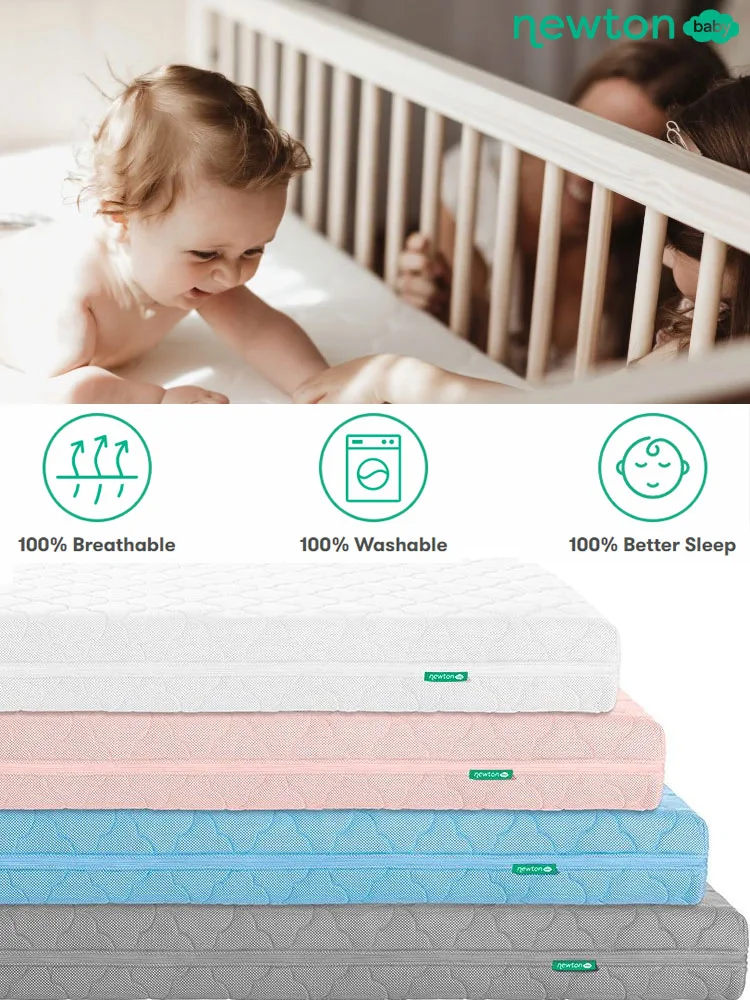
1. The Newton Crib Mattress: Best Overall!
The Newton stands out on our list for its fully breathable, washable design and innovative construction. This top-rated Newton crib mattress is made in the USA, GREENGUARD Gold certified, recommended by Dr. Sears, and a JPMA Innovation Award winner. Unlike most crib mattresses, the Newton isn’t dual firmness. Instead, it’s engineered to hit a carefully balanced firmness level suitable for both infants and toddlers, so you never have to worry about which side your baby is sleeping on. We recently tested the Newton ourselves (thanks for the samples, Newton!), and it exceeded our expectations. At first we wondered whether a single firmness might feel too soft for infants or too firm for toddlers, but in practice, Newton found a very good middle ground. Rather than relying on foam or springs, the mattress uses Newton’s proprietary Wovenaire core, which is a food-grade polymer structure that eliminates polyurethane foam and metal coils entirely.
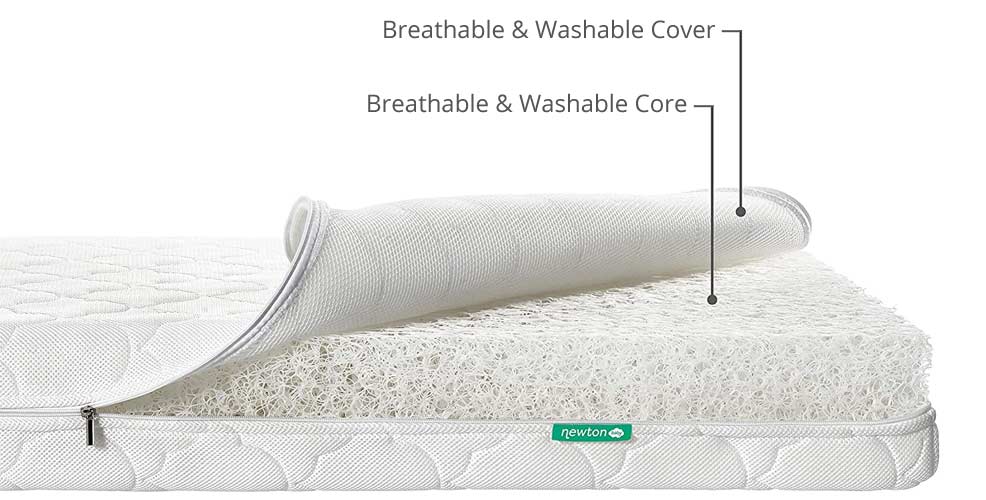
There are three major advantages to the Wovenaire core (you can see it in our in-depth Newton crib mattress review). First, because it’s about 90% air, the mattress is extremely breathable and lightweight. This promotes airflow around your baby and makes sheet changes much easier. Second, the polymer structure avoids polyurethane foam emissions and tends to hold its shape very well over time. Third, and this is a big one, the entire core is washable. Remove the zip-off cover and you can rinse the core directly in the shower or with a hose. In our testing, the Newton fit both of our test cribs very snugly, had essentially no odor or off-gassing, and felt supportive yet comfortable. The squared edges help minimize crib gaps, and the included breathable zip-off cover is soft, durable, and easy to clean. Newton even suggests using the mattress without a protector or sheet during the earliest months to maximize airflow (always follow your pediatrician’s safe sleep guidance).
There’s also a lot the Newton avoids: no heavy springs, no polyurethane foams, no latex, no adhesives, and no chemical flame retardants. The core is made from the same food-grade polymer used in yogurt cups and is reportedly recyclable, though realistically, that may depend on local recycling options. The one trade-off is that the core isn’t natural or organic like some competitors on this list. Still, it is food-grade, low-emission certified, extremely durable, and uniquely washable. At around $299 (often discounted on Newton’s site, and also available on Amazon), we think it offers excellent value for its safety-focused design and convenience. If breathability, easy cleaning, and innovative construction are high priorities for your family, the Newton is an outstanding choice and our top overall pick. Who else ranks it highly? Our friends at BabyGearLab, Babylist, What to Expect, and The Bump all recommend it as well. Interested? You can check out the Newton Crib Mattress here.
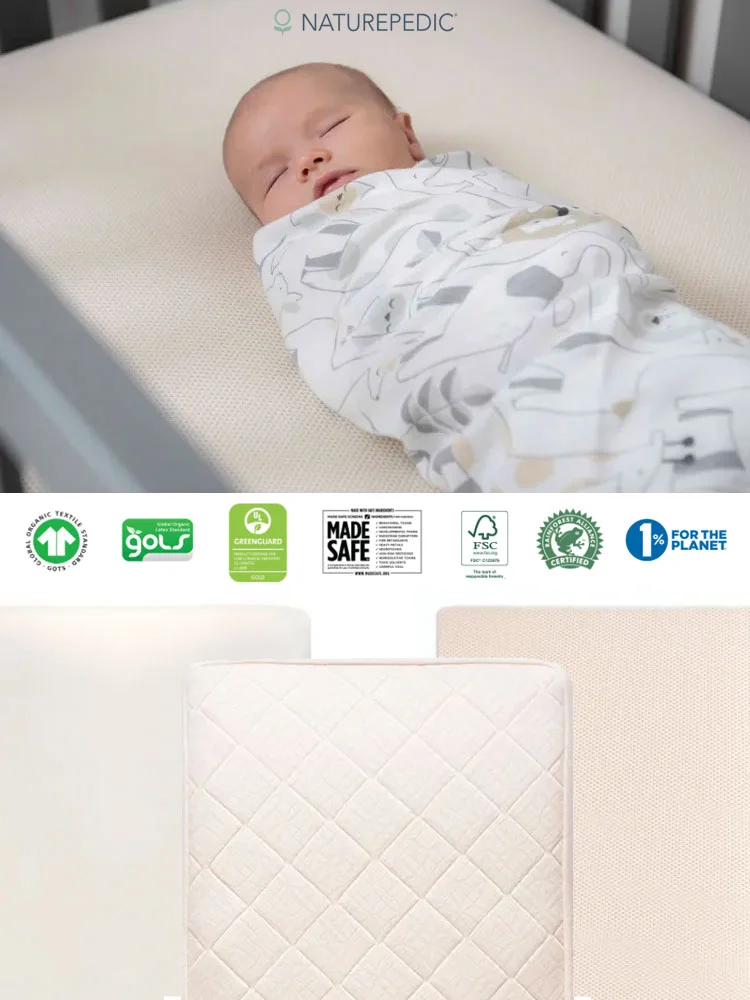
2. Runner-up: Naturepedic Organic Breathable Crib Mattress.
The Naturepedic Organic Breathable crib mattress stands out for its premium organic construction, thoughtful breathable design, and excellent durability. We purchased this mattress late last year for hands-on testing, and it quickly impressed us with its material quality and overall build. It’s made in the USA, uses certified organic materials throughout (not just the cover), and features true dual firmness with a very firm infant side and a softer toddler side. You can choose between a lightweight WaveSupport core or a traditional innerspring design. We tested the coil version, which uses 252 coils, organic cotton padding, and a certified organic cover. In our experience, a coil core tends to maintain its shape better over time, resists indentations, and provides long-term support. The trade-off is weight: at about 19 pounds, it’s heavier than many competitors, but we think the durability benefits are worth it.
The mattress meets GREENGUARD Gold, GOTS, and MADE SAFE certifications, reflecting both low emissions and strict material safety standards. Fit in our test crib (Babyletto) was excellent, with snug edges and squared corners. Out of the bo,x it was essentially odorless, and overall construction quality (from stitching to seams to materials) felt very high-end. The breathable organic cotton cover is soft, comfortable, and easy to clean, and the interior tag confirms the use of organic fiber batting along with non-GMO PLA batting. One especially clever design feature is the breathable cover system. Instead of zipping off completely, it functions more like a fitted sheet that stretches over the mattress. Since the coil version is fairly heavy, this makes cleaning much easier because you don’t need to remove the mattress from the crib each time. It’s a small but very practical usability win. The waterproof core liner is another standout. While we’re often cautious about waterproof coatings, Naturepedic’s design uses a plant-based polyethylene made from non-GMO sugarcane. This approach avoids vinyl, phthalates, PFCs, and other potentially harmful chemicals while still providing excellent accident protection. The MADE SAFE certification is a strong validation of this safer waterproofing method.
There are only two minor downsides. First, the mattress is heavier than average. If that’s a concern, the WaveSupport version is significantly lighter. Second, it’s priced on the higher end at around $450. That said, considering the materials, certifications, durability, and thoughtful design, we think it’s well worth it and easily one of the best organic crib mattresses available. Who else ranks the Naturepedic among the top crib mattresses? Our friends at BabyGearLab, Babylist, The Bump, and What to Expect all recommend it as well. Interested? You can check out the Naturepedic Crib Mattress here!
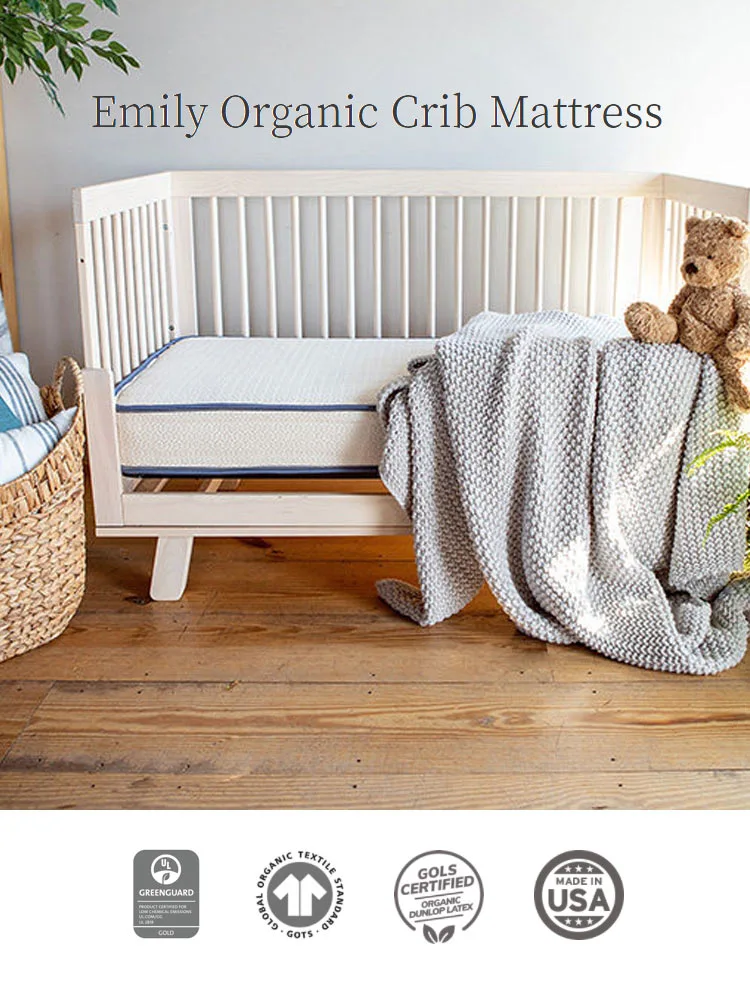
3. The Emily Crib Mattress.
The Emily crib mattress stands out for its certified organic materials, sturdy innerspring support, and excellent overall value. It’s made by My Green Mattress right here in the USA, and it carries impressive certifications, including GOTS, GOLS, and GREENGUARD Gold. The construction combines a 150-coil innerspring core with organic coconut coir, organic wool batting, and a quilted organic cotton cover, resulting in a mattress that feels durable, breathable, and thoughtfully built. The breathable organic cotton surface allows for good airflow, while the wool layer underneath helps regulate temperature, keeping things cooler in the summer and slightly warmer in the winter. Beneath the comfort layers, the innerspring system provides strong edge and corner support, which helps the mattress maintain its shape over time and makes it easier to get a snug, secure fit inside the crib.
As we discuss in our hands-on Emily Crib Mattress Review, the mattress ships flat (always a plus in our book). Out of the box, we detected essentially no odor, consistent with its low-emissions certification. Once placed in the crib, the fit was excellent with tight edges and corners. In testing, we found the firmness to be very well balanced. It’s firm enough for infant safety but still comfortable and responsive enough for toddler use. Unlike some mattresses, it isn’t dual-firmness (both sides are the same), which may be a downside for parents specifically looking for a dedicated infant/toddler design. On the flip side, the identical construction means you can rotate or flip the mattress regularly (we suggest doing so during sheet changes) to help prevent sagging or body impressions over time. And yes, like most innerspring mattresses, it does have a little bounce, something energetic toddlers may quickly discover!
Overall, we’ve been very impressed with the Emily mattress, and it’s steadily moved higher on our rankings after long-term testing. One of its biggest advantages is value: at roughly $299, it’s one of the more affordable certified organic crib mattresses available. The main drawbacks are the lack of dual firmness and the fact that you’ll want to buy a separate waterproof protector, highly recommended to keep this mattress looking new. Who else likes the Emily mattress? Our picky friends at BabyGearLab are fans too. Interested? You can check out the Emily Natural Crib Mattress here.
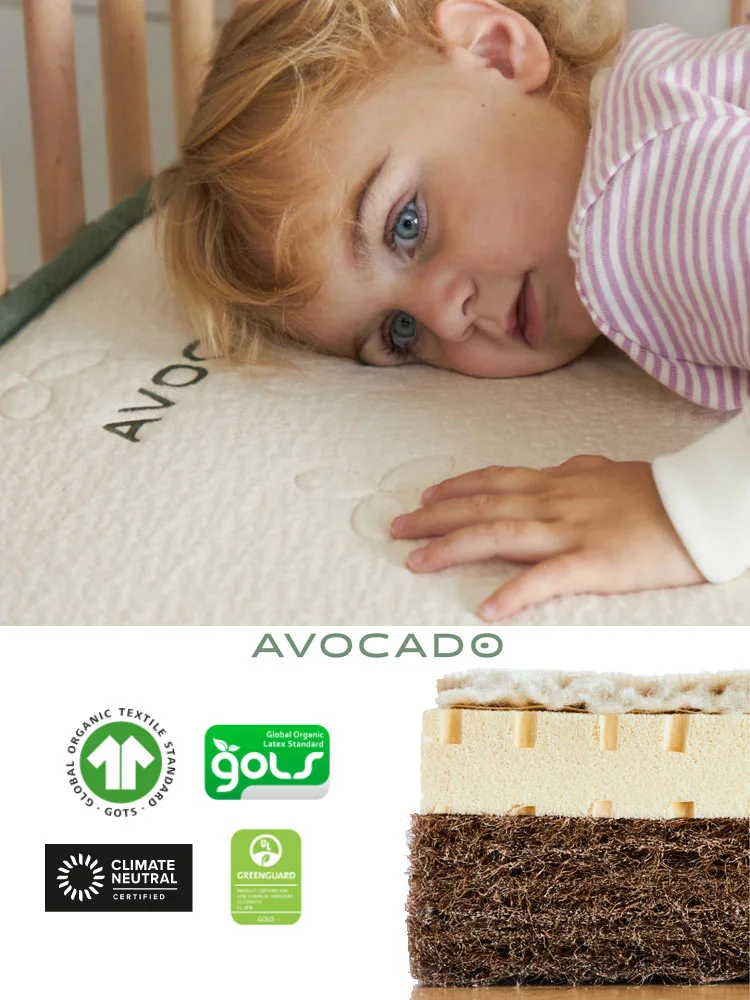
4. Avocado Green Crib Mattress.
This crib mattress really stands out for its exceptionally high-quality organic construction and sustainably sourced materials. The Avocado is most similar to the Naturepedic in overall design philosophy, but with a few notable differences. It does not include a waterproof layer or a 3D mesh breathable cover, but it does feature a beautifully quilted surface and a fully certified organic build with GOTS, GOLS, MADE SAFE, and GREENGUARD Gold certifications. We recently got our hands on the Avocado for testing (thanks for the samples, Avocado!), and were genuinely impressed with the quality of the materials and craftsmanship. It offers everything a discerning parent might want from a premium organic mattress: a certified organic cotton cover, an organic coconut husk core infused with flexible organic latex, excellent airflow through both the surface and interior, and hand-finished construction made in California. Just as important is what it doesn’t contain: no polyurethane foam, chemical adhesives, vinyl, heavy metal springs, added flame retardants, plastics, or polymer cores.
Instead of relying on a synthetic structural core like the Newton Wovenaire or Naturepedic WaveSupport designs, the Avocado uses its coconut husk and latex combination to provide support, durability, and breathability in a fully natural structure. Like the Newton, Emily, and Naturepedic mattresses, it also ships completely flat, so you don’t need to worry about expansion issues after unboxing. In our hands-on testing, first impressions were excellent. There was essentially no odor or off-gassing, and the organic cotton quilted surface feels beautiful, soft, and extremely durable. The craftsmanship is outstanding, with stitching, seams, and fabric quality that all feel premium. Compression testing showed a properly firm infant side for safety, while the toddler side is noticeably more responsive and comfortable. The breathable construction of both cover and core also helps improve airflow, which can be helpful during warmer months. For more details, you can read our full Avocado crib mattress review. Parents who prioritize sustainability will also appreciate that the mattress is produced under strict environmental and labor standards, with materials sourced through responsible farming and manufacturing practices. You can read more about Avocado’s sustainability initiatives and certifications on their site, it’s a genuinely impressive list.
The main downside is that the Avocado does not include a removable waterproof cover. You can purchase one directly from Avocado or use a third-party protector, but we strongly recommend using one to protect the mattress from inevitable messes. Outside of that, our only real hesitation is the price, coming in at around $500, it’s one of the more expensive crib mattresses on this list. Still, for parents who want top-tier organic construction and U.S.-made craftsmanship, it’s a standout option. Interested? You can check out the Avocado Green Crib Mattress here.
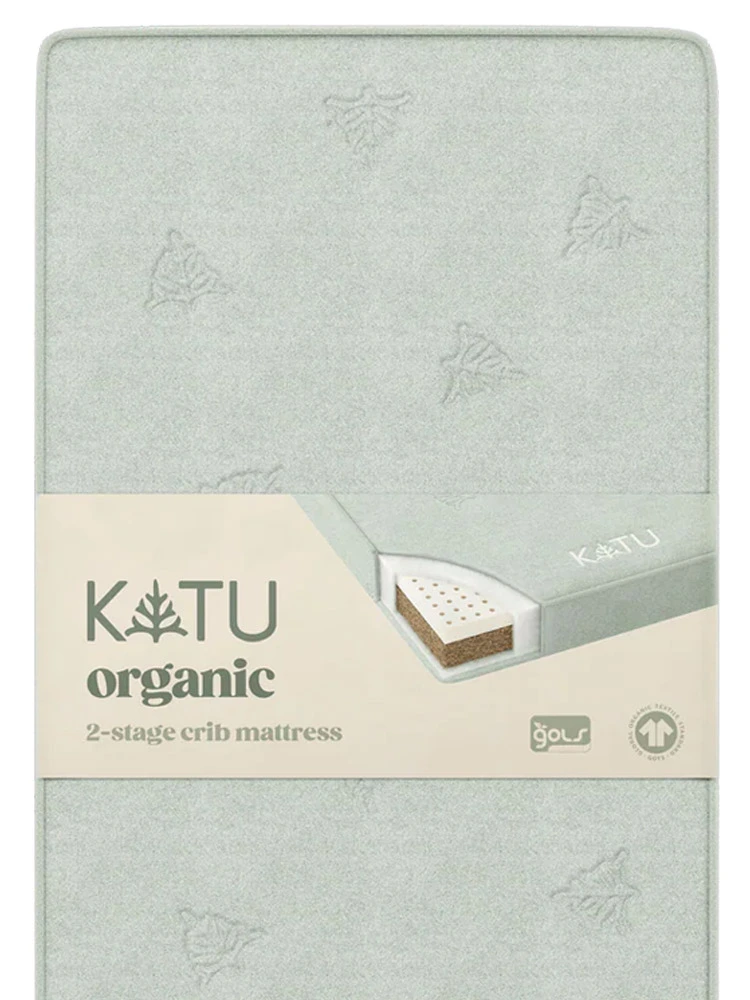
5. The Katu Organic Crib Mattress
The Katu Organic crib mattress stands out as one of the most natural, minimally processed options on our list, built with certified organic materials and a simple, non-toxic construction philosophy. Handcrafted in the USA, it holds GREENGUARD Gold and GOTS certifications and is made without polyurethane foam, chemical flame retardants, glues, or adhesives. Instead, Katu relies on a carefully layered combination of organic coconut husk, organic latex, organic wool, and organic cotton to create a breathable, supportive mattress. The mattress features a dual-firmness design, with a firmer infant side for safety and a softer toddler side for comfort. This allows parents to flip the mattress as their child grows, helping extend its usable lifespan. During our hands-on evaluation, the infant side felt appropriately firm and supportive, while the toddler side offered slightly more cushioning without feeling overly soft. The coconut husk and latex core provide structure and breathability without the need for metal springs or synthetic foam.
There are several advantages to Katu’s natural construction. First, the coconut and latex core allows for good airflow while avoiding the chemical odor sometimes associated with foam mattresses. Second, the organic wool layer serves as a natural flame barrier and helps regulate temperature, keeping the mattress cooler in warmer months and insulating slightly in cooler weather. Third, the quilted organic cotton cover is durable, breathable, and fits snugly in standard cribs with squared edges. Unlike fully washable polymer mattresses such as the Newton, the Katu core itself is not designed to be rinsed or washed. However, its materials are naturally resistant to dust mites, mold, and mildew. We strongly recommend using a waterproof mattress protector (available through Katu or third-party brands) to protect the mattress from accidents.
There are a few drawbacks to consider. The mattress is slightly thinner than some others on this list, and recent price increases have made it less of a budget option than it once was. Shipping times can also run around a month, so it’s not ideal if you need a mattress quickly. Overall, we found the Katu crib mattress to be supportive, breathable, and impressively natural in both materials and construction (you can read our full Katu crib mattress review here). It fit snugly in our test crib with no gaps, had no noticeable odor, and offered a nice balance of firmness and comfort across both sides. For parents who prioritize certified organic materials, natural flame resistance, and a dual-firmness design, the Katu is a very appealing choice. Who else recommends the Katu? It’s received positive attention from Reddit users as well as reviewers at The Good Trade, Modern Nursery, and Gimme the Good Stuff. Interested? You can check out the Katu Crib Mattress here.
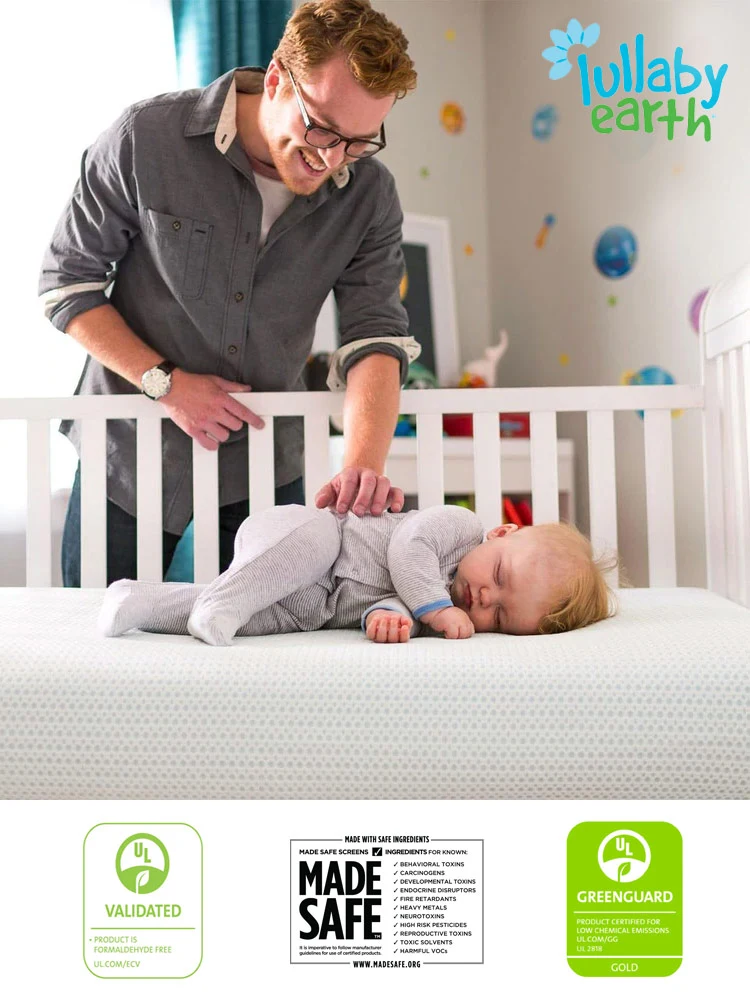
6. Lullaby Earth Crib Mattress.
Looking for a breathable, waterproof, dual-firmness mattress with strong safety certifications at a reasonable price? The Lullaby Earth Breeze crib mattress checks a lot of boxes and has become a very popular option for good reason. It’s GREENGUARD Gold and MADE SAFE certified for low emissions and material safety, fully recyclable, extremely lightweight, about 6 inches thick, and designed with seamless edges for easy cleaning. It also includes a waterproof cover with a breathable sleep surface. Instead of using coils or foam, the Breeze uses the same WaveSupport core found in some Naturepedic mattresses, a lightweight food-grade polymer structure that provides support while helping reduce weight and emissions. The MADE SAFE certification is especially notable, since it evaluates not just emissions but also the safety of materials used in production.
In our testing, the dual-firmness design worked well: the infant side felt appropriately firm, while the toddler side was noticeably softer and more comfortable. The corners fall somewhere between rounded and squared, and the mattress fit nicely in our test (DaVinci) crib. Because of that slight rounding, there may be a bit more chance of pacifiers slipping into the corner gaps compared with fully squared mattresses, but overall fit was still very good. One of the biggest advantages is weight. The Lullaby Earth is extremely light, even lighter than some foam mattresses we’ve tested, which makes sheet changes quick and easy. The included 3D mesh cover is breathable, machine-washable, and backed by a non-vinyl waterproof layer. Underneath, the mattress lining has smooth, seamless edges that wipe clean easily. Overall, construction felt solid in testing, and we expect good long-term durability. There aren’t many downsides. As with most waterproof designs, the backing likely contains some synthetic materials, so while the core is MADE SAFE certified, it’s not entirely clear whether the cover itself meets that same standard. Beyond that, we think the Lullaby Earth Breeze is an excellent option for parents who want a lightweight, certified, breathable mattress without moving into the higher price tier. Who else recommends the Lullaby Earth? Our friends at BabyGearLab, Babylist, and What to Expect all rate it highly. Interested? You can check out the Lullaby Earth Crib Mattress here.

7. Babyletto Pure Core Non-Toxic Crib Mattress.
Priced at around $199, the Babyletto Pure Core Non-Toxic crib mattress is a newer option that offers a nice balance of safety-focused materials, dual firmness, and affordability. It pairs naturally with Babyletto and DaVinci cribs, but works well in most standard-size cribs. The mattress features a dual-sided design with a firm infant side and a softer toddler side, giving it good usability from newborn through the toddler years. The core avoids polyurethane foam and instead uses layers of polyester fiber, which helps reduce emissions while keeping the mattress lightweight and supportive. It’s GREENGUARD Gold certified and made without vinyl, PVC, chemical flame retardants, dyes, phthalates, PFCs, synthetic latex, or other high-VOC materials.
Above the core is a softer comfort layer made from polyester and modacrylic fiber. Modacrylic is a durable synthetic fiber that resists mildew, holds shape well, and is often used in flame-resistant applications. The removable “hybrid” cover combines a soft cotton sleep surface with a vinyl-free waterproof backing. The cover zips on and off easily and can be machine-washed (though it does need to air dry). In testing, the Babyletto Pure fit extremely well in both our Babyletto and DaVinci cribs, with snug edges and minimal corner gaps. The firmness levels felt appropriate on both sides, with solid edge support and a comfortable toddler surface. There are a few minor drawbacks. The zipper on the cover feels a bit lighter-duty than we’d prefer, and after washing the cover, we noticed some shrinkage that made reinstalling it slightly tricky. Also, the mattress is manufactured in Taiwan rather than the USA, which may matter to some parents. Overall, this is a very strong option at its price point. For parents looking for a non-toxic, dual-sided mattress with a waterproof, removable cover and excellent crib fit, the Babyletto Pure offers a lot of value. Who else recommends it? Our friends at BabyGearLab, What to Expect, and The Bump all list it among their top crib mattress picks. Interested? You can check out the Babyletto Pure Crib Mattress here.
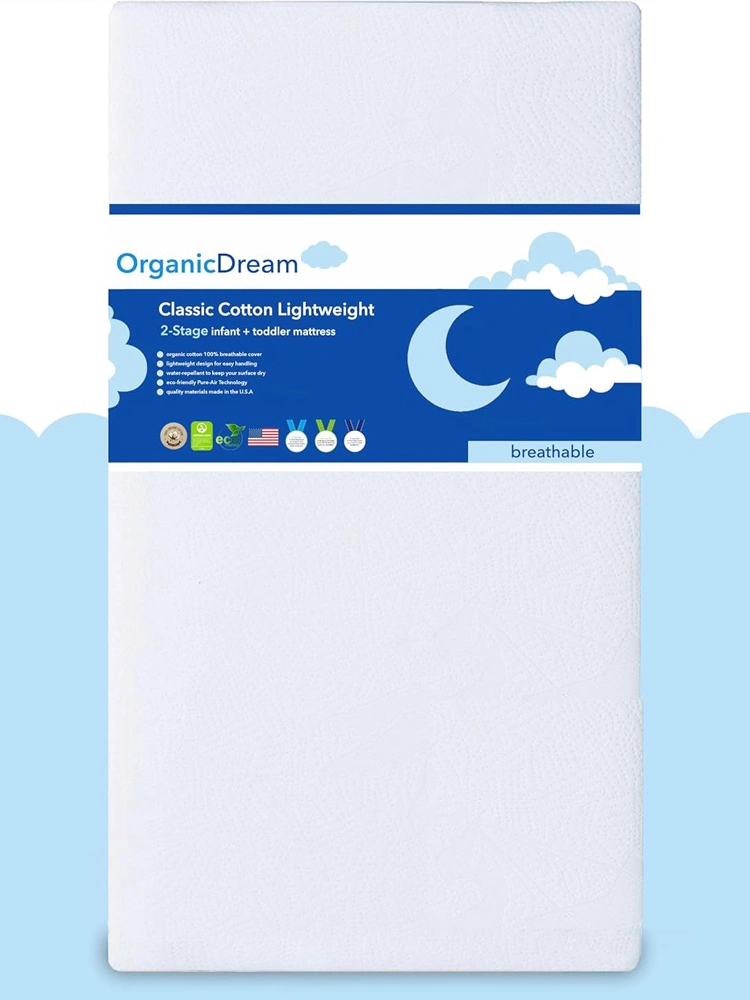
8. OrganicDream 2-Stage Organic Mattress.
We first tested this organic crib mattress early last year and were impressed by its combination of comfort, thoughtful design, and reasonable price. Made in the USA using domestic and international materials (from Canada and Europe), the OrganicDream stands out with GREENGUARD Gold certification, OEKO-TEX certified fabrics, and certified organic cotton sleep surfaces. It also offers true two-stage (dual-firmness) usability, along with a removable, machine-washable cover and breathable, hypoallergenic construction. In testing, several things stood out. First, it’s surprisingly lightweight at about 12 pounds despite its full 6-inch thickness, which makes lifting and sheet changes easier than with many other mattresses in this category. Second, the firmness levels are well balanced: the infant side is appropriately firm, while the toddler side feels softer and more responsive without sacrificing support. The reinforced edges help maintain structure, and the slightly rounded corners fit nicely in our DaVinci test crib.
The organic cotton cover is soft, breathable, and comfortable against the skin. We removed and machine-washed the cover during testing and only noticed minor tightening afterward; it stretched enough to zip back on without difficulty. The cover is also water-resistant for extended periods, helping protect the mattress core if accidents aren’t caught immediately. We also appreciated the low-emissions construction. Out of the package, there was essentially no odor or off-gassing, consistent with its GREENGUARD Gold certification. One important clarification is that while the sleep surfaces are organic cotton, the internal core is made from a food-grade polymer similar to the Newton mattress. That means it isn’t fully organic, but it is durable, low-emission, and designed for long-term support. After more than a year of use, we’ve found that the fabrics, stitching, zipper, and core have all held up very well. Overall, this is a thoughtfully designed mattress that offers strong value for parents who want organic sleep surfaces, dual firmness, and a lightweight, easy-to-maintain design. Interested? You can check out the Organic Dream Crib Mattress here.
Additional Options
While we do not strongly recommend any of these options, they can be great budget picks for parents who aren't concerned with polyurethane foam cores or vinyl covers. In general, if you're comfortable picking a mattress with a polyurethane core, definitely look for one that is Greenguard GOLD and CertiPUR-US certified.
We suggest not paying over $100 for a polyurethane core crib mattress, especially with a vinyl cover. The following crib mattress options are in no particular order, but if you click on them, it will take you to our full review:
Moonlight Slumber Little Dreamer review
Colgate Eco Classica III review
Simmons Kids Beautyrest Beginnings Black Brilliant Sun review
Kolcraft Pure Sleep Therapeutic 150 review
Serta Perfect Start review
Milliard Hypoallergenic review
Delta Children Twinkle Stars review
Graco Premium Foam review
Sealy Soybean Foam Core review.
Complete Crib Mattress Buying Guide
Choosing a crib mattress involves much more than simply finding one that fits. After testing crib mattresses for more than 15 years, we’ve learned which features truly matter for safe infant sleep, everyday convenience, and long-term durability.
Below we walk through the most important features, safety considerations, construction differences, convenience features, pricing, and other factors to help you choose the right crib mattress for your family.
The Basic Features of a Crib Mattress
Size, Dimensions, & Weight
There are two common crib mattress sizes: mini-crib and standard crib.
Mini-crib mattresses usually measure about 24" wide by 38" long. These sizes are not federally regulated, so it is important to confirm the exact dimensions of your mini crib before purchasing a mattress.
Standard crib mattresses measure approximately 28" wide by 52⅜" long. The Consumer Product Safety Commission (CPSC) regulates this size and requires mattresses to remain within about ⅝ inch of those dimensions.
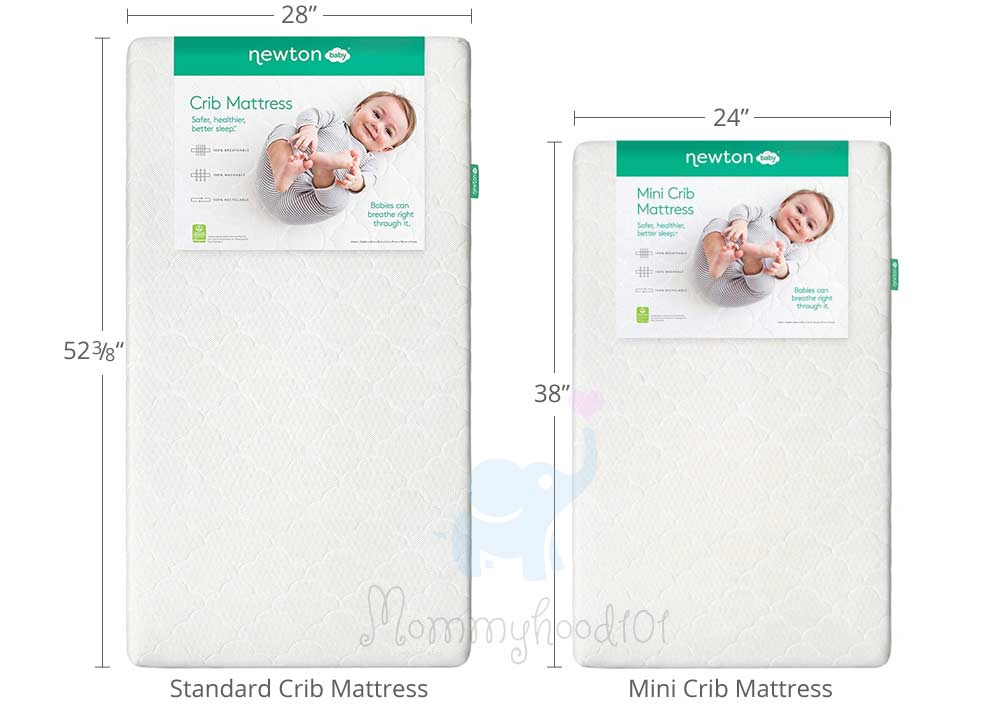
Because manufacturers are allowed small variations, some mattresses measure slightly smaller or larger. In practice, most standard mattresses fit snugly inside standard cribs.
Typical crib interiors measure about 28" by 52". When centered, most mattresses leave less than half an inch of space along the sides.
If you want the best chance of a perfect fit, consider purchasing the crib and mattress from the same manufacturer. Even then, small manufacturing variations can still occur.
Mattress thickness usually ranges from 4-6 inches. The CPSC limits maximum thickness to 6 inches so crib rails remain at a safe height.
In our experience, mattresses between 5-6 inches thick provide the best combination of firmness, durability, and comfort.
Keep in mind that bassinets use completely different mattress sizes that vary widely depending on the product.
Core Materials: Springs & Things
Twenty-five years ago, most crib mattresses used traditional coil springs.
Innerspring mattresses provide strong support and evenly distribute weight across the sleeping surface. However, older versions were extremely heavy and sometimes overly bouncy.
Today, crib mattresses use several different core designs:
innerspring, pocket coil, foam, polymer, corrugated fiber, wave support, and hybrid constructions.
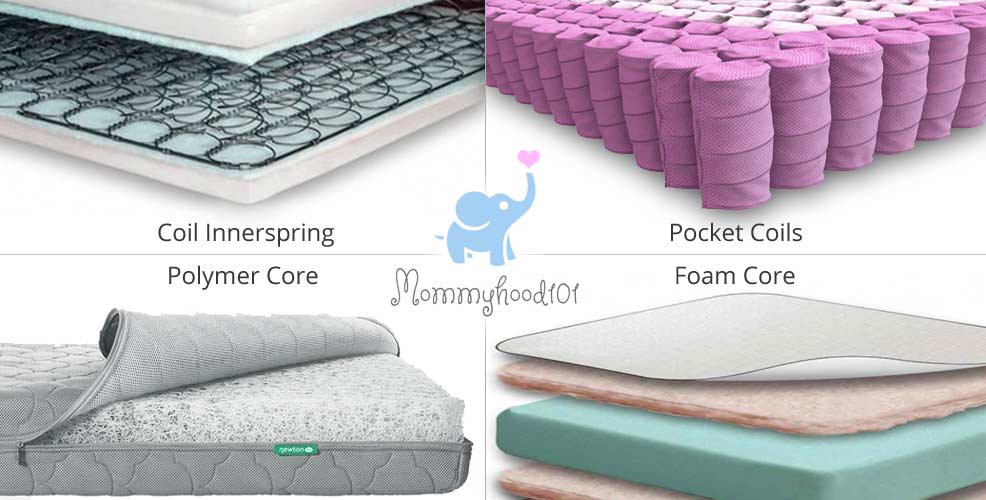
Each core design has trade-offs involving support, breathability, durability, weight, VOC emissions, and cost.
Support: Innerspring and pocket-coil mattresses generally provide the strongest support, especially with higher coil counts. Foam and polymer cores can also be supportive but may compress slightly over time.
Weight: Innerspring mattresses are the heaviest and can exceed 30 pounds. Polymer and polyester fiber cores are far lighter, often weighing only 8-10 pounds. Wave-support mattresses such as some Naturepedic crib mattresses usually weigh around 14 pounds.
The Love to Dream Gro crib mattress uses a “corrugated fiber” core, which is typically layered polyester fibers or polymer mesh arranged in a wave-like structure to improve airflow.
Durability: Foam and polymer mattresses can develop small indentations after years of use. Innerspring and hybrid constructions tend to maintain their shape longer.
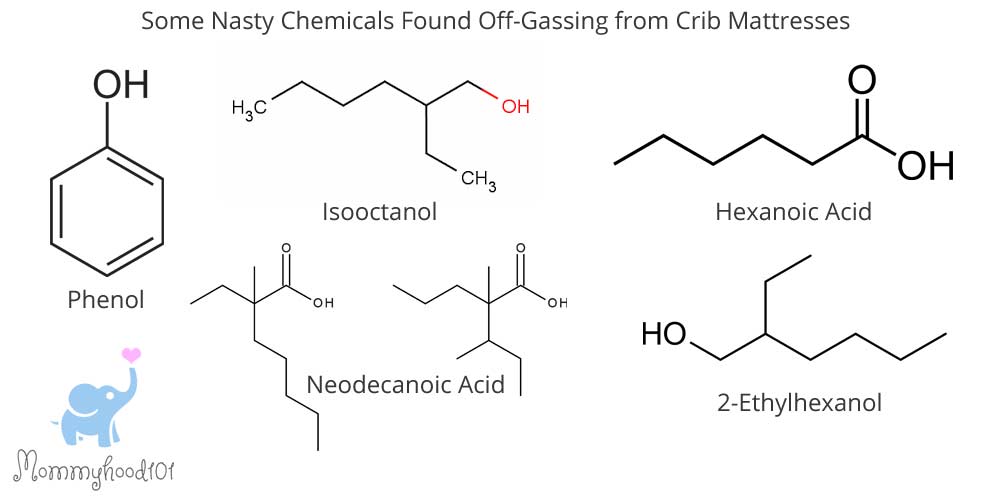
VOC Content: Many parents are concerned about volatile organic compounds (VOCs). A study published in Environmental Science and Technology found multiple chemical emissions in some crib mattresses.
Polyurethane foam mattresses historically raised the most concerns, though many newer versions now use CertiPUR-US certified foam.
Breathability: Breathable mattress cores help improve airflow and temperature regulation. Polymer mattresses like the popular Newton crib mattress are especially known for high airflow.
Cost: Foam mattresses are typically the least expensive. Innerspring and polymer designs usually cost more due to materials and manufacturing complexity.
- Foam: Lightweight and affordable but may trap heat or dent over time.
- Coil: Durable and supportive but heavier and often pricier.
- Polymer: Breathable and lightweight but typically premium priced.
Edge Support and Corner Angles
Edge support is an important feature that is often overlooked when choosing a crib mattress.
Traditional innerspring mattresses provided excellent edge support because the coils extended all the way to the perimeter and were reinforced with a border rod. This prevented the sides from sagging.
Many modern foam and polymer mattresses now reinforce the edges to mimic this support and reduce compression near the sides of the mattress.
Strong edge support helps prevent sagging and keeps the mattress stable as your baby grows into a toddler.
Another design detail to consider is the shape of the mattress corners. Some mattresses have rounded corners, while others use squared 90-degree corners:
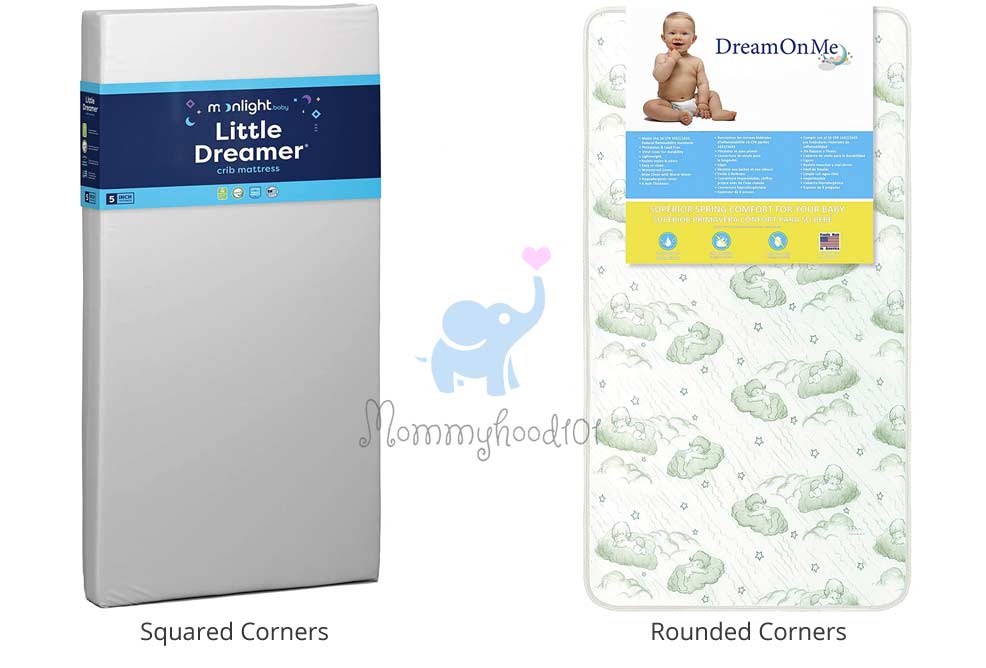
Rounded corners can leave small gaps in crib corners where pacifiers or small toys may fall.
Squared corners reduce these gaps but can make it slightly harder to remove the mattress during sheet changes.
Many modern mattresses offer a compromise with gently rounded corners. The popular Avocado crib mattress and Newton crib mattress both use this approach.
Dual-Sided Support for Infants and Toddlers
A dual-sided crib mattress is one of the most useful features parents can choose.
Infants require a very firm sleeping surface according to the Safe Sleep guidelines from the American Academy of Pediatrics.
A firm surface is a hard surface; it should not indent when the baby is lying on it. - AAP
Most modern crib mattresses solve this by offering two sides:
- Infant side: extra firm for safe newborn sleep
- Toddler side: slightly softer for comfort after the first year
These are often called dual-sided, reversible, or two-stage crib mattresses.
Here is an example from the excellent Avocado mattress showing clearly labeled infant and toddler sides:
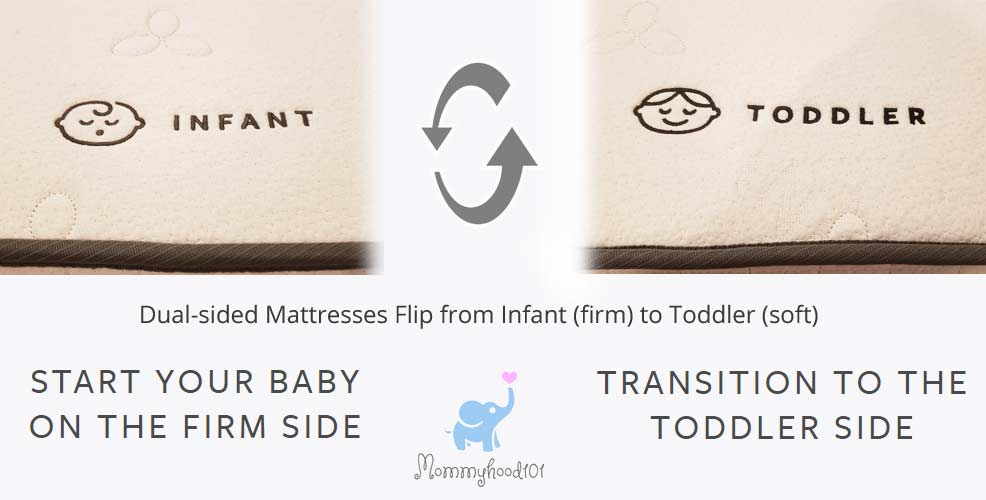
Most children transition to the toddler side at around 12 months of age.
For safety and long-term usability, we strongly recommend choosing a dual-sided crib mattress whenever possible.
Accidents and Waterproof Covers
Accidents are inevitable during infancy and toddlerhood. Diaper leaks, spit-ups, and potty-training mishaps will eventually happen.
This makes waterproof protection extremely important for preserving the mattress.
Some mattresses include waterproof surfaces, while others require a separate mattress protector.
One extreme example is the Newton crib mattress, which includes both a washable cover and a washable core:
Traditional waterproof crib mattresses often used vinyl covers. While vinyl is effective at blocking moisture, many parents prefer to avoid it due to concerns about breathability and potential chemical emissions.
Some manufacturers now use PEVA instead of PVC vinyl because it avoids chlorine and phthalates.
Modern crib mattresses typically approach waterproofing in three ways:
Hybrid Covers: These combine a breathable outer fabric with a waterproof inner membrane made from polyester, latex, or TPU.
Water-Repellent Covers: Some fabrics are treated with coatings that repel small spills but may not fully protect against heavy leaks.
Washable Covers and Cores: Some mattresses feature removable machine-washable covers and cores that can be rinsed or washed.
Crib Mattress Safety Considerations
Your baby may spend 12–15 hours per day sleeping in their crib during the first years of life.
Because of this extended contact time, mattress safety certifications and material choices matter.
Many manufacturers pursue certifications such as:
- Greenguard GOLD
- CertiPUR-US
- GOTS organic textile certification
- GOLS organic latex certification
- UL formaldehyde validation
- MADE SAFE certification
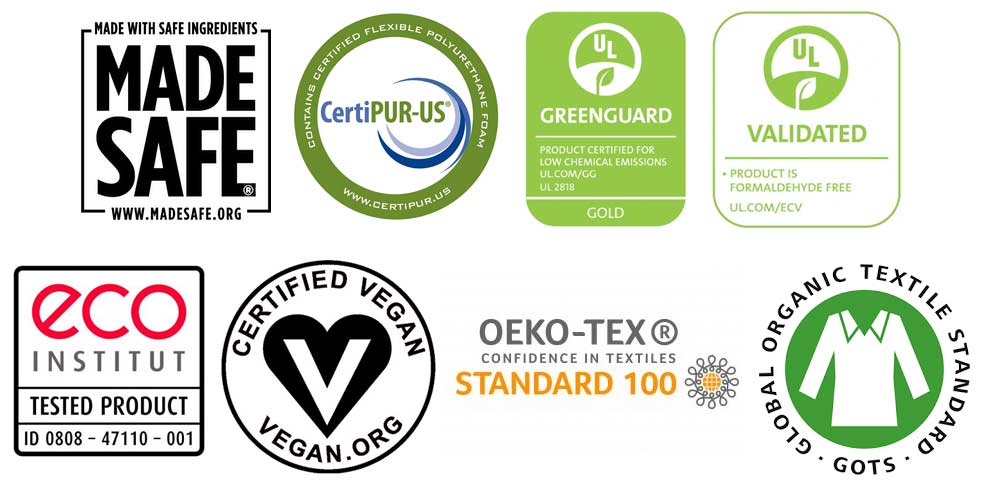
These certifications primarily address chemical emissions, materials sourcing, and manufacturing safety.
In our experience, the most stringent certifications include:
- Greenguard GOLD verifies very low chemical emissions
- MADE SAFE screens ingredients for human and environmental safety
- UL Validation confirms formaldehyde-free products
Off-Gassing and VOCs
Off-gassing refers to the release of volatile organic compounds (VOCs) from manufactured materials.
This issue has been studied extensively, including research published in peer-reviewed journals examining chemicals emitted by crib mattresses.
If chemical exposure is a concern, we strongly recommend choosing a mattress with Greenguard GOLD certification or similar standards.
Many parents also prefer organic mattress brands such as Avocado that go beyond standard emission requirements.
Mattress and Crib Compatibility
Standard crib mattresses are federally regulated, so compatibility problems are uncommon.
However, some mattresses shipped compressed in small boxes may not fully expand after unpacking.
If a mattress leaves large gaps along the crib edges, it should be returned immediately.
A good rule of thumb is the two-finger rule:
If you can fit more than two fingers between the mattress and crib frame, the mattress is too small.
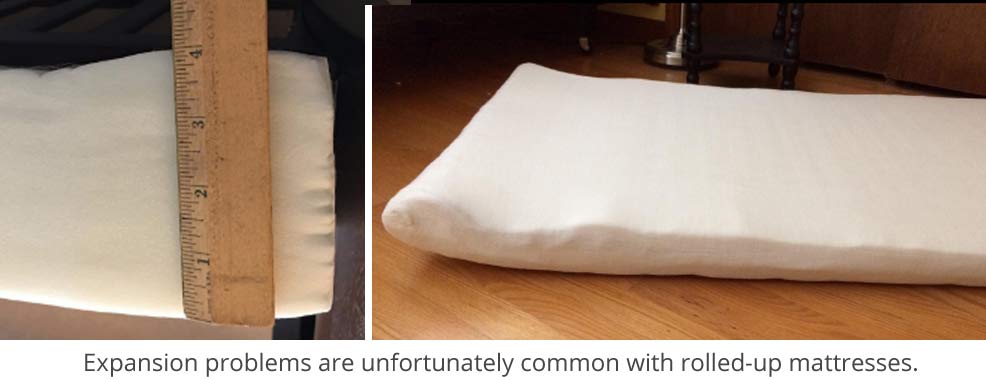
This is one reason we often prefer mattresses that ship flat instead of rolled.
Long-term compression during shipping can sometimes lead to uneven expansion or permanent deformation.
Appropriate Mattress Firmness and Softness
If a crib mattress feels soft and plush, it is probably not firm enough for an infant.
Safe sleep guidelines from the AAP emphasize that infants should sleep on a firm surface.
Never use mattress toppers, thick pads, or soft bedding for babies under 12 months.
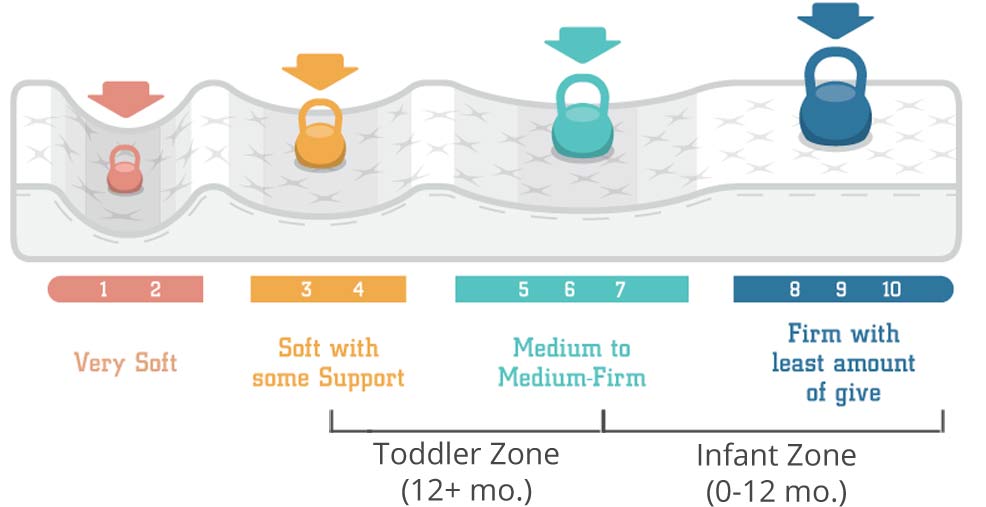
Dual-sided mattresses allow infants to sleep safely on a firm surface while providing a softer toddler side later.
Most parents flip the mattress around 12 months of age, although pediatricians may recommend adjustments based on developmental milestones.
For more detailed guidance, see our article on crib mattress safety.
Mattress Breathability
Breathability refers to how easily air flows through the mattress surface and core.
Many modern covers are breathable fabrics, though waterproof barriers may reduce airflow slightly.
Some mattresses, such as the Newton crib mattress, are designed with fully breathable cores.
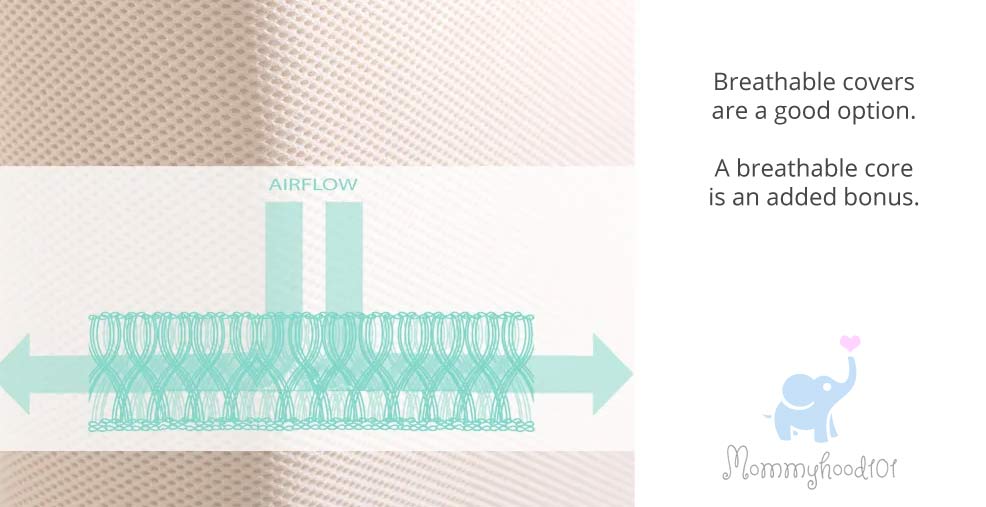
Breathable mattresses may:
- Improve airflow around the baby
- Reduce heat buildup
- Help keep sleep surfaces cooler
Foam cores tend to trap more heat because air cannot easily move through them.
Appropriate Mattress Covers and Pads
Do not use soft mattress pads for infants under 12 months.
Extra padding can reduce firmness and increase sleep risks.
Waterproof mattress protectors, however, are commonly used and generally safe when they fit tightly and do not add cushioning.
Crib Mattress Safety Checklist
✔ Firm surface (does not indent when baby lies on it)
✔ Fits snugly in crib (less than two fingers’ width gap)
✔ Breathable cover and core preferred
✔ Free from chemical odors or off-gassing
✔ Meets CPSC safety standards
✔ Greenguard GOLD and/or MADE SAFE certified
✔ No mattress toppers, pads, or loose bedding for infants
✔ Dual-sided design recommended
✔ Flat sleeping surface (never inclined)
✔ Waterproof or washable surface
✔ Maximum thickness 6"
Additional Crib Mattress Safety-related Readings
Code of Federal Regulations Part 1241 Safety Standard for Crib Mattresses
Crib Mattress Convenience Features
Beyond safety and construction, a few convenience features can make daily use of a crib mattress much easier. These features affect everything from shipping to cleaning and everyday handling.
Rolled-up versus Flat Shipped Crib Mattresses
Some crib mattress companies now ship mattresses compressed and rolled into smaller boxes.
This trend began with large adult mattresses, which are expensive to ship and difficult to maneuver through doors and staircases. Compressing them into smaller boxes dramatically reduces shipping costs.
For crib mattresses, however, the benefit is much smaller. Crib mattresses are already compact enough to ship flat without much difficulty.
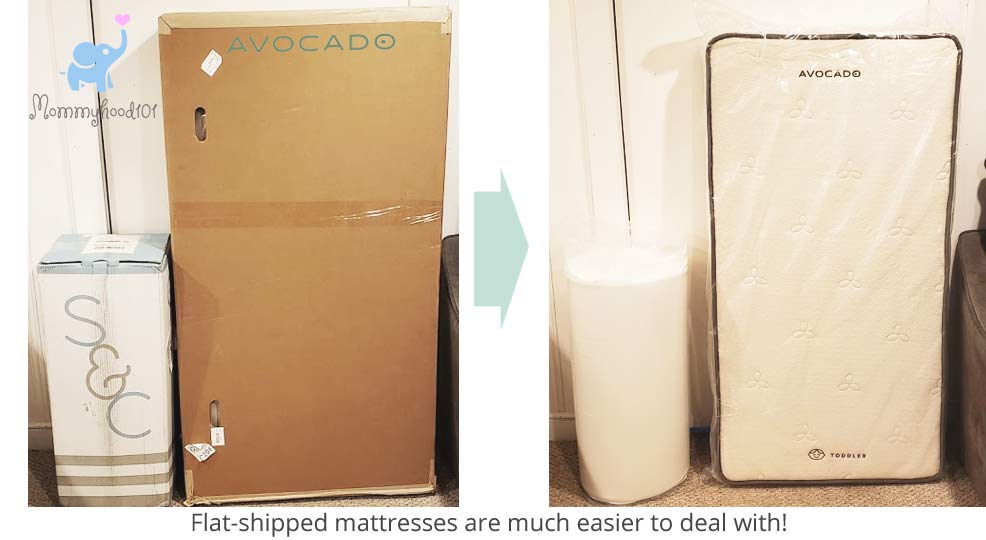
We generally prefer mattresses that ship flat for two main reasons:
- Material limitations: Mattresses that can be tightly rolled are usually made from foam or similar compressible materials.
- Expansion risks: If a mattress remains compressed for long periods in storage or shipping, it may not fully expand once unpacked.
We generally prefer crib mattresses that ship flat rather than compressed.
In some cases, a rolled mattress may expand unevenly or remain misshapen. Returning it can also be frustrating because it is nearly impossible to compress the mattress back into the original box.
Choosing a mattress that ships flat helps avoid these problems entirely.
Weight and Ease of Lifting
Crib mattresses get lifted frequently during normal use. Parents remove them when changing sheets, cleaning covers, adjusting crib height, or retrieving dropped toys.
Because of this, mattress weight is worth considering.
Lightweight mattresses are easier to handle, especially for caregivers who may not have much upper body strength.
Most lightweight crib mattresses weigh around 10–12 pounds.
The Newton crib mattress, for example, weighs about 10 pounds and is one of the easiest mattresses to lift.
Heavier mattresses are usually made with innerspring coils, cotton batting, or organic materials.
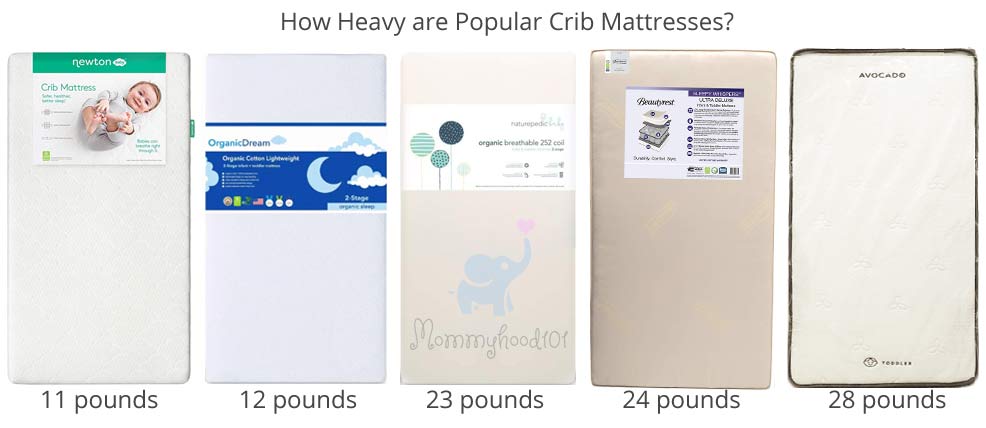
Some premium mattresses can weigh more than 25 pounds. For example:
- The Naturepedic innerspring crib mattress weighs nearly 25 pounds.
- The Avocado crib mattress weighs close to 30 pounds.
A heavier mattress is not necessarily a bad thing. In fact, heavier mattresses often use higher-quality materials. The key is simply choosing a weight that is manageable for the caregivers using it.
Zip-off Mattress Covers and Pads
A removable mattress cover is one of the most useful features a crib mattress can have.
Accidents and spills happen frequently during infancy and toddlerhood. Being able to remove the cover and wash it quickly can save a great deal of frustration.
Most crib mattresses include a zippered cover that arrives already attached to the mattress.
In some cases the cover is sold separately. For example, the Avocado crib mattress allows parents to purchase waterproof covers independently.
A good example of a quality protector is the organic cotton waterproof crib mattress protector sold by Brentwood Home.
Regardless of the brand, we strongly recommend using a waterproof cover to protect the mattress core.
Machine-washable Components
Modern crib mattress covers are usually designed to be machine washable.
This allows parents to simply remove the cover and wash it with regular laundry.
Most mattress covers can also be tumble dried on low or medium heat.
When purchasing a crib mattress, check whether:
- The included cover is removable
- The cover is machine washable
- The cover can safely go through a dryer cycle
These features make routine cleaning much easier over the life of the mattress.
Vibrating Crib Mattresses
A newer innovation in crib mattresses is the addition of gentle vibration technology designed to soothe babies and encourage sleep.
Some manufacturers claim vibrating mattresses may help babies fall asleep faster, sleep longer, and reduce fussiness.
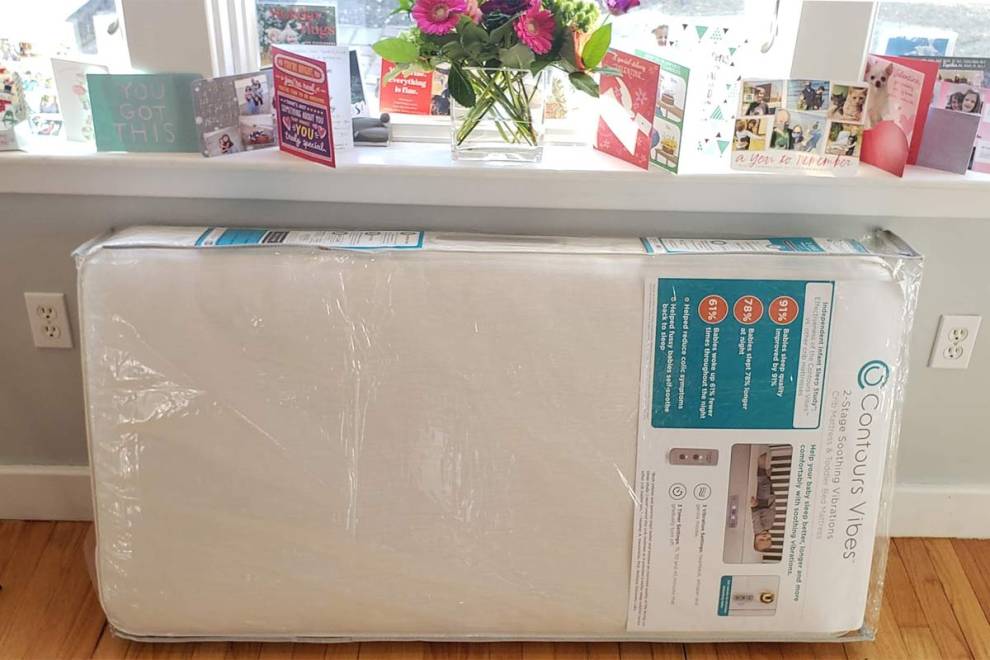
One example is the Contours Vibes crib mattress, released in 2021 as one of the first vibrating crib mattresses we have tested.
If you're curious about this concept, check out our Review of the Contours Vibes Crib Mattress to learn more about how it works.
What to Spend on a Crib Mattress
How much you should spend on a crib mattress depends largely on your budget and priorities.
Most good-quality crib mattresses fall into these price ranges:
- $100–200: basic foam mattresses
- $200–300: solid mid-range mattresses with improved materials
- $300–500: premium mattresses with organic materials, breathable cores, or advanced construction
Price differences are influenced by several factors including materials, manufacturing location, brand reputation, and sustainability practices.
Small Versus Big Business
Some parents prefer supporting smaller mattress companies that emphasize sustainability, organic materials, or local manufacturing.
Large mattress companies dominate a big portion of the market. Brands such as Serta, Sealy, Tempur-Pedic, Simmons Kids, and Beautyrest produce many of the mattresses commonly found in major retailers.
However, several smaller companies have built strong reputations for producing high-quality crib mattresses.
Some of the best smaller crib mattress brands include:
Medium-sized brands such as Newton and Colgate also manufacture well-reviewed mattresses.
Which Crib Mattresses are Made in the USA?
Many parents prefer products manufactured in the United States due to quality control and labor standards.
Several well-known crib mattress brands manufacture their products in the USA, including:
- The Newton crib mattress core is made in Nashville, TN (cover made in China).
- The Avocado crib mattress is made in California.
- Naturepedic crib mattresses are made in Ohio.
- Lullaby Earth mattresses are made in Ohio.
- The Love to Dream Gro crib mattress is made in New Jersey.
- The Colgate crib mattress is made in Georgia.
- The OrganicDream crib mattress is made in Missouri.
- The Moonlight Slumber mattress is made in Illinois.
- The MyGreenMattress Emily mattress is made in Illinois.
- The Beautyrest crib mattresses are manufactured by Delta Children in Wisconsin.
This list is not exhaustive. If country of origin is important to you, always verify manufacturing details directly with the brand.
Environmental Sustainability
Sustainability has become an increasingly important factor in crib mattress manufacturing.
This includes responsible sourcing of materials, low-impact manufacturing processes, and recyclability of mattress components.
Some brands place a strong emphasis on sustainability and environmental certifications.
The Avocado crib mattress is a good example. The company uses certified organic materials and maintains multiple environmental certifications including:
- Climate Neutral certification
- GOTS and GOLS organic certifications
- STANDARD 100 by OEKO-TEX
- 1% for the Planet membership
Naturepedic has also received numerous sustainability awards from organizations such as the Environmental Working Group and the Organic Trade Association.
If environmentally responsible manufacturing is important to you, several crib mattress brands now offer excellent options.
Conclusions
Choosing a crib mattress can feel overwhelming because there are many factors to consider: safety certifications, materials, construction methods, durability, and price.
The good news is that many excellent options exist across a wide range of budgets.
Every family has different priorities. Some parents focus on organic materials, others prioritize breathability or lightweight designs.
The perfect crib mattress for your family is the one that balances safety, comfort, durability, and budget.
Frequently Asked Questions about Crib Mattresses.
Questions about Crib Mattress Size
Are crib mattresses a standard size?
Yes. Standard crib mattresses measure approximately 52 inches long by 28 inches wide. Mini-crib mattresses are typically about 38 inches by 24 inches but are not federally standardized.
Are crib mattresses twin size?
No. A twin mattress measures about 75 inches by 38 inches, making it far larger than a crib mattress.
Are crib mattresses and toddler mattresses the same size?
Convertible cribs usually use the same mattress when converting to a toddler bed. However, some toddler beds use different sizes, so always check manufacturer specifications.
Will a crib mattress fit in a pack n play?
No. Pack-and-Play mattresses are smaller and typically measure about 37.5 inches by 25.5 inches.
Will a crib mattress fit an Ikea toddler bed?
No. Many Ikea toddler beds use longer mattresses, such as the Underlig mattress which measures about 63 inches long.
Will toddler sheets fit a crib mattress?
If the toddler bed uses a standard crib mattress, the same sheets will fit. Otherwise toddler sheets may be larger.
Will a crib mattress fit in my car?
Rolled mattresses usually fit easily into a trunk or backseat. Flat mattresses require about 52 inches by 28 inches of space.
Questions about How to Choose a Crib Mattress
What is the perfect crib mattress?
Each year we test numerous models to identify the best balance of safety, comfort, durability, and value. The Newton crib mattress consistently ranks among our top picks.
What crib mattress should I buy?
This depends on your priorities. Budget options include brands such as Safety 1st, while premium options include Newton, Naturepedic, Moonlight Slumber, Babyletto, and Colgate.
Which Naturepedic crib mattress is best?
Naturepedic produces several excellent organic crib mattresses. A popular option is the Naturepedic Breathable Organic Crib Mattress with 2-stage firmness and removable protector pad.
How should I buy a crib mattress?
Crib mattresses can be purchased in stores or online. Online shopping often provides a wider selection and convenient delivery.
Why buy an organic crib mattress?
Organic mattresses may reduce exposure to certain chemicals used in conventional foam or textile manufacturing. Many parents prefer organic materials for this reason.
Questions about Crib Mattress Safety and Stages
Why are crib mattresses so firm?
Health organizations such as the AAP and CPSC recommend firm sleep surfaces for infants to reduce sleep-related risks.
When should I flip a crib mattress?
Most dual-sided mattresses are flipped around 12 months of age when transitioning from the infant side to the toddler side.
Why lower a crib mattress?
As babies begin sitting and standing, lowering the mattress helps prevent climbing and potential falls.
When should I lower a crib mattress?
Lower the mattress once your baby can sit independently and again when they begin pulling themselves up.
How do you lower a crib mattress?
The mattress platform is typically attached with screws at the crib corners. Move the platform to lower screw holes to reduce the mattress height.
What is Greenguard GOLD certification?
Greenguard GOLD certification verifies that a product meets strict standards for low chemical emissions, including formaldehyde and other VOCs.
What is CertiPUR-US certification?
CertiPUR-US certification applies specifically to foam materials and confirms that they meet certain safety and emission standards.
Questions about Crib Waterproofing and Mattress Covers
Are crib mattresses waterproof?
Some crib mattresses include waterproof layers, while others require separate waterproof mattress protectors.
Are crib mattress protectors safe?
Yes, as long as they fit tightly and do not add padding. Many modern protectors use breathable fabrics rather than vinyl.
Are crib mattress pads safe?
Protective covers are generally safe, but thick padded toppers should not be used with infants.
Why use a crib mattress pad?
Mattress protectors help prevent stains and extend the lifespan of the mattress.
Do you need a crib mattress cover?
If the mattress does not include a waterproof layer, using a waterproof protector is strongly recommended.

Related Content
Beautyrest Black Brilliant Sun Crib Mattress Review
The Beautyrest brand is one of the most popular of all time, and their crib mattress is...
Contours Vibes Crib Mattress: Full Review
The Contours Vibes Crib Mattress is the only vibrating crib mattress on the market,...
Avocado Crib Mattress Review & Testing
The Avocado crib mattress brings organic materials, quality, and comfort to an entirely...
Newton Crib Mattress Review: Hands-on Testing
The Newton Crib Mattress is the most innovative crib mattress on the market, with a...